
- It’s a weird situation when hospitals not being filled with dead people is a negative.
Not enough people are dying in Scotland.
Hmm, maybe we should phrase that better…
Alright, so, Scotland’s hospitals are struggling with a bizarre problem. They simply don’t have enough corpses.
While that is generally very positive news, it does put Scotland’s medical students in a difficult spot. After all, nothing helps you learn the anatomy of a human body quite like a human body.
However, there aren’t enough people in Scotland who donate their bodies to medicine. As such, future doctors and nurses must squabble over the few that come in.
Additionally, the number of medical students in Scotland has increased significantly over the last couple of years. Again, that’s great news for doctor-starved Scottish hospitals — but it sure doesn’t help with the lack of dead bodies to cut apart.
Now Hiring Doctors
At the root of Scotland’s lack of corpses is its ambition to train more doctors. Now, let us be clear — that’s excellent.
Scotland (and the rest of the U.K., for that matter) has struggled for years and years with a chronic lack of medical personnel. From nurses to doctors, the National Health Service (NHS) simply doesn’t have enough people.
Over the years, the NHS has tried to remedy the situation through various means, but mostly by hiring foreign doctors. That hasn’t been enough, though, and the wait times to see a doctor through the NHS remain notoriously long.
In 2016, the Scottish government put its foot down. It promised to significantly increase the number of medical school places to train more homegrown doctors.
For once in a blue moon, a governmental authority has actually done with it set out to do. In the 2023-24 academic year, Scotland boasted 5,930 medical students, the BBC reported.
That’s nearly 300 students more than the year before. And when compared to 3,928 medical students in 2016, you’re looking at 2,000 additional doctors.
Never thought we’d see the day of elected officials delivering on their big words.
Not Enough Donations
However, the increased number of future doctors brought with it a problem nobody at Holyrood (that is, the Scottish Parliament) probably could’ve expected. And that is the shortage of corpses.
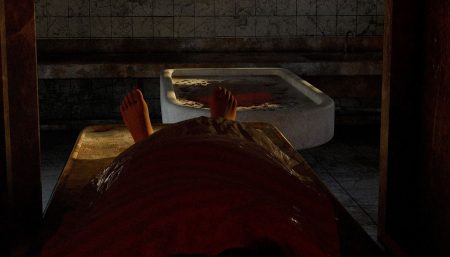
If the idea of students cutting apart dead bodies makes you squeamish, just know that it’s the most effective way for medical students — particularly those aiming to be surgeons — to learn what makes us tick. Textbooks and anatomical models can only teach you so much, and the surgeon must eventually stick their hands inside somebody’s body cavity anyway.
Practicing on an expired patient is crucial for helping keep the future living ones from expiring, you know.
Most of the cadavers come from people who donate their bodies to medicine and science. However, not enough people are doing that.
In the 2023-24 academic year, Scottish anatomy departments took in 468 corpses. Out of them, however, 178 were rejected as unsuitable for one reason or another.
So, that 290 bodies for the students to examine and practice on. To put things into perspective, that’s just nine cadavers more than the previous year, while the number of students grew by the aforementioned 300.
According to The Scotsman, Scotland’s medical schools currently house 352 embalmed and 123 frozen corpses. In total, that comes to 475 generous dead.
So, we have one corpse for every 12 or so students. That just won’t do, so medical schools have been forced to cancel classes.
The Art of the Resurrectionist
Bizarrely enough, this is not the first time Scotland’s medical students have had to deal with limited access to dead bodies. A similar situation occurred in the early 1800s.
Back in the day, most of the training cadavers weren’t voluntarily donated. Instead, they came from executed criminals who no longer needed their mortal vessels.
In 1823, however, the U.K. government passed legislation that drastically reduced the number of executions. Victory for human rights — a significant loss to Scottish medical education.
A solution soon presented itself, but it wasn’t a savory one. The corpse shortage led to an uptick in the number resurrectionists.
That’s a fancy word for “grave robbers.” People began digging up recently buried corpses and selling them illegally to hospitals.
Let’s hope nobody in Scotland tries solving the current crisis in this way.