
- Maybe we should all pick up animal droppings more often.
When you’re a parent, you have to teach many things to your child. One of them should be not to bring poop to school — no matter what kind of show and tell they’re having.
In this case, however, it turned out alright.
The University of Illinois at Chicago (UoIC) has partnered with a local Boys and Girls Club to help youths get involved in the sciences. As part of this initiative, the participating middle schoolers were encouraged to collect environmental samples to discover potential new antibiotic strains.
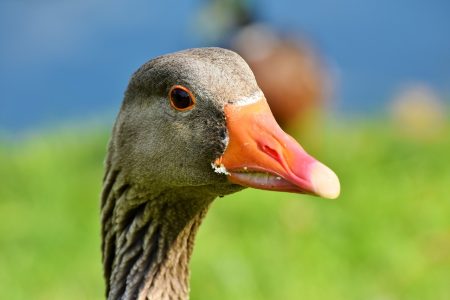
So, two students bought in goose poop they’d picked up at a local park.
That bit of poop turned out to be a golden nugget. With the help of UoIC scientists, the students extracted powerful antibiotic bacteria from the feces.
That would’ve been a great success on its own. But soon, the grown-up scientists realized that the bacteria produced a compound that was completely new to science.
After testing the compound, they noticed that it hinders the growth of certain cancer cells. In other words, the middle schoolers accidentally helped discover a potential new anti-cancer treatment.
Inspiring Future Scientists
The discovery of the new anti-cancer compound was reported in a peer-reviewed study in the journal ACS Omega. For their contributions, the middle schoolers — Camarria Williams and Jonathon Rodriguez — are listed as co-authors of the paper.
Imagine having a scientific publication under your belt before you’re even in high school. Talk about overachieving.
In any case, the paper originated from a program run by UoIC, called the Chicago Antibiotic Discovery Lab (CADL). This research initiative, organized in collaboration with the Boys and Girls Clubs of Chicago, serves two purposes.
First, it aims to encourage youths to pursue careers in science. By letting the kids work together with genuine scientists in a real research lab, the CADL hopes to create more future biomedical researchers.
The second purpose is to do genuine, bonafide research to discover new antibiotics. In case you’re not aware, our current antibiotic arsenal is growing weaker and weaker as bacteria develop resistance to them.
So, the CADL hopes to kill two birds with one stone — inspire future scientists who can then go on to improve medical treatments for everyone.
Win-win.
It Begins with Poop
As part of the CADL program, the Chicago Boys and Girls Clubs rounded a group of interested middle schoolers. They embarked on a 14-week journey into applied sciences, said the American Chemical Society in a statement.
In one exercise, the middle schoolers collected environmental samples from their local community. The goal was to demonstrate that potential new medications could be found in surprising places.
So, Williams and Rodriguez picked up a nugget of goose crap from the Garfield Park Lagoon. Maybe they were curious to see what it contained, or maybe it was a joke.
In the lab, however, the poop turned out to be a jackpot. With the help of UoIC researchers, Williams and Rodriguez isolated a strain of Pseudomonas idahoensis bacteria from the feces.
They then analyzed the bacteria and concluded that it had antibiotic properties. The bacteria could inhibit the growth of another bacterium that can cause skin infections by more than 90%.
That’s quite a discovery already. However, going over the data with the kids, the UoIC scientists noticed something odd.
A New Discovery
They realized that the P. idahoensis strain produced a strange compound they couldn’t identify. And no wonder — further tests showed that bacterium’s secretions were completely unknown to science.
The stuff they churn out has since been called oframide N. Previously identified orfamide compounds are known for their medical properties, so the team decided to run some tests to see if this one was useful as well.
And oh boy, is it.
Laboratory tests showed that orfamide N can fight cancer. It slows the growth of both melanoma and ovarian cancer cells.
Of course, the stuff can’t be used as is and further research is necessary to determine its ultimate practicality. However, based on the initial results, we may be looking at the initial baby steps toward a whole new cancer treatment.
Not a bad result to get from two kids picking up a chunk of bird crap.