
Last week, we ran an article about accidents that occurred while texting. Today, we present some ideas on how to prevent it.
1The "texting gun" that stops drivers from using their phones by detecting text signs
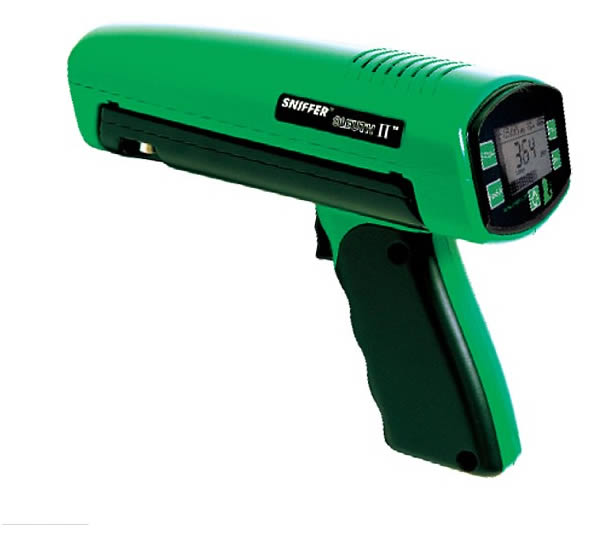
Everyone knows that texting while driving is extremely dangerous, but that doesn't stop some thoughtless motorists from trying to compose a message while flying along the highway. Now, one company claims to have developed a "texting gun" that can recognize the frequency of a text message, allowing police to fine people for doing it.
In the UK it is illegal to use your phone at all when driving, while the law varies in the US from state to state – most allow phone calls but no texting. Drivers caught using a phone in the UK can be charged up to $1,640 and also lose their license, although hands-free kits and sat navs are allowed. These inconsistencies can make it difficult for police to know if a person is indeed being distracted by their phone.
This led to Virginia-based company ComSonics to design a gun that can detect frequencies. The device, called the Sniffer Sleuth II, is currently in production, although no release date or price has been announced just yet.
According to the Virginian-Pilot, the gun can discern the different frequencies from a text message, phone call or data transfer. It apparently works by using similar technology to that of cable repairmen, who look for transmission "leaks" to find where a cable is damaged.
For states like Virginia – where talking on the phone while driving is legal, but texting is not – this could be especially useful.
2The anti-texting beer glass utilized by a Brazilian bar
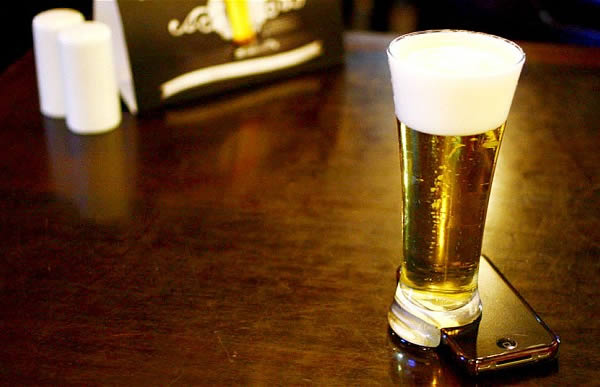
The worst texting offense of all sometimes happens at a bar or restaurant. A guy sitting with his girlfriend checks his Facebook while she contemplates how she's going to break up with him, or a small group of friends sit in silence and smile lifelessly at their phones. It's pathetic, but a lot of us are guilty of it.
The Offline Glass, developed by a Brazilian advertising agency, promises to end the scourge of drinkers eschewing the company of their friends in favor of some quality time with their smartphones. The ingeniously simple glass features a large indent in its base which means it will only stand upright when supported by a mobile phone.
It was designed by advertising agency Fischer & Friends and unveiled at the Salve Jorge bar in Sao Paolo. Hopes are high that the glass will give drinkers little chance but to ignore their phones in favor of their companions.
3The iPhone-shaped piece of plastic meant to cure smartphone addiction
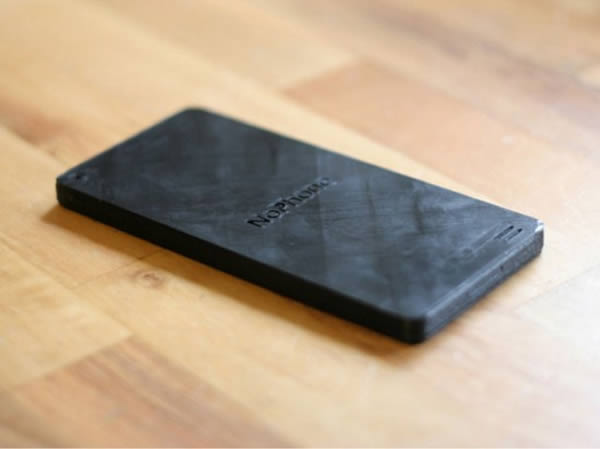
If you're secretly worried about your smartphone addiction, then the new NoPhone might be just the thing you need. It's the perfect smartphone placebo – it looks and feels exactly like a smartphone, but it does nothing. It's just a piece of plastic that you can carry around in your hand to fool yourself.
The NoPhone is currently a prototype that will cost a measly $12 once it hits the market. Its makers are trying to raise $30,000 on Kickstarter in order to cover production and marketing costs. They describe the device as a "technology-free alternative to constant hand-to-phone contact that allows you to stay connected with the real world."
Dutch designer Ingmar Larsen, who helped create the NoPhone, said that he conceived the idea as a joke along with friends Van Gould and Ben Langveld. To their great surprise, it received a lot of attention online and people from all over the world started placing requests for NoPhones of their own. The three friends then decided to turn to Kickstarter to fund mass production.
4The dinner game that makes diners more civilized
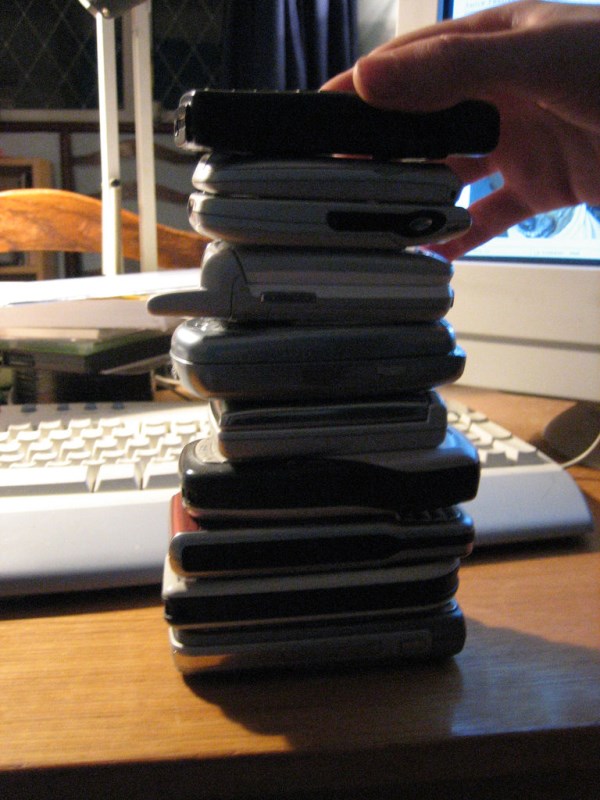
Don't you hate it when a nice meal with friends is constantly interrupted by beeping iPhones and Androids? Well, this buzzy game, created in 2012, is called "The Phone Stack" and offers an amusing solution.
Also known as "Don't Be A Di*k During Meals With Friends" the game tries to curb cell phone interruptions when dining out with pals. After everyone orders, they place their phones in the center of the table, face down. They may even stack the gadgets, as the name suggests. Even as the phones buzz and ring throughout the meal, no one is allowed to grab his device. If someone is unable to resist his smartphone's siren's song, he's responsible for picking up the check.
The woman who appears to have created the game, (a self-described 20-year-old named Stephie) pointed out on her site that stacking phones at the table isn't necessary, but it's more dramatic that way. Besides, it makes it much harder to sneak a peek at your phone when it's buried under three others.
5The "Ninjas" that shocks filmgoers into shutting up
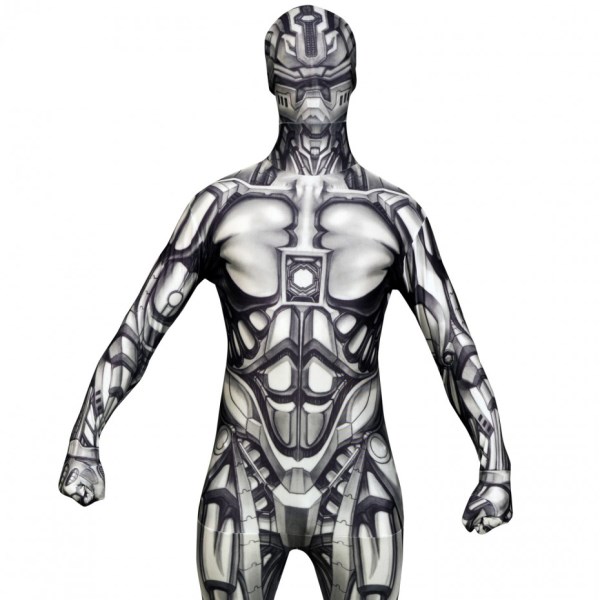
Everybody hates people who use their cell phones in movie theaters. In 2012, a theater in London's Leicester Square decided to take the matter into its own hands, or better yet, into a Ninja hands.
The Prince Charles Cinema is said to be employing volunteer “ninjas” to regulate good behavior among the audience. The term “ninja” is being used loosely here — they're really more like glorified ushers in black, skintight bodysuits — but whatever you call them, it's certainly an interesting way to keep the peace.
The so-called ninjas are ordinary cinephiles who agree to “guard” screenings in exchange for free admission. When they spot a patron talking, texting, throwing popcorn, kicking seats, or otherwise engaging in rude behavior, they swoop down to give the jerk in question a talking-to.
The scheme came about when Morphsuits co-founder Gregor Lawson found himself fed up with inconsiderate audiences he ran into at the theater. Lawson's Edinburgh-based company is known for their skintight full-body “zentai” suits, and he wondered if he could use his products to help solve the problem.
6The anti-texting thumb socks
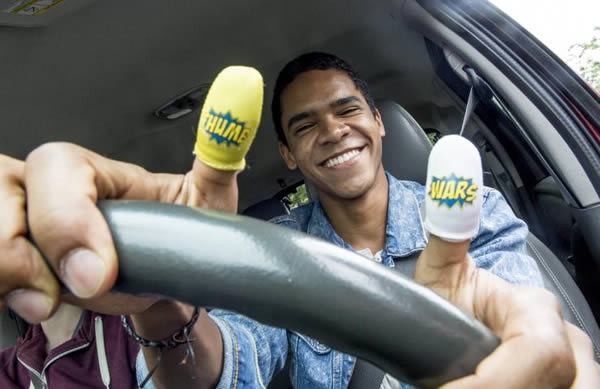
Until August 2014, DoSomething.org offered anyone interested a pair of thumb socks for free (with free shipping.) Yep, thumb socks. Cute finger-wear that make it impossible to text and drive. These accessories are meant to help discourage texting while driving, and add a certain pizzazz to your thumbs-up gestures.
7The app that rewards people for not texting during movies
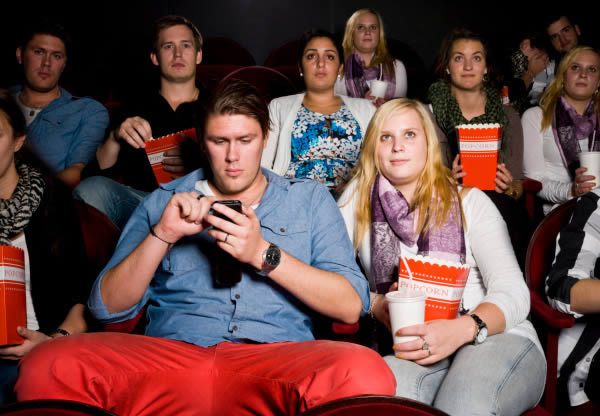
In 2012, one of the most popular movie theater chains in the world, Cinemark, debuted a new app to dissuade moviegoers from texting during movies. Here's how it works: when a movie starts, people are prompted to use the Cinemark app to put their phones into “Cinemode.” The program tracks whether or not the cell phone was used during the movie; if you're a good little girl or boy and manage to watch an entire movie without texting your friends or updating your Facebook status, you'll be rewarded with a discount coupon for your next movie ticket.
8The undercover police officers who dress as homeless people to spot texting drivers
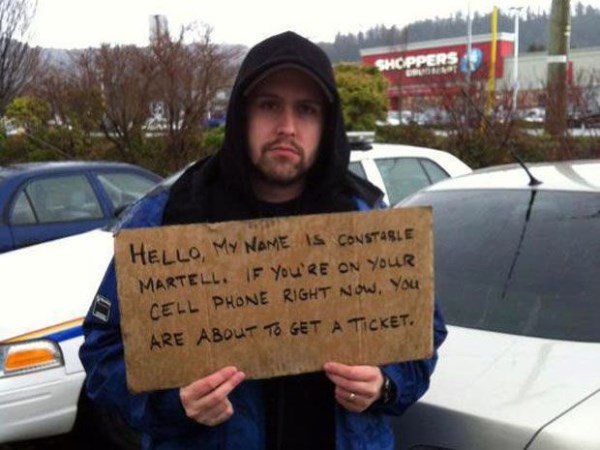
In Chilliwack, British Columbia, police officers disguised as panhandlers have become the Royal Canadian Mounted Police's newest tool in cracking down on distracted driving.
In 2012, RCMP Const. Bryan Martell appeared at a Chilliwack-area intersection dressed in a hooded jacket and ball cap – and sporting a few day's growth of beard. Wandering alongside stopped vehicles he carried a cardboard sign reading “Hello, my name is Constable Martell. If you're on your cell phone right now, you are about to get a ticket.”
If he spotted a driver texting talking on his cell phone, Cst. Martell radioed ahead to a uniformed officer who would then ticket the vehicle. The tactic is dubbed "Hobo Cops."
As a result of a one-day blitz, officers handed out 21 tickets and gave out countless verbal warnings. Since February 2010, British Columbians have been barred from using any sort of handheld electronic device while driving.
9The LA restaurant that prohibits all cell phone use

Chef Evan Funke's dining room, Bucato, prohibits all cell phone use, including photography and texting. Diners can use their phones only within “designated cell phone areas.” When asked to elaborate on the policy during a media preview, GM Ed Keebler lambasted the increased use of cell phones during meals, claiming they contribute to "gastro ADD." Instead of broadcasting food to the outside world using Instagram, Twitter, or Facebook, customers will be encouraged to "share their meal with fellow diners."