
- Would being forced to eat Vegemite be a crueler punishment?
Spiders of unusual size, kangaroos, and Vegemite. These are scientifically proven to be the things that define the experience of being Australian.
Andre McKehnie, however, feels like he isn’t being allowed to express his nationality. For more than three decades, he has not been allowed to eat Vegemite.
That would be because he’s serving a life sentence for murder.
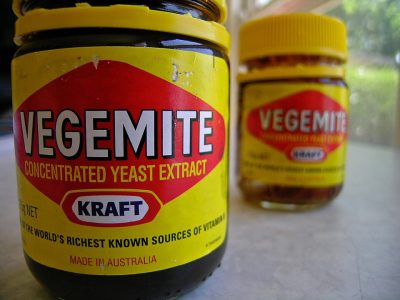
In some Australian prisons, Vegemite is banned due to concerns that its pungent smell could distract drug-sniffing dogs. Despite some evidence to the contrary, prison authorities also believe that the yeast extract spread could be fermented into alcohol.
McKehnie, however, believes that depriving him of Vegemite equals to depriving him of his Australian identity. So, last year, he sued the prison system, seeking to overturn the Vegemite ban.
Recently, his case reached Australia’s Supreme Court. The top judges in the country have now laid down the final decision.
Although they recognized that the ban did limit McKehnie’s cultural rights, he still can’t have Vegemite.
Vegemite-Loving Murderer
Let’s start at the very beginning of this strange court saga. McKehnie was sentenced to life in prison in 1994 for the murder of Otto Kuhne, a property developer.
Following a couple of transfers, McKehnie has been serving his sentence in the Australian state of Victoria since 2004. He soon discovered that some of the state’s prison regulations chafed him the wrong way.
Particularly, he couldn’t get over the fact that he can’t have Vegemite in prison.
According to Corrections Victoria, the state’s prison authority, Vegemite could be used to distract drug-detecting dogs due to its strong odor. What’s more, the agency claims Vegemite could be fermented further into alcohol within the prison.
That’s despite the fact that Vegemite manufacturer Mondelez has disputed this claim. The company states that the production process kill all yeast in Vegemite and it can’t be turned into booze.
Human Rights Violation
In November 2025, McKehnie decided to fight back. He filed a lawsuit against Corrections Victoria.
In the lawsuit, he argues that not being able to eat Vegemite deprives him of his identity as an Australian. And if you go strictly by the letter of the law, he does kind of have a point.
Australia’s charter on human rights states that all people “with a particular cultural, religious, racial, or linguistic background” must be allowed to “enjoy their culture, to declare and practice their religion, and use their language.”
Vegemite is part of McKehnie’s culture, but he’s not allowed to enjoy it. Thus, Corrections Victoria is impinging his constitutional rights.
To refute the prison’s claim that the Vegemite ban was necessary to prevent drug and alcohol consumption, McKehnie pointed to other states that do allow Vegemite. Obviously, he argued, there must be alternative methods to keep intoxicants out of prisons.
Additionally, McKehnie had earlier argued that the Vegemite ban had contributed to his poor health. He claimed that he suffers from a deficiency of vitamin B1, which is found – for example – in pork and Vegemite.
As a Jewish person, McKehnie said he couldn’t eat pork. Before prison, he had been getting his vitamin B1 from Vegemite. Now, he had no access to that source, leading to health issues.
However, he dropped this argument at one point during his court case. Guess he’s not as sick as he claimed.
Justifiably ‘Limited Cultural Rights’
McKehnie’s lawsuit moved through the courts until it landed in Australia’s Supreme Court. On October 26, 2026, the high court gave its decision on the matter.
McKehnie lost and will not be able to get his Vegemite.
In a 47-page decision, Justice Claire Harris laid down her reasoning for the decision. Surprisingly, she did agree with McKehnie’s basic premise.
According to Harris’ decision, the state of Victoria’s Vegemite ban “limited [McKehnie’s] cultural rights.” On paper, she stated, that was a violation of the human rights charter.
However, she found that Correction Victoria was justified in limiting prisoner access to Vegemite to maintain order and keep illicit substances out of prisons. According to her decision, that goal carried more weight than McKehnie’s right to consume Vegemite.
“The limitation on Mr. McKechnie’s ability to enjoy Vegemite in community with other persons of Australian background is primarily that he is a prisoner,” Harris wrote. Vegemite wasn’t off-limits because the prison had anything against his cultural background – it was a safety measure, she found.
With that, the Vegemite court case has come to a close. I’ll let you decide if not having access to the stinky spread counts as a cruel and unusual punishment.