
- You don’t need to be an extraterrestrial to be okay in space.
Space is not the place to be. Unless you’re an alien, no living thing can withstand the horrible conditions of the void.
Or so you might think. As it turns out, though, there are plenty of creatures that are perfectly fine with a trip to the orbit – or even long-term exposure to the vacuum of space.
Here are seven incredibly tough animals that can (more or less) shrug off a space voyage.
1. Fruit Fly
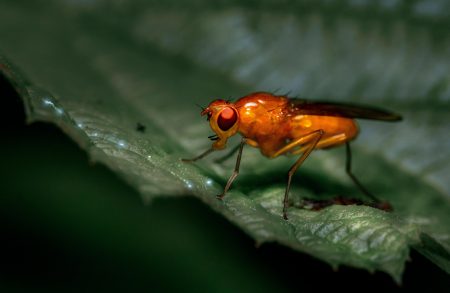
Soviet space dog Laika is often credited as the first animal in space. Not to diminish the cute puppy’s sacrifice (she didn’t survive), but she wasn’t actually the first.
Fruit flies were.
In 1947, the U.S. launched a bunch of fruit flies into space to examine how exposure to cosmic radiation affects living beings in preparation for human space trips. It turned out that flies don’t really give a hoot or a holler whether they’re in space or on Earth and returned from the flight unharmed. They’ve since been used in countless experiments to research various aspects of space travel.
This probably doesn’t surprise anyone who’s tried exterminating fruit flies from their homes. They’re tough little buzzers.
2. Jumping Spider
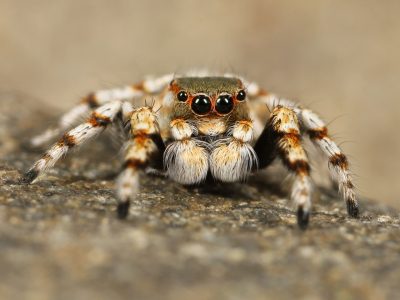
It took six decades for fruit flies’ natural predator to reach them in space. In 2012, a jumping spider dubbed Nefertiti flew to the International Space Station (ISS).
Scientists were curious how the spider would hunt in zero gravity – or whether it could survive in space at all. Much to their surprise, Nefertiti cared about being in space about as much as the flies she went after.
The spider had absolutely no issues stalking unsuspecting flies before leaping at them. Frankly, to the flies, the whole experience must’ve been like the movie Alien.
3. Mummichog Fish
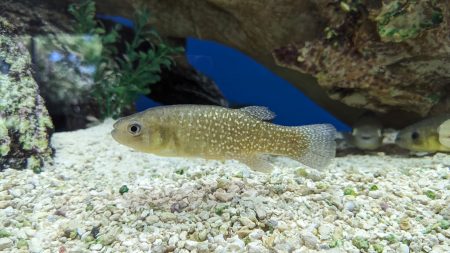
The mummichog is a small fish that swims around the coasts of North America. In 1973, several mummichogs were launched to the Skylab space station to find out whether having no gravity would affect their swimming.
Not so surprisingly, it did. Fish use gravity to determine which way is up, so during their first days in space, the confused mummichogs swam around in erratic circles.
However, they soon got accustomed to their new living space. Within a week or so, they’d learned to orient themselves using the space station’s lights and started swimming as if they were back on Earth.
4. Roundworm
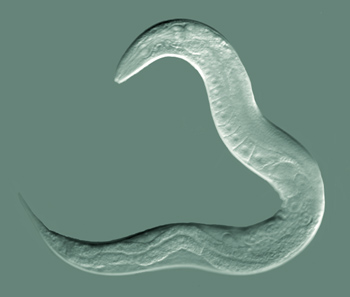
Caenorhabditis elegans is a tiny roundworm that is commonly used to examine the effects of aging and other biological systems. As such, they’ve also made it to space.
Not only can C. elegans survive on spacecraft, but they can also withstand exposure to the void of space. When blasted by radiation in the vacuum, the worms shrivel into a dormant state, from which they can later bounce back.
In fact, the best demonstration of their resilience came in the aftermath of the 2003 Columbia Disaster. Surviving C. elegans were recovered from the wreckage, having lived through both space exposure and the shuttle’s disintegration.
5. Cockroach
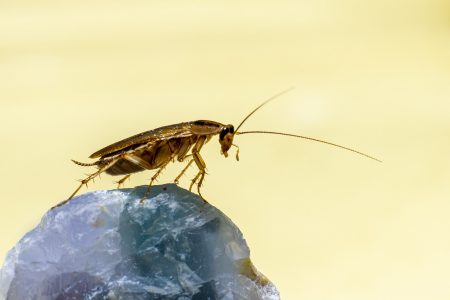
Cockroaches are infamously prophesied to inherit the planet, being able to survive almost anything on Earth. It’s really no surprise then that the verminous bugs aren’t bothered by getting launched into space, either.
Russian scientists sent a cockroach they’d named Nadezhda into the orbit in 2007 aboard the Foton-M 3 biosatellite. In space, she received such massive doses of cosmic radiation that a human would’ve dropped dead within minutes.
But not Nadezhda. The cockroach returned to Earth and promptly produced 33 baby roaches.
Curiously, her offspring’s carapaces were much darker than normal cockroaches’, but they had otherwise no health problems. In turn, their babies – that is, Nadezhda’s grandchildren – were perfectly normal, disgusting cockroaches.
6. Tardigrade
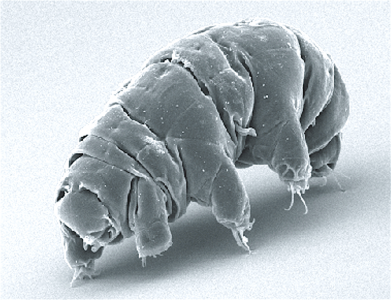
Tardigrades, also called water bears, are tiny, eight-legged, tube-faced creatures that live practically everywhere on Earth. From freezing Antarctic valleys to blistering rainforests, they can adapt to anything.
That includes space. Scientists have launched tardigrades into the orbit and exposed them to the most horrific cosmic conditions they can cook up – and the things just don’t care.
Their secret lies in their ability to practically mummify themselves. If things get too tough, they dry themselves out and wait for the hard times to pass before popping back to life.
No wonder they’re one of the most hardcore animals in the world.
7. Deinococcus Radiodurans
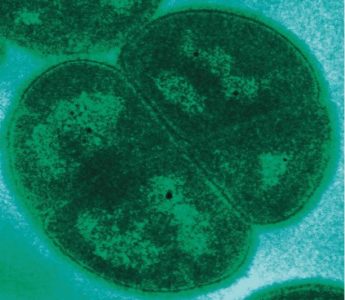
Our last spacefaring badass isn’t really an animal, but a bacterium. However, considering how resilient these things are, I say they deserve a spot on this list.
Just their name tells you immediately what these bacteria are about. Their scientific name translates roughly to “horrible radiation-resistant bacterium.” Researchers, meanwhile, have nicknamed them “Conan the Bacterium.”
- radiodurans can withstand 5,000 Grays (Gy) of cosmic radiation without breaking a sweat. You, meanwhile, can take about 5 Gy before you start experiencing insurmountable difficulties with continuing to live.
These bacteria have stayed in the vacuum of space for more than three years. Even after all that time, they’ve been no worse for wear.
Want to know more about how things live in extreme environments? Check out these 8 totally inhospitable places where life still goes on.