
- Weird-bottomed beasts, you make the rocking world go ‘round.
Nature is wild, and you can never trust that certain things are the same from species to species. For example, animal genitals can get mindbogglingly bizarre — or even deadly.
But what about butts? They’re just holes to expel waste, surely they serve the same purpose whatever animal you’re looking at?
Oh, you sweet innocent thing. Come with us, as we dive straight into the strangest bottoms out there.
Manatees’ Propulsive Butt Blasts
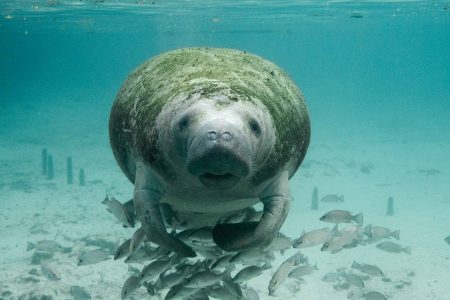
Most marine mammals — think whales — have collapsible lungs that allow them to retain or expel air to regulate their buoyancy. Manatees, on the other hand, decided to go a bit of a different route.
Instead of air, their gas-based buoyancy system depends on their intestinal gases. Yes, we’re talking about their farts.
Manatee diaphragms and intestinal tracts are incredibly muscular, giving them precise control over when, where, and how much they fart. If a manatee needs to get to the bottom of things, it just lets one rip and sinks a bit deeper into the water.
And if it needs a bit of extra propulsion to make a speedy move, well… You can guess how that works.
The Butt-Breathing Turtle
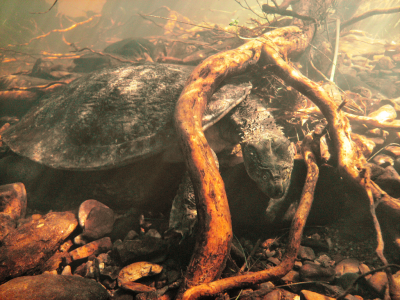
You know home some people have their heads way too far up their own ass? The Fitzroy River turtle had it so deep that it eventually started breathing out of its butthole.
Now, it’s really nothing weird about turtles absorbing miniscule amounts of oxygen through their butts — many species do that. But the Fitzroy River turtle doesn’t half-ass things and it takes nearly three-quarters of its oxygen in through its gaping anus.
We’re not exactly sure why the turtle chose to live like this. And yes, it’s a choice — it has a perfectly functional set of lungs but it prefers to such oxygen from the water with its butt instead.
We suppose it helps the turtle avoid predators. After all, thanks to its ass-inhalation ability, the turtle can remain underwater for weeks on end.
Pygmy Sperm Whales’ Anal Syrup
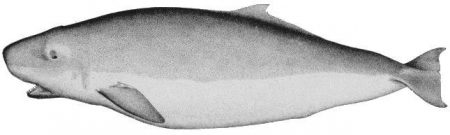
If we had to choose two words that REALLY shouldn’t go together, “anal” and “syrup” would be pretty high up on the list. But the pygmy sperm whale doesn’t give a hoot or a holler about propriety.
So, as you probably already guessed, pygmy sperm whales produce something called anal syrup. And you don’t want this stuff on your pancakes.
You see, although it’s a whale, the pygmy sperm whale isn’t that big — it’s only 11 feet long. That means that it’s relatively vulnerable to predators, as far as whales go.
Let’s say a hapless predator (who’s clearly never encountered one of these whales before) starts threatening the pygmy sperm whale. The whale is going to respond by squeezing up to 11 gallons of thick, sticky, disgusting, vile, noxious orange-red goo out of a special bladder at the end of its intestines.
Unsurprisingly, it’s an extremely effective defense. Marine biologists call it a “poo-nami.” No, we’re still not joking.
Sea Cucumbers’ Toothed Anus (to Keep Fish Out)
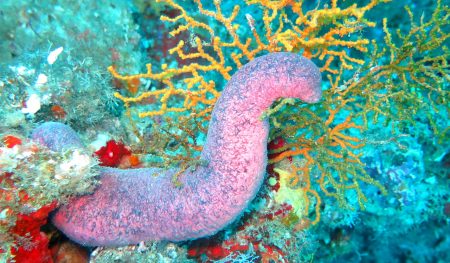
Imagine you’re a sea cucumber, oozing along on the ocean floor and doing whatever it is sea cucumbers do. Suddenly, you feel a strange sensation in your anus.
Don’t worry, it’s just a pearlfish. Actually, do worry, because it’s swimming up your ass.
Pearlfish like to crawl sea cucumber butts because it’s a reasonably safe location for them to take a bit of a break. Additionally, if they get peckish, they can snack on the sea cucumber’s gonads and respiratory organs.
Not that sea cucumbers are blessed with a lot of brainpower, but even they understand that this isn’t an ideal situation. So, some species of sea cucumbers grew anal teeth to keep fish from getting all up in their guts.
We’ll just assume that those that didn’t are kind of into the whole thing. Oh yeah, and like the Fitzroy River turtle, sea cucumbers breathe through their asses.
100 Worm Butts with Brains and Eyes
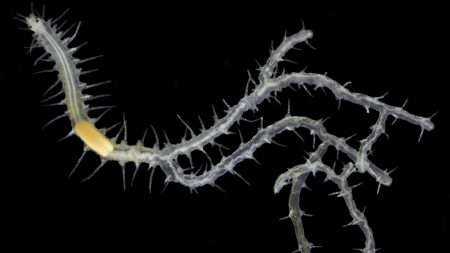
While some animals have bizarre behinds, at least they all agree on one thing — you only need one butt. But a certain sea worm clearly missed that memo.
Ramisyllis multicaudata is one funky worm. Like many plants and fungi, it grows a branching body.
That means that the worm has one head, but potentially hundreds of butts. As it grows, its body splits into multiple segments — like a tree branch.
If that’s the way the worm wants it, that’s how it gets its. But what about when it’s time to get amorous? Isn’t it kind of hard to find the right orifice to stick it into when there are hundreds of them?
It could be, but the Ramisyllis is a busy worm — it doesn’t have time for sex. When it’s time to procreate, one (or more) of the worm’s butts grows a brain, eyes, and other necessary organs, and detaches from its parent.
Then the newly-spawned butt worm swims away to find something to mate with. Meanwhile, its parent proceeds to grow more asses.
The Butt-less Face Mite
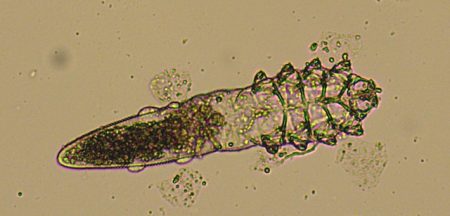
So, the Ramisyllis has way too many butts. The microscopic Demodex — or the face mite — went in the exactly opposite direction.
It has no butt. Zero, none. It was born ass-less and it will die ass-less.
Their ancestors pooped through their mouths, but not Demodex. They will never poop ones in their lives. All the waste the produce packs up in their gut cells.
That might explain why the Demodex has the whopping lifespan of about two weeks. When they die, they disintegrate and their waste spreads all over their residence.
By the way, guess what that residence is? Here’s a hint — they’re not called face mites because they have a face.
That’s right. They live on your face.