
- And now you know...
Living in California without a private means of getting around can take off half of the city’s thrills. When you’ve had enough and opted to get your vehicle, everyone points you to the DMV as the go-to place for getting your license.
Applying for a driver’s license in California without knowing what the princess entails will have you waiting fruitlessly for months. One of the primary elements that determines the success of this adventure is the outcome of your license exam.
You’ll be required to take various assessments to prove to the California authorities and yourself that you have the necessary experience to tour California roads. This practice test site will help you increase your chances of passing on your first try.
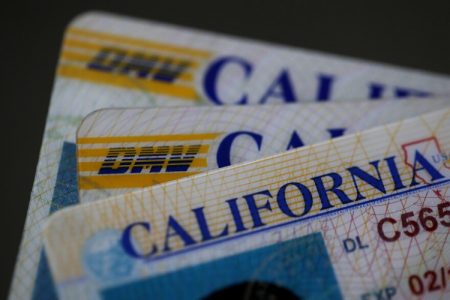
Different Types of Driving Licenses
There are different types of California driver’s licenses. Before heading down to the California DMV practice test, you should get proper enlightenment about the different types and which of them is most suitable for you.
Here are the primary types:
- Class C License: Your standard driver’s license, ideal for everyday vehicles.
- Class A License: For big rigs and heavy-duty trucks.
- Class B License: For buses, delivery trucks, or larger non-passenger vehicles.
- Class M1 License: To ride motorcycles legally.
- Class M2 License: For motorized bicycles and scooters.
- Class C Commercial License (with passenger endorsement): For driving passenger vehicles.
- Class C Commercial License (with hazmat endorsement): Required for transporting hazardous materials.
- Class C Commercial License (with tanker endorsement): For driving tanker trucks carrying liquids.
Criteria for Eligibility
Here are the eligibility requirements for obtaining a driver’s license in California:
- You’re above 16.
- You have a legal presence in California.
- You’ve had your legal permit for a minimum of 6 months.
- You’ve completed your driver education and training.
- You passed the licensure exam.
- You passed the knowledge test.
- You passed the vision test.
How to Get a Driver’s License
The official process involves different steps and procedures, all of which are necessary to ensure that drivers are safe and knowledgeable. Here is a detailed breakdown of all the necessary steps.
If You’re Below 18
- If you’re under 18, apply at a local DMV to get a learner’s permit.
- Thereafter, you’ll have to complete 6 hours of professional behind-the-wheel training with a licensed driving school.
- After getting the permit, you’ll be required to wait at least six months before applying for a provisional license. During this time, you must complete 50 hours of supervised driving, including 10 at night with a supervised adult.
If You’re Above 18
- Visit the DMV and fill out the application form.
- Provide a valid ID.
- Check with the DMV for the most current fee schedule and pay the required fees.
- Pass the written test
- Schedule a vision test.
- Present the necessary documentation.
- Schedule and pass the behind-the-wheel driving test.
Applying as a Non-American
The ball game is a tad different if you’re new to the country. Candidates typically have to jump through a few more hoops than usual. However, the process can be quite straightforward, especially with the right guidance. Also, some of the steps can be completed online.
- First, you’ll have to fully register yourself as a legitimate resident of California (this includes becoming a registered voter, signing up for taxes, or even paying college tuition).
- Reach out to a local DMV within ten days of your arrival.
- Schedule an appointment with your DMV (or simply show up and join the queue).
- Complete the license application when it’s your turn.
- Give them all the necessary personal information (e.g., social security number, proof of residency, etc.).
- Have your photos and fingerprints taken.
- Pay the required fees.
- Pass the vision exam.
- Collect your license (or permit, as the case may be).
- Schedule and pass the behind-the-wheel assessment.
What Comes After
Completing the license exam is a pivotal step, but what comes after is also quite important. After passing the exam, you’ll get a temporary paper license that you can typically use for a 60-day period.
While you wait, the DMV works to process your official license, and they’ll send it to your registered address by mail. This process usually takes a few weeks.
If you’re over 18, the license grants you full driving privileges. If you’re under 18, however, you’ll have to abide by the restrictions of the Graduated Driver Licensing Program. These limitations include not driving at night, not driving whenever you’ve had even the tiniest sup of alcohol, and also not driving without the presence of a legal adult.
You’ll also have to go through regular renewals and maintain accurate contact information with the California DMV. Above all, being a responsible driver is not only a privilege but also a duty; you have the mandate of keeping yourself and everyone else on the road safe.
FAQs
How much will it cost to get a driving license in California?
The application fee for a driver’s license in California is $41. However, there may be additional costs that may spike the fee. You may have to pay for the written and behind-the-wheel tests. If you do not have any existing documents, you may also need to pay certain fees to acquire them. Be sure to check the most up-to-date fees on the California DMV website.
How long does it take to get a California driving license?
The time frame for the entire procedure depends on several factors, such as your age, how quickly you complete the required driver’s education and practice hours, and DMV appointment availability. Some people may take several months to obtain a learner’s permit to get a full driver’s license.
Can you use a non-American driving license in California?
Yes, California, like many U.S. states, allows individuals with a non-U.S. driving license to drive within the state. But they can only do this for a limited period. The license also has to be in English. The specific requirements for transferring a foreign driver’s license can vary based on your country of origin and residency status.
Can non-Americans obtain a driving license in California?
Of course. Non-Americans can obtain a driver’s license in California, but only if they follow specific requirements and procedures. Certain factors, such as the individual’s immigration status and the duration of their stay in the United States, also come into play.
If you’re not a citizen, you should confirm with the California Department of Motor Vehicles for the most up-to-date guidance and information.