
- Forget about heroin or cocaine, it’s ‘everything’ seasoning we need to worry about.
Some things are sure to get the alarms blaring if you show up at an airport with them in your bag. The list of contraband includes firearms, drugs, exotic animals, and human remains.
Oh, and bagel seasoning. At least if you’re arriving in South Korea.
The American grocery store chain Trader Joe’s has exploded in popularity in Asia over the recent years. In South Korea, however, one of its seemingly innocuous products has found itself in the crosshairs of airport and customs officials.
We’re talking about the Everything but the Bagel seasoning. There’s currently a full-blown crackdown going on in South Korea’s airport against travelers bringing the spice blend back into South Korea.
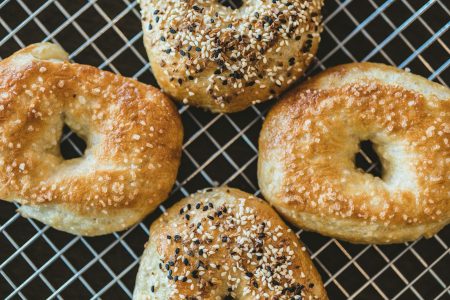
It’s all for a strange reason — the seasoning blend contains poppy seeds.
An Unlikely Fashion Brand
First, some background. Trader Joe’s is popular in the U.S., but the brand has also really taken off in parts of East Asia, especially Japan and South Korea.
And it’s not just about buying your groceries at Trader Joe’s. For some reason, the store brand has turned into a fashion icon.
For example, Trader Joe’s at one point sold small canvas tote bags for $2.99 a pop. On Japanese eBay, fashionistas have paid $2,999 for one bag — a thousand-fold price increase.
It’s all part of Amerikajin fashion, or America-core if we want to localize the term. Everyday American stuff is just cool over in Asia, at least among some people.
That said, South Koreans and Japanese do like Trader Joe’s for its food products, too. In particular, they’ve gone crazy about the Everything but the Bagel seasoning.
Food influencers on Asian social media have gone all in on the “everything” label. They regard the seasoning mix as a universal shortcut to deliciousness, putting it on anything from eggs to fish and soups.
As such, it’s no wonder South Korean tourists visiting the U.S. want to bring the fashionable American seasoning back home with them. They go to Trader Joe’s, buy a couple of shakers of Everything but the Bagel, and fly back home to South Korea.
And as soon as their plane touches the ground, they turn into drug-smuggling criminals.
Crackdown on Flavor
At the heart of the Trader Joe’s seasoning drama are poppy seeds. Although they’re commonly used as a flavoring in the U.S., poppy seeds are an illegal narcotic in South Korea.
Just in case you didn’t know, the poppy plant is the source of all (non-synthetic) opiates. That includes such delightful substances as opium, heroin, morphine, codeine, and others.
Due to this connection, anything poppy-related — including its seeds — is illegal in South Korea.
There was a time when you probably could’ve gotten past customs with a shaker of everything seasoning in your bags. Recently, however, South Korean authorities have gone all in on cracking down on poppy smugglers.
“Seed products with narcotic substances have always been banned from being brought into Korea. Recently, the customs offices have been strengthening crackdown on narcotic-related items,” a spokesperson of the Incheon Airport in Seoul told CNN.
Many South Korean airports now contain large posters informing travelers that Trader Joe’s everything seasoning is an illegal product. The posters feature a picture of the product and specify that it’s the poppy seed content that poses a problem.
In addition, customs officials have gone traveler to traveler at airport lines, showing them pictures of the seasoning jars and asking if they’re carrying some. Should they find a hapless (and often unwitting) drug smuggler, they’ll confiscate the jars.
Most people seem to get by with a slap on the wrist as long as they surrender the offending seasoning. Sometimes, however, there are more serious consequences.
According to The Guardian, one South Korean woman returning from her honeymoon in the U.S. earned an official record for drug smuggling. For having a bag of Trader Joe’s Everything-coated nuts, the customs made her sign a document where she declared she had brought illegal narcotics into the country.
False Positives
South Korea isn’t the only country in the world that restricts poppy seeds. The United Arab Emirates, Taiwan, Saudi Arabia, and Singapore have also banned the popular spice.
But is there any actual basis for the blanket ban? Well, no but yes.
The poppy seeds you buy from the spice aisle are technically harmless. Opiates are derived from the latex secreted by the plant and there’s none of that stuff in the seeds.
However, during harvesting, some seeds might be contaminated with tiny amounts of the forbidden poppy goo. It’s not enough to produce any psychoactive effect — but it might show up in a drug test.
As such, organizations from the U.S. Department of Defense to the U.S. Anti-Doping Agency recommend service members and athletes avoid eating poppy seeds.
Of course, there’s also the chance that somebody might grow poppies from poppy seeds. Those plants could then theoretically be harvested for their latex and used to produce opium.
That said, we doubt anyone trying to establish a drug farm by sprinkling Trader Joe’s spice mixes into pots will have much success.