
- They seem to have had a good time for as long as it lasted.
There can be all kinds of nasty things lurking in murky ponds, from mosquitoes and giant water bugs to leeches and more. But hey, at least you don’t have to worry about sharks.
Unless you’re in Australia. Because bizarre, deadly wildlife is always a concern in Australia.
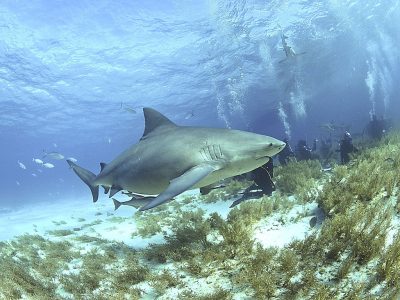
For nearly 20 years, a pond at the Carbrook Golf Club was infested with huge bull sharks. That’s weird for quite a few reasons.
Sharks generally live in the salty seas, but the pond is full of freshwater. A remnant of a sand quarry, there shouldn’t have been anything in there for the sharks to eat — yet they survived very well.
Until they didn’t. The sharks were last seen in 2015 and the pond is today assumed to be sharkless.
While they were there, though, the sharks became a beloved attraction at the gold course. And why wouldn’t they — they couldn’t harm anyone, as long as golfers didn’t dive into the pond after lost balls.
The rise, success, and fall of the golf club bull sharks was a series of unlikely events that came together just right. This is their weird story.
Oceanic Immigrants
According to new research on the pond sharks, they were first spotted at the Carbrook Golf Club’s pond in 1996. However, they may have already been living there for a few years at that point without anyone noticing.
But how on earth did they get into the pond that’s more than six miles from the ocean?
Well, the first thing you should know about bull sharks is that they don’t mind fresh water. Sure, they’re an oceanic species but they can survive in unsalted water just fine.
As such, they tend to travel upstream from river estuaries. They can easily swim six miles inland from the ocean.
And what’s that meandering by the Carbrook Golf Club? Why, it’s the confluence of Logan and Albert Rivers!
But even if there were sharks in the river, they still couldn’t crawl across land to get into the isolated pond. Not unless the river were to flood or something.
And that’s just what it did. The Logan River experienced five flooding events between 1991 and 1996, during which the rising water levels connected the pond and the river.
The only reasonable explanation is that during one (or several) of those floods, at least six bull sharks swam into the pond. Once the floodwaters receded, they became trapped.
Getting Big
So, the sharks were now stuck in the pond — and that should’ve been a death sentence for them. According to marine biologists who have studied the sharks, they were juveniles when they entered the Carbrook pond.
Juvenile sharks need a lot of food. But the pond is the remnant of a previous sand mining operation and apart from some algae and whatnot, it’s essentially sterile.
What did the sharks eat? Wayward golfers?
The same floods that brought in the sharks happened to also create a thriving fishy ecosystem in the pond. Mullet, red snapper, tarpon, and other kinds of fish swam into the ponds with the sharks.
The smaller fish began thriving, which in turn provided the sharks with an abundant food source. And they didn’t have to share it with other predators, considering the bull sharks were the biggest things around.
As such, the young sharks grew big and strong over the years, swelling to nearly 10 feet in length. Golfers and the golf club management took note — and they liked what they saw.
The bull sharks turned into the golf course’s more-or-less official mascots. After all, where else could you golf around out-of-place man-eating sharks?
Oh yes, they are man-eaters. Bull sharks are possibly the most aggressive shark species toward humans, so swimming in the pond would’ve been a fantastically terrible idea.
We’re happy to say that as far as we could find out, no one ever tried it — outside of carefully controlled circumstances.
And Then There Were None
For 19 years, the sharks thrived in the golf course pond. And then they didn’t.
The last time anyone saw them was in 2015. Since then, there has been no sign of them and although there may still be a shark somewhere in the pond’s depths, it’s largely considered shark-free now.
What happened? Did they all drop dead?
Some of the sharks definitely died. One shark was spotted floating upside down in the pond at one point, and illegal fishing at the pond has verifiably caused another shark to die.
Others may have died and sunk to the bottom or had their carcasses devoured by their brethren. Yet, researchers suspect at least a few of the sharks left through the same door they entered.
The Logan River flooded again in 2013, briefly connecting with the pond. It’s quite likely that a shark (or two or three) took this opportunity to return to their ancestral ocean.
It’s a pity that a fascinating demonstration of sharks’ adaptability has disappeared. Then again, they were never supposed to be in the pond in the first place.
If even a couple of them could grow safely into adults and then return to their oceanic home, we’ll say the Carbrook pond did well for the sharks.