
- Is that a rocket in your pocket? Please, please tell me it’s just a rocket.
Animals do things differently. That includes what they carry in their no-no zones.
When it comes to animal genitalia, it gets really strange, really quickly. Reproductive competition is fierce in nature, so critters end up developing some seriously funky equipment to ensure they get to carry on their legacy.
We’ve covered this subject before, but there’s a lot more left to talk about. So, let’s pull down their proverbial pants and check out what kinds of weirdness some animals carry between their legs (or elsewhere).
Oh, and if you’d prefer to avoid animal genitalia, go read this article about the cutest animals you didn’t know about.
1. Echidna’s Four Branches
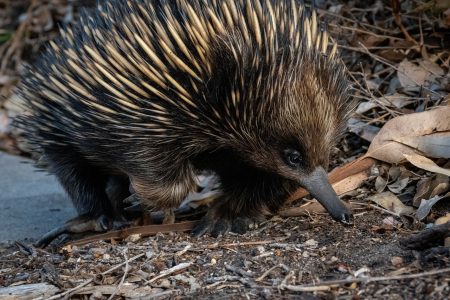
Echidna reproduction is already pretty weird, what with them being egg-laying mammals. Yet, making that egg happen in the first place requires some strange tools.
Namely, the male echidna’s penis spreads into four branches at its head. If they’re all locked and loaded, so to speak, the whole thing is too big for the echidna to have sex with.
So, to be able to reproduce, only two of the heads get ready to go at a time. It’s not entirely clear why they need such a complex dong, but biologists believe it’s due to the intense competition between males.
During mating seasons, a single female echidna may be shadowed by up to a dozen males. The four-headed penis essentially gives the male extra ammunition — after taking its first shot, it swaps sides like magazines and is ready to get back into the fray.
2. The Penis-less Tuatara
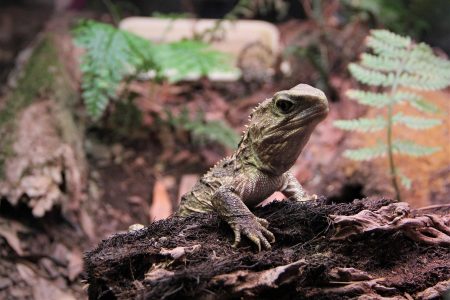
The males of most reptile species boast not just one but two dongs in an organ known as hemipenes. In this company, the tuatara may feel a little inadequate.
After all, it has no penis at all.
Despite its looks, the tuatara is not a lizard. It’s part of a much older lineage, and for some reason, the species’ males lost their wangs along the evolutionary road.
To make babies, the tuatara goes at it like birds. They rub their genital openings together and hope it gets the job done.
3. Exploding Bee Stingers
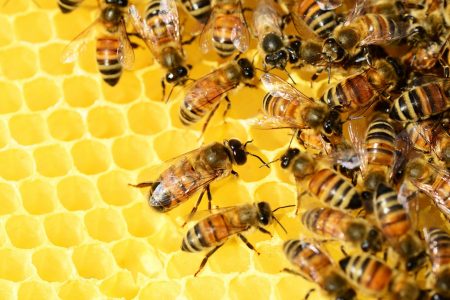
You’re probably aware that most worker bees are female, and their stingers rip off after use, killing their previous owners. Well, male bee drones are kind of similar.
After mating with the queen, the drone also loses its “stinger.” Its genitals quite literally explode inside the queen, instantly killing the drone.
Yet, the drone’s mangled endophallus is now stuck in the queen, forming what’s called a “mating plug.” This prevents other males from inseminating the queen and ensures the first drone’s genes are passed on.
Is it really worth it? Your call.
4. The Ducky Corkscrew
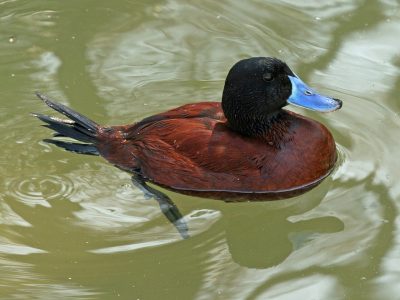
You might bring a corkscrew to the bedroom to pop a bottle of wine to set the mood. The Argentine lake duck brings it as the main attraction.
These ducks carry a ridiculous, 17-inch-long, corkscrew-shaped penis. Proportionally speaking, it has the biggest wang out of all vertebrates.
That’s doubly impressive because most male birds don’t have penises at all.
Yet, the lake duck male needs the bizarre corkscrew to navigate the female’s labyrinth of a vagina. Why on earth would the ducks make reproduction so difficult?
If you want to know why (though be fairly warned), check out our article on 5 animals that turn sex into a nightmare.
5. Spider Monkeys’ Pendulous Lady Parts
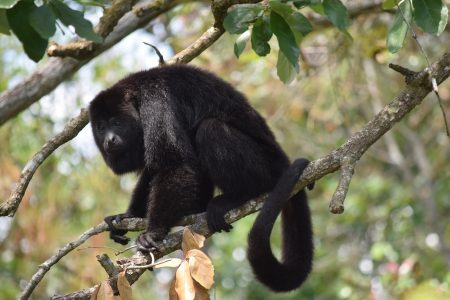
Look at the spider monkey up in the tree. Why, judging by the huge thing hanging from its crotch, it must be a male!
That’s where you’d be wrong. That monkey is a girl, and the pendulous thing is her clitoris.
This is how female spider monkeys attract males. By checking out her floppy lady parts, the males can immediately tell if she’s down to get dirty without wasting time and effort on fruitless courtship.
Sounds pretty handy, as long as the males aren’t too self-conscious about size. The female’s clitoris is, after all, typically a lot longer than the male’s penis.
6. Sharks and Their Claspers
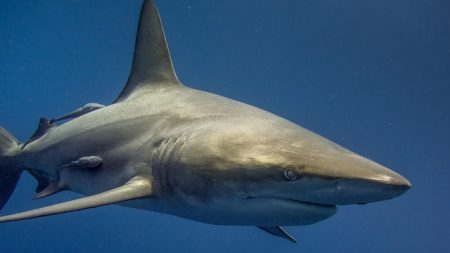
Imagine that you’re a shark. Now, imagine trying to make a baby shark (do-do-doo) with some sharp-toothed hottie while bobbing up and down in the ocean and being tossed around by water currents.
Sounds difficult, right? Sharks thought so, too, and that’s why male sharks developed claspers.
They’re exactly what they sound like. Located near the shark’s genitals, the claspers are small, flexible bits that allow the male to hang on to the female and prevent rogue waves from pulling the two apart.
In some shark species, though, the claspers also feature hooks or spines. We can’t imagine that being too comfortable for her.
7. Argonaut’s Autonomous Penis Delivery
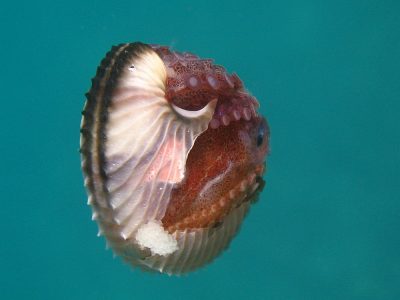
These days, you can get practically anything delivered to your door. If you’re a female argonaut octopus, that includes a penis ready to mate.
Apparently the male argonaut octopuses are too busy with their hobbies (or whatever it is octopi do) to bother looking for and courting a female. So, their penises — or hectocotyli, if you speak nerd-ish — have taken the same approach as autonomous food delivery vehicles.
The male simply rips off its sperm-carrying tentacle and tosses it into the currents. Fortunately for argonauts as a species, the hectocotylus has everything it needs to swim around and find a female.
In fact, when marine biologists first encountered an argonaut penis, they thought it was a parasitic worm going after a female. It took several years before they realized that upon spotting the “worms,” the females would grab and stuff them in…
Well, let’s leave it there.