
- Who knew that even cheese needs genetic diversity?
Do you like fine French cheese with a glass of nice wine? Well, you might not have a whole heck of a long time left to enjoy your little luxury.
That’s because certain cheeses are becoming threatened species — or more precisely, the fungi used to make them.
As you may or may not know, Camembert, Brie, and other white cheeses are moldy. Unlike the fuzzy stuff growing on the block of Swiss you forgot in the back of your fridge for two months, this mold is a good thing.
The mold on these cheeses is what makes them taste so good (your mileage may vary). The genetic diversity of the molds used in cheese production, however, is plummeting.
With their quickly collapsing genetic diversity, the fungi are becoming more and more vulnerable to… Well, death.
And if the mold disappears, so will the cheese that relies on it — at least how we know it today.
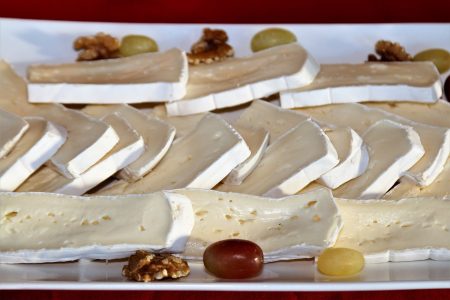
Delicious but Sterile
In case you weren’t aware, cheese isn’t just some block of curd you slice for your sandwiches. Cheese is a living thing, teeming with bacteria and fungi.
We know it sounds gross, but that’s cheese for you.
Some French cheeses, like Camembert and Brie, are famous for their smooth, creamy texture and the brilliant white, slightly fuzzy mold that covers them. But the cheeses didn’t always look like that.
In the days gone by, these cheeses were produced with a variety of strains of the Penicillium biforme mold. As a result, the cheese also varied more or less in color, aroma, and flavor.
But then, right at the end of the 19th century, French cheesemakers hit the jackpot. They discovered the albino Penicillium camemberti mold strain, which resulted in the white, delicious cheese we know today.
People who decide when cheese is good determined that P. camemberti produced a superior cheese, so of course all cheesemakers wanted to use it. This is why Camembert, Brie, and other cheeses like them are so uniform in appearance, no matter where you buy them.
There’s just one problem with this mold — it can’t reproduce. For reasons nobody has been able to figure out, the P. camemberti strain creates asexual spores but it can’t breed on its own.
Fortunately, this sterile golden goose didn’t die out due to its horrific mutations. Cheesemakers simply began to clone the mold and have been doing so for the past 120 or so years.
Genetic Kiddie Pool
Cloning has kept P. camemberti alive so far. However, it has introduced a whole new issue.
That issue is essentially fungal incest.
As we’re certain you know, wallowing in one shallow gene pool is not good for the health of the next generations. For reference, check virtually any inbred royal lineage in human history.
It’s the same story for fungi. The endless cloning and natural inability to breed have guaranteed that P. camemberti hasn’t gotten even into the genetic kiddie pool — at best, it’s dipped its toe in a bucket.
The mold’s genome has deteriorated drastically over the decades. If it wasn’t able to reproduce before, today P. camemberti can barely produce even the asexual spores.
Consequently, keeping the clone train a-runnin’ is more and more difficult. Now, cheese researchers (yes, they exist in France) say that P. camemberti — and the many cheeses that require it — are teetering on the edge of extinction.
Not a Unique Problem
Sadly, Camembert is far from the only cheese struggling with similar problems. In fact, it’s not even an issue unique to cheese.
Blue cheeses, like Roquefort or Gorgonzola, are also suffering from the lack of genetic diversity. So are, for example, bananas — after all, when did you last eat a banana with seeds in it?
With these food items, however, the situation isn’t quite so dire. Blue cheeses are funkier and more complex in flavor than Camembert or Brie, so cheesemakers have a bit more leeway in allowing more genetic variance into the molds.
We should probably further point out that Camembert and Brie likely won’t disappear altogether. There are other molds cheese producers can use — but they will alter the cheese’s taste and smell.
So, if you’re a fan of the current Camembert, go eat some. It may be gone soon.