
- This case show just how important well-fitting safety gear is – even if you’re not in an accident.
As anyone who has suffered a migraine knows, it can feel like an invisible vise is squeezing your head. Conversely, having your head squeezed can also trigger a migraine.
This Indian fighter pilot recently found that out through ill-fitting equipment.
The 29-year-old pilot had suffered from baffling headaches for more than a year before seeking medical help. However, his doctors weren’t much help, as they didn’t find anything wrong with the young man.
According to all tests, he should’ve been healthy as a horse. Nonetheless, he received migraine medication and continued to fly on a restricted schedule.
Four months later, the pilot’s headaches had disappeared completely. However, a military medical review revealed that the prescribed medicine hadn’t done squat.
The man’s off-handed remarks about his symptoms starting and ending when he got issued new gear helped doctors connect the dots. Instead of migraines, the pilot’s headaches were the result of a too tightly fitting helmet.
With his new, roomier lid, the man returned to regular duty without problems. As far as the doctors who treated him could find out, this is the first diagnosed case in the world of a pilot’s overly tight helmet almost ending his career.
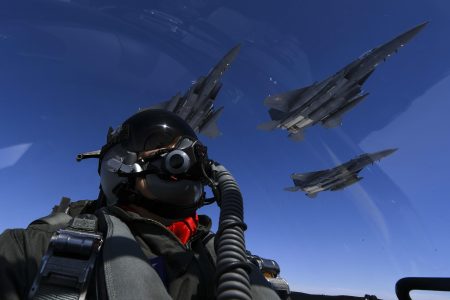
Debilitating Headaches
Our hero with a headache is an unidentified 29-year-old man from India. He works as a fighter in the Indian Air Force, but some time back, he started experiencing issues that threatened to ground him for good.
For more than a year, the man had been experiencing severe headaches. He could be in so much pain that his superior officers had no choice but to unassign him from scheduled flights.
If he did fly despite his headache, he would live to regret it the next day. The pain would only double after taking to the air, and sleeping (if he could sleep) didn’t relieve the symptoms.
Bizarrely, his headaches seemed to work on an almost military-like schedule. They would come on two or three times a month, starting in the late afternoon and lasting for about three days.
No Clear Cause
After suffering for 18 months, the pilot finally decided to seek help. He went to see a civilian neurologist, who found themselves baffled by his condition.
There was seemingly no reason for the man to have a headache. He didn’t suffer from stress and had no medical history that could bring on the pain.
Eventually, the doctor diagnosed the pilot with migraines. That was despite him not experiencing any of the common migraine symptoms, like nausea, ringing ears, or visual “auras” around objects.
The neurologist prescribed the man migraine medication and told him he’d probably have to take it for years to come. Concerned about his career, the pilot sought a second opinion from a military doctor.
Those visits played out virtually identically. The military doctors found no reason whatsoever for the man to be experiencing headaches, and they confirmed that his symptoms didn’t really match a migraine.
But they just couldn’t think of any other explanation. So, the pilot started taking his medicine.
Successfully Medicated?
Over the next three months, he took a migraine pill at the first sign of a headache and aspirin during the pain. The air force allowed him to keep flying on a lighter schedule but required him to report to a military neurologist once a month.
Four months later, the pilot’s headaches had disappeared. The medication had worked wonders!
However, before he could return to regular duty, his superiors required him to undergo one final medical review. That consisted of more tests and an in-depth three-day interview about his condition.
During that interview, the doctors were still puzzled by the man’s lack of migraine symptoms (besides the pain). Then, they noticed something that made them raise their eyebrows.
My Helmet’s Too Small!
The pilot mentioned that the symptoms had started when the military issued him a new, tighter-fitting helmet. He hadn’t brought that up before because, well, he didn’t think it was that important.
Continuing his story, he also pointed out that at the same time he started taking the medicine, he had once again received a gear update. This time, the new helmet had more space, making for a comfier flight.
Reviewing the entire case, the doctors put one and one together. The pilot didn’t have migraines, and the medication hadn’t actually done much anything.
Instead, his previous helmet had been so tight that it had given him massive, days-long bouts of compression headache whenever he flew.
A five-month review period confirmed the doctors’ discovery. With the looser helmet, the pilot returned to active duty like nothing had ever happened.
Curious, the doctors scoured international case files for a similar story. However, finding nothing, they concluded that they’d treated the first-known case of a poorly fitting helmet giving a headache to a military pilot.
Suppose that’s one way to make medical history.
Want to read about other strange causes of headaches? How about having chopsticks inside your skull?