
- We're just glad that biting and eye gouging are no longer acceptable moves in the sport...
Chances are that, at some point in your life, you’ve heard talk about MMA fighting – whether because of the Irish Conor McGregor, an MMA winner who made waves trying his hand at boxing in recent years, or the Friends’ storyline where Monica’s boyfriend, Pete, decides to try and become the Ultimate Fighting Champion.
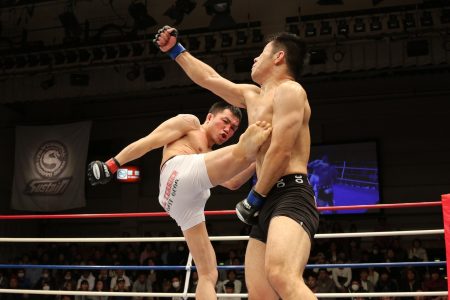
But what exactly is MMA, for those who’ve heard of it but have never indulged in watching it? Well, MMA stands for Mixed Martial Arts and is a type of combat sport that allows for multiple different types of fighting styles to be merged together in order for opponents to compete against one another.
Earlier iterations of MMA were famed for their violence, but this has been modified in recent years and rules to limit the tactics and damage caused have been introduced, making it much more respectable to the public.
When Did it Start?
The utilization of Mixed Martial Arts in a combat-based sport dates all the way back to ancient times, noted as being part of an early combat sport in China, known as Lei Tai. There’s evidence demonstrating that this form of sport existed during early Olympic Games (circa 648 BCE), when the martial training of armies – pankration – was deemed the combat sport of Ancient Greece. Multiple forms of combat were combined and the only fighting aspects banned were biting and eye gouging. It was only possible to win if the opponent was rendered unconscious or admitted defeat. For some time after this, when the Roman Emperor, Theodosius I, banned the Olympic Games, the sport was lost. It did resurface, however, in 20th Century Brazil, popularized by brothers Carlos and Helio Gracie. It then made its way to North America in the 1990s.

How Does it Work?
When it made its way into Western society (namely America), the key aim was to pit different styles of martial art against one another to see which one prevailed – such as wrestlers against boxers, jujitsu fighters against karate fighters.
Set within a type of ‘cage’-style ring – dubbed ‘the Octagon’ and not too dissimilar to a boxing ring – the only rules at first mimicked those from its early days: no biting or eye gouging. A match finished when one of the fighters submitted to the other in the ring, or one corner admitted defeat. Both of these facts led to it being marketed as a ‘no holds barred’ sport and deemed as ‘brutal’ by many.
The modern iteration of MMA as a sport makes it much more accurate for viewers and supporters to place bets and gamble on the outcome of an MMA match, with stats related to each fighter – including their weight and style of martial art – helping the placing of accurate bets. In the US, gambling relating to MMA has become as commonplace as with other mainstream sports.
Rules and Regulations
From 2001, new UFC management decided to overhaul the sport, bringing in more rules and regulations to diminish the outright brutality, standardize the overall practice, and make it more respectable. This also led to the inclusion of more skilled fighters trained in specific combat and martial arts styles, as opposed to being dominated by big, burly brawlers who utilized their strength and underhand techniques to succeed.
To make the sport more respectable, weight classes were introduced (as with boxing), as were timed rounds, time limits, and a longer list of fouls, including no headbutting, hair-pulling, or groin attacks. Additionally, downward elbow strikes to any part of the body, throat, spine or back-of-the-head strikes, and attacks against a grounded opponent are all banned. As a result, politicians dropped their opposition to the sport, larger regulation bodies picked it up to monitor it, and it has become the fastest-growing sport of the 21st Century.
With MMA now more focused on skill instead of sheer, brute force, the sport has become much easier to judge and understand for viewers, and is one of the best ways to witness the variety of skill and talent on show in relation to different martial arts styles.