
- Can you hear that?
Hearing is an essential sense for us humans. It’s even more so for many animals who rely on their hearing to score their meals or avoid becoming meals themselves.
As such, it’s no wonder that there are some freaky-deaky ears out in nature. But the most fascinating thing about those ears is that they’re not ears at all — at least not in the way we understand ears.
Here are 10 of the strangest ears across mammals, birds, reptiles, and insects alike.
1. Elephant

Let’s start by addressing the elephant in the room: the elephant. Perhaps the world’s most famous large-eared animal, elephants have extremely sharp hearing as their ear flaps can catch soundwaves like a satellite dish.
Yet, perhaps even more importantly, the ears help elephants keep cool. They don’t sweat much, so the ears allow heat to radiate away from their bodies and prevent the ‘fants from overheating. Additionally, flapping their ears serves as a vital means of communication within an elephant herd.
2. Long-eared Jerboa
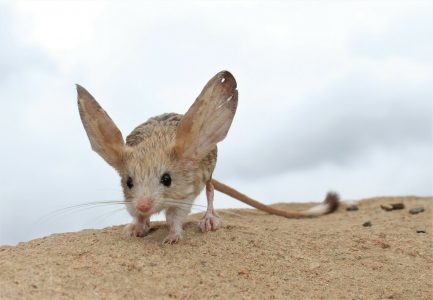
Elephants are well-known for the size of their ears, but their actually not that big proportionally. The title for the owner of the proportionally largest ears in the world belongs to the (appropriately named) long-eared jerboa.
These small rodents live in China and Mongolia. Their bodies grow to be 3.5 inches long at their largest. Of that length, though, 30-40% is made up of ears, depending on the individual.
On top of huge ears, the jerboa has lanky hind legs and a tail that can be twice as long as its body. They’re pretty cute, in their own disproportionate way.
3. American Curl Cat

The American curl is a breed of domestic cat known for — you guessed it — its curling ears. These cats are born with regular, straight ears, but they start curling backward within 48 hours of birth.
Once fully grown, the ears usually curl rearward at a 90-degree angle. Some American curls, however, have earlobes that form a full circle, curving back to touch their heads.
Curiously enough, the entire breed is descended from a single litter of stray kittens that all had these distinctive ears.
4. Axolotl
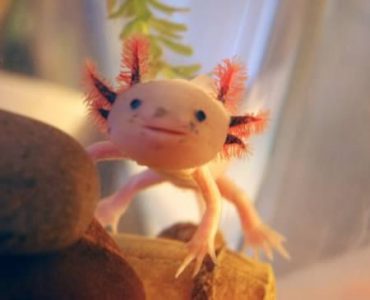
The funky-looking axolotl doesn’t have external ears. Then again, it doesn’t need them because it hears with feathery gills on the sides of its head.
In addition to drawing oxygen from water, the gills are extremely sensitive to vibrations (which is all sound is). With them, the axolotl can hear approaching noises just like you do.
That is, if you used your lungs to hear.
5. Lynx

One of the most distinctive features of the wild lynx is the tufts of hair on top of its ears. The curious part about those tufts, though, is that nobody’s quite sure why they’re there.
The prevailing theory is that they help the lynx hear better by catching sound waves and directing them down into the ear. Yet, biologists have also speculated that they could be a communication tool, a whisker-like sensory aid, or camouflage.
Perhaps they’re all of that. That’s one useful bunch of hair.
6. Snake
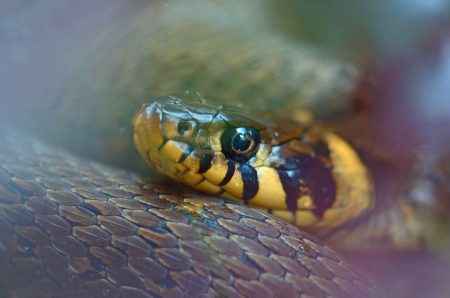
Look as much as you want, but you won’t find ear openings on a snake. But much like the axolotl I mentioned earlier, the snake has other means of hearing.
Snakes utilize what’s called conductive hearing to figure out what’s going on around them. Their bodies pick up soundwaves traveling along the ground and transfer them into their skulls, where small bones vibrate in the snake’s inner ear to produce the sense of hearing.
Essentially, they don’t need external ears because their whole body is an ear.
7. Whale

We all know about whale song, but how do whales hear the noises they make? After all, have you ever seen a whale with ears?
Well, the ears are there, but they are highly specialized for their underwater existence. Whales have teeny-tiny ear openings that lead to auditory bones that aren’t fused to the skull, improving their directional underwater hearing. Additionally, the structure of their ears is specialized to deal with the immense water pressure of ocean depths.
There are also fascinating differences in ear structure between various kinds of whales. Baleen whales form a natural plug of earwax to protect their ears, which also serves as an ongoing record of their health condition. Toothed whales, meanwhile, capture sound waves with their jawbones that transfer them to the inner ear.
8. Owl
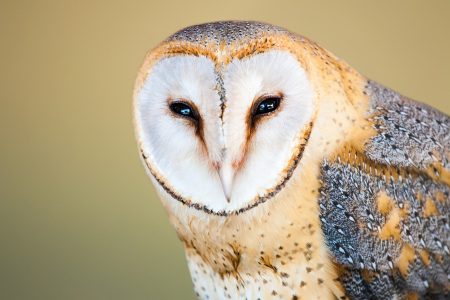
A person might feel self-conscious about having one ear significantly higher than the other. For owls, however, that’s just how everyone’s ears are.
You won’t see an owl’s ear openings under the feathers, but they actually have very large ear holes. They’re also lopsided, with one being near the top and one near the bottom of the skull.
This asymmetrical arrangement gives owls astounding three-dimensional hearing. They can tell with pinpoint accuracy where the faintest noise is coming from to catch hiding prey animals.
9. Jumping Spider
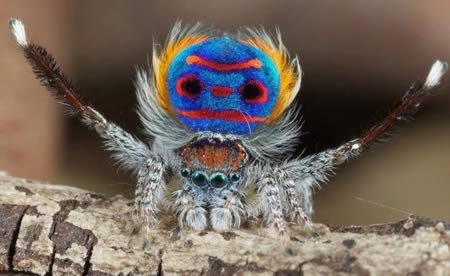
Which part of their bodies would you think jumping spiders hear with? If you guessed their eight legs, you’d be correct.
Although jumping spiders have no real ear structures, their legs are covered with stupendously sensitive, tiny hairs. These hairs are so delicate that they can pick up sound vibrations from several yards away.
That doesn’t sound like much to us, but for the spider, its leg hearing is plenty for it to locate bugs to pounce on.
10. Greater Wax Moth
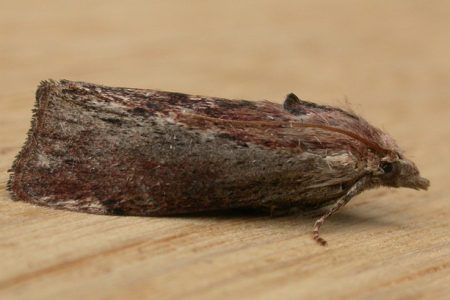
It might be hard to believe, but the sharpest hearing in nature does not belong to an elephant, rabbit, bat, jerboa, or any other large-eared animal. Instead, the award for the most sensitive hearing goes to the greater wax moth, which doesn’t even have ears in the first place.
This small, silvery moth picks up soundwaves with its thorax (that is, the central body section its wings attach to). On both of its sides, the moth has small air-filled chambers covered by a thin membrane called tympanal organs.
While they’re not “ears” per se, they allow the moth to pick up sound frequencies up to 300 kHz. To put that into perspective, the high end of human hearing caps out at about 20 kHz, while some extremely sharp-eared bats can pick up sounds up to 200 kHz.
And it’s those bats that the moth is keeping an ear-like organ out for. With its keen hearing, the moth can hear bats’ echolocation before they can and take evasive maneuvers to avoid becoming dinner.
Want some more weird but fascinating animal anatomy? Check out our article series of odd animal body parts!