
- Gaze into these eyes and you won’t be quite sure of what you see.
They say the eyes are windows of the soul. If that’s the case, then there are some freaky-deaky souls out there.
The human eye is excellent at what it does, but compared to many animals, our peepers aren’t that impressive. There are critters in nature that can spot tiny prey from a mile away, see everything around all at once, perceive colors we can’t even imagine, or their eyes just looks really weird.
Here are 11 of the freakiest eyes in the animal kingdom.
1. Colossal Squid
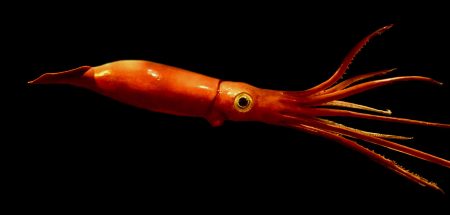
The colossal squid is the world’s largest squid. It’s also the owner of the world’s largest eyes.
A colossal squid’s eyeball can have a diameter of a foot, making it roughly the same size as a soccer ball. The pupil in the middle of the eye is also massive, measuring 3.5 inches across.
The squid needs its giant peepers, though. Without them, the squid wouldn’t really be able to see at all in the dark, cold depths that it lives in.
2. Chameleon
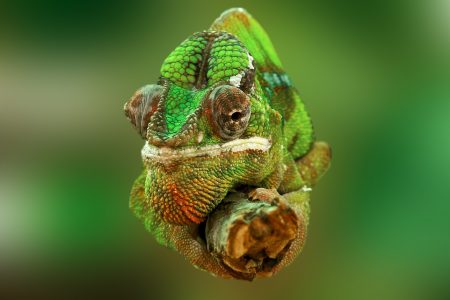
If you’ve ever seen a chameleon at a pet store or a zoo, you know how weird trying to maintain eye contact with them is. After all, they can look at two things at once.
Chameleons are able to move each of their eyes individually. This gives them the ability to scan a wide area for tasty bugs. Upon spotting one, both eyes hone in on the target, allowing the chameleon to snatch the insect with its extendable tongue with extreme accuracy.
Chameleon eyes are also not really embedded in their sockets to facilitate their movement. That’s why they protrude so far out of their head.
3. Scallop
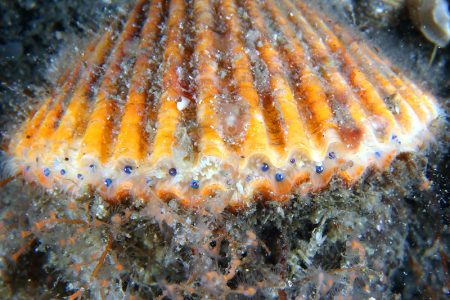
“Scallops have eyes?” you may ask. Indeed, and they have a lot of them.
If you look at a live scallop, you’ll see that the edges of its shell are lined with little blue dots. Each of those is an eye, and there may be up to 200 of them.
Their eyesight is also incredibly sharp for a clam, being more or less on par with some insects and spiders. It’s all so that they know when to snap their shells shut if a predator approaches.
4. Horseshoe Crab
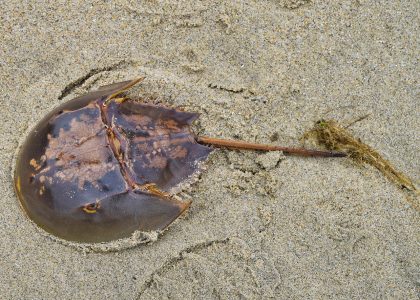
Horseshoe crabs have a lot of eyes too, 10 in total. In addition to two large compound eyes, they have eight smaller eyes around their bodies.
And when we say around their bodies, we mean it. The smaller eyes are located up front, on its sides, on its back, and there’s even one on its butt to watch its back.
These small eyes don’t really see much, but they can detect movement. That’s enough to alert the horseshoe crab to a danger lurking in its not-so-blind spot.
5. Ogre-faced Spider
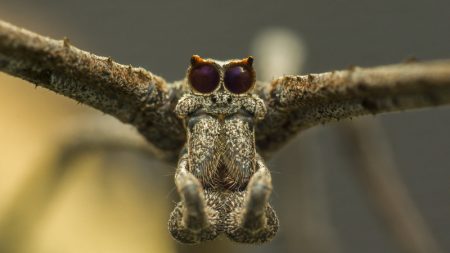
Now that’s a face only a mother could love. You might think ogre-faced spiders have only two eyes, but they do, in fact, have eight of them like all spiders.
Two of them are just a lot bigger than the others.
The ogre-faced spider needs its ginormous peepers, due to its strange hunting method. Instead of spinning a web, this ogre is an active hunter, using a piece of webbing between its long front legs to catch prey it spots with its sharp eyesight.
6. Raptors
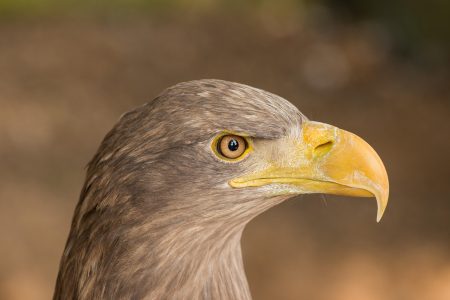
Raptors — that is, birds like hawks, falcons, and eagles — have perhaps the most detailed vision in the animal kingdom. Their vision is three to five times as detailed as humans’.
Basically, us humans are watching a crusty 480p video of the world, while eagles and hawks enjoy an 8K Ultra-HD presentation.
Then again, you need that sharp vision when you fly a mile high and must spot a wayward mouse or rabbit in the bushes below.
7. Tarsier
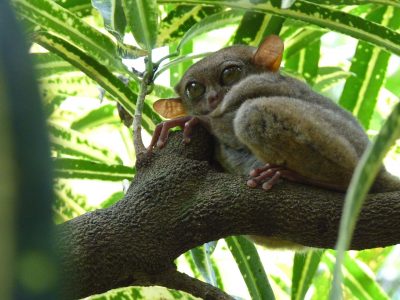
The tarsier has the largest eye-to-body-size ratio of any mammal. In fact, their eyes are about the same size (if not slightly larger) than their brains.
The huge eyeballs are a necessary adaptation to the tarsiers’ chosen lifestyle. They are nocturnal animals — despite not having any kind of advanced nighttime vision, like cats, for example.
So, in order to be able to see anything at all in the pitch-black darkness, their eyes have simply grown enormous to make use of even the tiniest bit of moonlight.
8. Fly
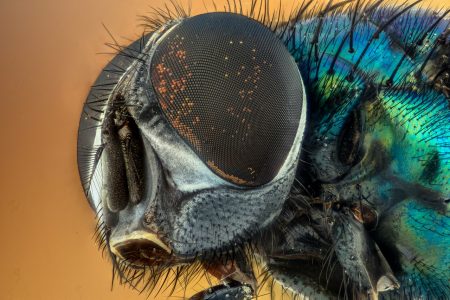
Ever wondered why it’s so hard to swat a fly? It’s because the fly watches the world at a much higher frame rate than you do.
The human eye captures roughly 60 “frames” every second, if we use video terms. Flies, on the other hand, operate at hundreds of frames per second.
This means that the fly is watching your rolled-up newspaper coming down in slow motion. We might be amazed by its incredible reflexes, but from the fly’s perspective, it’s basically stepping out of the way of a car moving toward it at five miles per hour.
9. Cuttlefish
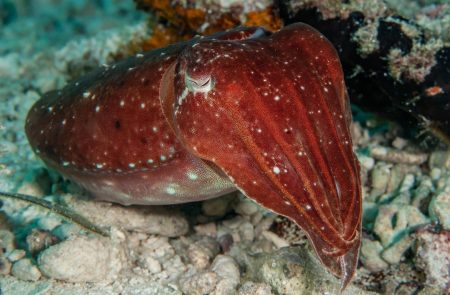
There are a lot of strangely shaped pupils in nature, but cuttlefish eyes must be the most bizarre. These aquatic critters have off, W-shaped pupils.
Those freaky eyes come with a lot of benefits, though. Although they have only two eyes, they can see 360 degrees around them, leaving them with virtually no blind spots.
Additionally, the W pupil filters out vertical streaks of light shining down from the surface. This keeps the cuttlefish from getting blinded and helps increase contrast in murky waters.
10. Mantis Shrimp
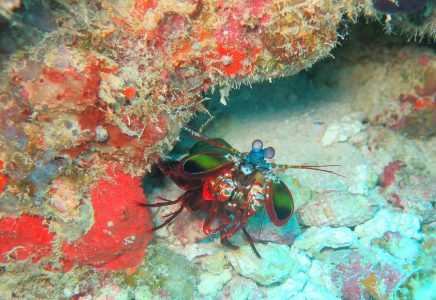
The mantis shrimp has the single best color perception out of any creature on the planet. They are able top see ranges of colors our minds are utterly incapable of comprehending due to basic biology.
Human eyes have three types of photoreceptors that perceive red, green, and blue light. The mantis shrimp’s eyes have 12 photoreceptor types, allowing to see ultraviolet light, light polarization, and much more.
As such, it’s completely impossible for us humans to tell exactly what a mantis shrimp sees. After all, how can you describe colors we don’t know exist?
11. Stalk-Eyed Fly
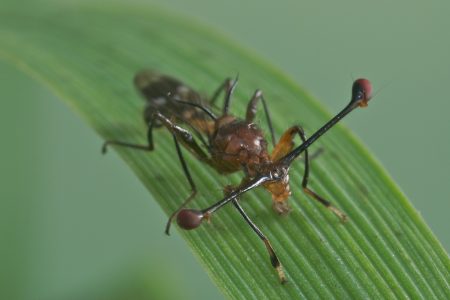
Now, a stalk-eyed fly’s eyes function like any other flies, so you already know has an incredibly fast vision. But this guy does something other flies don’t.
It decided to put its eyes at the tips of long stalks. But why?
Well, stalk-eyed fly ladies just find a man with long, thick eye stalks really sexy. What looks funny to us is the hunkiest Adonis of the stalk-eyed fly world.