
- The things they do in the name of science.
Genetic modification has done a lot to benefit humanity. It has given more plentiful crops, like corn and rice, and even medications, like bacteria-produced insulin.
Not every genetic experiment has been a great success. For example, you can look at the one that turned cuddle hamsters into ultraviolent psychos.
And then there are those genetic experiments that are simply mind-boggling. Recently, we got a new to add to that list.
A group of researchers has successfully turned fruit flies into cokeheads. The flies typically avoid cocaine because even insects know that drugs are bad.
However, the scientists turned off the genes that make cocaine taste foul to the flies. Lo and behold, the bugs quickly turned into raging junkies constantly looking for their next hit.
There’s a reason for making the flies crave cocaine, though. According to the researchers, this experiment can help us understand and treat addiction in people.
How does that work? Let’s find out.
Smart Little Flies
The study on dope-snorting flies was conducted by a research team from the University of Utah. It was recently published in the Journal of Neuroscience.
Now, this isn’t the first time scientists have offered cocaine to fruit flies (believe it or not). Previously, however, the attempts to get them addicted to coke have failed for a simple reason — fruit flies don’t want to do cocaine.
“Flies do not like cocaine one bit,” summarized Adrian Rothenfluh, the study’s senior author, in a statement.
In this way, fruit flies are a lot smarter than us humans, who will willingly take cocaine. If you let a fruit fly choose between pure sugar water and cocaine-laced sugar water, it will always choose the drug-free option.
That’s because fruit flies know cocaine is dangerous.
“Insects are evolutionarily primed to avoid plant toxins, and cocaine is a plant toxin,” said Travis Philyaw, the study’s lead author.
Good on the flies. Of course, the researchers couldn’t let this stand, so they begun working on a way to force the bugs to become addicts.
Because that’s just how scientific minds work.
A Taste for Cocaine
Lucky for the scientists but unfortunately for the flies, they soon figured out why the insects wouldn’t touch dope. The secret lies in their little legs. Or arms, or whatever you want to call them.
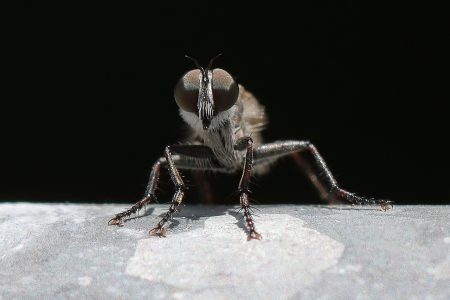
“[Flies] have taste receptors on their ‘arms’—their tarsal segments—so they can put their hand in something before it goes in their mouth, and decide, ‘I’m not going to touch that,’” explained Philyaw.
Observing the flies’ nervous systems, the research team noticed that tasting cocaine fired up the receptors associated with bitter tastes. In other words, the flies know to avoid cocaine because it tastes unbearably bitter to them.
Basically, it’s like eating kale to them. Gross.
So, to resolve this “problem,” the researchers genetically modified the fruit flies to turn off their bitterness-sensing taste receptors. And what do you know — the bugs started loving cocaine.
The change was very quick, too. Within 16 hours of tasting cocaine for the first time, the flies would always choose the sugar water with cocaine in it.
However, the flies are still smarter than people in the sense that they try to moderate their drug intake. They quickly realized that overdosing is awful and started avoiding sugar water with too much cocaine.
“At low doses, they start running around, just like people. At very high doses, they get incapacitated, which is also true in people,” Rothenfluh said.
Sometimes we wish we got paid for watching bugs get high out of their minds.
It’s Serious Research
Believe it or not, the scientists weren’t getting the flies addicted to coke just for the heck of it. They did it in hopes that this research could help understand and treat human addiction.
You see, fruit flies are shockingly similar to humans in many ways. We share about 75% of the genes associated with the functioning of major organs and various diseases, so knowledge gained from the flies has a good chance of being directly applicable to people.
Not only that, fruit flies spawn incredibly quickly (which we’re sure you know if you’ve forgotten a banana out). The researchers can quickly observe generational effects of certain genetic changes, which could take years or decades to manifest in mammals.
In this case, the researchers hope that understanding how and why a fruit fly can develop a cocaine addiction may help us do the same for humans.
“We can really start to understand the mechanisms of cocaine choice, and the more you understand about the mechanism, the more you have a chance to find a therapeutic that might act on that mechanism,” Rothenfluh explained.
So, making flies into junkies does serve a grander purpose. It’s not just for fun, we swear.