
- Only two things are certain: death and taxes. And we’re not so sure about the taxes.
We’re all doomed to die. No, that’s not teenage nihilism or Shakespearean introspection — it’s a fact of life.
To illustrate this point, an estimated 99.9% of all species that have ever existed are long gone. Whether it is a plant or animal, big or small, any given species rarely survives past 15 million years.
This is true even if we discount apocalyptic natural disasters, like meteor impacts or global warming. It seems life itself is rigged to work against itself.
Here are six (plus one) ways we and every other living thing may eventually kick the bucket.
1. Co-extinction
In some instances, a species might disappear even if nothing directly harms it. However, if it relies on another species to keep, that other species dying off might spell doom to the first one as well.
A great example of this is the Ceratophaga vicinella moth. This moth’s larvae have one bizarre diet — they feed only on the dead skeletal shells of the gopher tortoise.
Unfortunately, the gopher tortoise is an endangered species at risk of going extinct. If it dies off for good, it will take the moth with it, since the moth relies on there always being more tortoise corpses around.
You can think of co-extinction as dominoes. When one falls, another goes down with it.
2. Hyperspecialization
A hyperspecialized species is one that’s adapted to very particular conditions and circumstances. If those conditions change, the species may be unable to cope and will soon die off.
Dying of hyperspecialization often goes hand in hand with co-extinction (like with the aforementioned moths). However, a species — like many plants — could also be hyperspecialized to live in a highly specific climate.
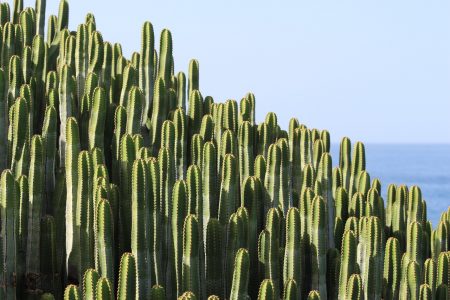
Think about your stereotypical cactus, for example. They thrive in arid, dry places, like the Southwest U.S. deserts. Should those places start getting much more rain for whatever reason, it could kill off the cacti very quickly.
3. Tiny Population
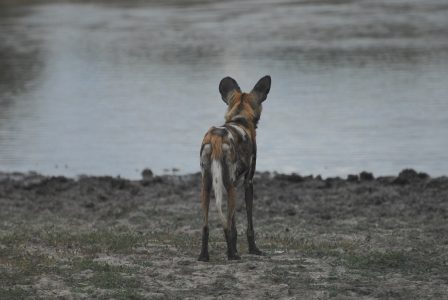
Any species with very few individuals is almost constantly at risk of extinction. All it takes is a bad disease outbreak or some other misfortune to wipe out the entire species.
Additionally, a small population increases the risk of inbreeding. We probably don’t have to tell you why taking a dip in your own gene pool is not particularly good for a species’ long-term survival.
And if you thought extinction events don’t really affect humans, may we point out that humanity almost died out due to a low population? Around a million years ago, the global population of our direct predecessor was about 1,300 individuals. We carry the genetic package of that event to this day.
4. Overpredation
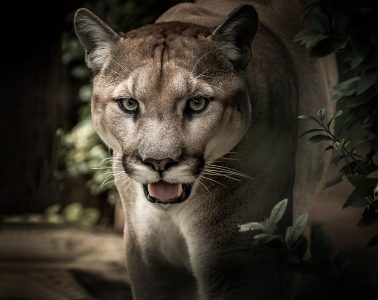
Some animals are excellent hunters. Some are so good, in fact, that they end up killing themselves by proxy.
Overpredation happens when a predatory species kills its prey so efficiently that the prey has no time to repopulate. Once the prey species is gone, the predator may no longer have anything to eat and starve to death.
One example of this would be the dodo bird, if humans had been almost entirely dependent on it for food. But there’s another example too — the fungus Batrachochytrium dendrobatidis.
This fungus is so infectious and deadly to frogs and amphibians that it’s threatening to kill off dozens upon dozens of frog species. The fungus is doing well for now, but what will happen once all the frogs are gone?
5. Invasive Species
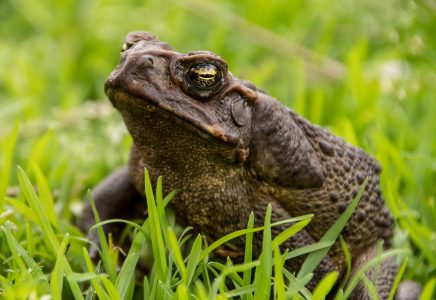
You might think invasive species are a modern problem. But although we humans have certainly introduced foreign species where they don’t belong, species invasion is a natural phenomenon and has happened throughout history.
Most species on the planet are adapted to handle the conditions and threats immediately around them. So, when a new species from afar shows up in a region, its native inhabitants might have no idea how to defend themselves against the newcomers.
For an example of an invasive species, you can look at the South American cane toad that has been introduced to Australia. The toad’s main defense is a toxic goo it excretes from its skin.
In its homeland, most predators are immune to the poison and can keep the toads’ numbers in check. Australian predators, however, die if they so much as lick the toads, which has allowed them to overrun large areas.
6. Life is Too Good
Finally, we have the most ironic reason for a species to go extinct. Animals and plants can die off simply because their lives are great.
Life is kind of like a soap opera in the sense that it thrives on conflict and drama. If a species lives in a peaceful, abundant paradise, its population and genetics will soon begin to stagnate.
The species doesn’t migrate anywhere, because it has all that it needs. Consequently, it ends up inhabiting a restricted area, which in turn will lead to a small population, overspecialization, reliance on a limited number of resources and other species…
Consequently, the species might end up facing all the previously mentioned issues. And so, it will go extinct — simply because its life was too good.
Extra: Evolving Into New Species
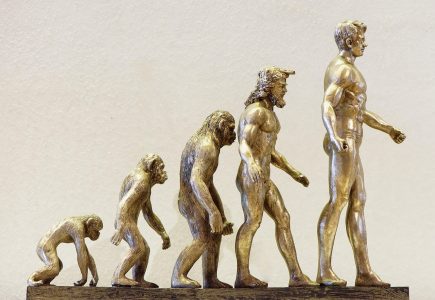
Now, we said 99.9% of all species that have lived are gone. Not all of them died, though.
One of the reasons why no species seems to make it past the 15-million-year mark is that 15 million years is a ridiculously long time. For instance, humanity has existed only for around 300,000 years — and that is if we start counting from the first ape that could be even remotely classified as a human.
Over 15 million years, everything that exists on Earth will change. The climate, the terrain, and even the amount of oxygen in the air will be different.
Naturally, if an animal (for example) wants to survive, it will have to change with its environment. Fast-forward 15 million years and the animal will have changed so much that it’s completely unrecognizable.
Theoretically, it might still be the “same” animal, tracing a direct lineage through all those years. Yet, it has changed so much that you can’t say it’s the same species anymore.
Unless, of course, it’s one of those stubborn weirdoes that simply refuses to change with the times.