
- It’s easy to have plenty of food if you eat what absolutely no one else does.
Some animals are carnivores, while others are content to munch on leaves and fruits. You can usually tell fairly quickly whether an animal eats plants, other animals, or both.
Yet, sometimes nature throws a curveball at you. Certain animals do not eat at all what you’d expect.
Perhaps they’re real gourmands who go only for the choicest (or strangest) morsels. They might also consume the complete opposite of what their related species eat.
Here are five animals (and one plant) with decidedly unusual diets and feeding habits.
1. Dipsas — The Goo-eating Snakes
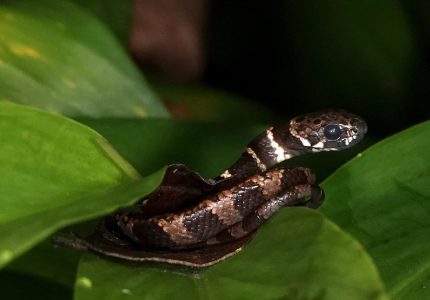
Dipsas is a genus of tree-dwelling snakes from South America, comprising some 30 species. They’re commonly called “goo-eating snakes” because they feed almost exclusively on slimy and gooey things.
These snakes subsist on snails, slugs, frog eggs, worms… You know, all the gross things you associate with witches and curious kids.
Eating snails isn’t particularly easy when you have no limbs, though. To dig the snail out, the snake has to squeeze a part of its lower jaw into the shell to be able to hook its teeth to the snail’s soft flesh.
As to why the snakes have chosen such a revolting diet, well… It’s because there’s no competition. Biologists believe resource scarcity drove these snakes to chow down on the slimiest things because no one else wants to.
2. Indian Gray Mongoose — Deadly Snakes and Sugar Juice
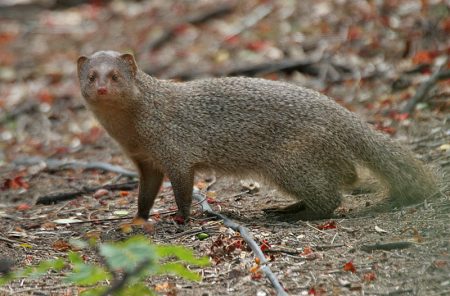
The Indian gray mongoose, living (unsurprisingly) in India, is a strange eater in a couple of ways. First of all, it likes to eat lethally venomous cobras.
That’s not as hard as it sounds, as these mongooses are virtually immune to cobra venom. When hunting cobra, they make fast feint attacks at the snake for more than an hour to tire it out before going for the kill.
They basically bully the snake to death.
Yet, when not eating snake meat, the mongooses also have a sweet tooth. They generally do not eat fruit, but they’re known to climb sugarbushes to drink their sickeningly sweet nectar. Researchers believe they simply enjoy the sugar rush.
3. Bonnethead Shark — Seafood Salad Eater
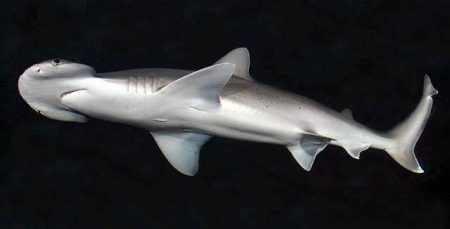
Sharks have a (not entirely deserved) reputation for being ravenous killing machines. The bonnethead shark, however, prefers a light seafood salad to a blood-dripping meat chunk.
These small hammerhead sharks still eat meat, but they prefer crustaceans and clams. They use their flattened heads like metal detectors to find crabs hiding in the sand before chomping down on them.
To go with the mollusks and crabs, the bonnethead likes to eat some seaweed. This is the only shark known to eat plants, and they eat a lot of them. Some caught individuals have had their stomachs half-full of seaweed.
While the sharks may eat seaweed to protect their stomachs from sharp crab shells, research also suggests that they do absorb nutrients from their veggies as well. Talk about a healthy diet.
4. Bagheera Kiplingi — The (Mostly) Vegetarian Spider
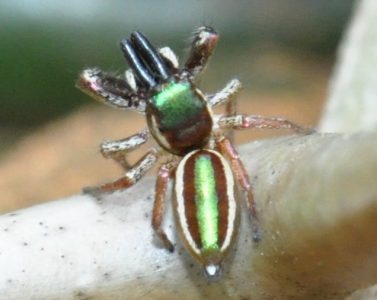
Everybody knows that spiders hunt insects and even other spiders — all except this one. Bagheera kiplingi is a jumping spider from Central America that’s almost entirely vegetarian.
They love eating protein- and fat-loaded nubs called Beltian bodies growing on the tips of certain trees’ leaves. Nobody actually knows how the spiders manage to eat them, though, since spiders don’t exactly have the kinds of mouths that can chew plant matter.
Being vegetarian doesn’t come easy for B. kiplingi, however. Many ant species also rely on Beltian bodies for food and will kill any approaching spider on sight, so getting to leaf tips requires stealth on the spider’s part.
That said, B. kiplingi does occasionally have some meat. When times are tough, it might steal larvae from passing worker ants or even cannibalize its own kind.
It’s like your vegan neighbor suddenly invited you for dinner — with you being the main course.
5. Ceratophaga Vicinella — Dead Tortoise Devourer
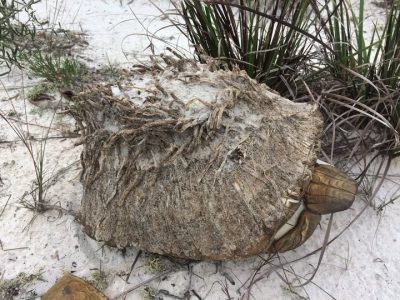
Butterfly and moth larvae eat plant leaves, right? Well, don’t tell that to Ceratophaga vicinella from the southern U.S.
This moth’s larvae enjoy a much more sinister diet. They feed exclusively on the skeletal shells of dead gopher tortoises. The larvae have extremely acidic stomachs, allowing them to digest keratin they scrape off the tortoise shells.
Nobody’s quite sure why the moth has specialized in such a bizarre food source, but that choice may end up being its downfall. Gopher tortoises are increasingly endangered and may disappear altogether — which will spell doom for the moth whose babies will eat nothing else.
6. Nepenthes Hemsleyana — Yummy Bat Crap
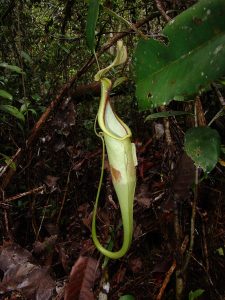
Nepenthes hemsleyana is a pitcher plant growing high up in the trees of Borneo’s jungles. It’s theoretically a carnivorous plant, but it kind of sucks at being one.
Its digestive juice isn’t that strong and the plant doesn’t have much of it. Additionally, it doesn’t smell very good to insects, so they tend to not even notice the plant.
So, instead of bugs, the plant subsists on guano — that is, bat poop.
N. hemsleyana is ideally shaped to provide bats with a convenient daytime hiding hole. It has a much wider top part than most other pitcher plants, so it’s easy to grab on to, and the low level of digestive juice means the bat doesn’t dip into it.
The bat will have to poop while inside the pitcher, though, but that’s just what the plant wants. It digests the bat s*** and gets all the nutrients it needs.