
- With some of these fruits, ‘edible’ is a very relative term.
Apples, oranges, bananas… Aren’t you getting tired of always eating the same old fruits?
Lucky for you, then, that the trees, bushes, and other plants of the world bear all kinds of different fruits. All you have to do is go on a round-the-world trip to sample them all.
A fair word of warning, though. Some of the fruit you’ll encounter on your botanical journey will look decidedly exotic.
Here are eight of the weirdest fruits you can find. Yet, they all are edible — if you dare.
1. Durian
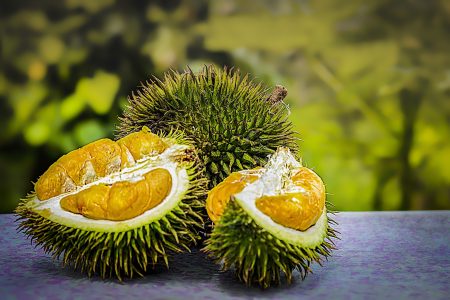
You may have heard of the durian, or if you haven’t heard, you may have smelled it. Durian is infamous for its gut-wrenchingly horrendous stench.
Not that the fruit needs to smell to grab your attention. Durian fruit grows very large, weighing up to six pounds, and it’s covered with fairly intimidating spines.
Yet, the worst part of it is the smell, which has been colorfully described as a mixture of “pig-excrement, turpentine and onions, garnished with a gym sock.” It’s so bad that most airlines won’t let you bring durian on the plane.
Durian’s taste, however, is excellent. It’s bizarre so something so delicious can smell so horrid.
2. Ugli
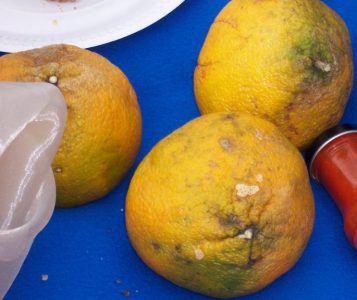
The ugli is so named because it’s ugly. No, really — ugli is one of the names the Jamaican tangelo is sold by, and it’s called so because of its appearance.
It’s a fitting name, too. Even when it’s perfectly ripe and good to eat, ugli’s blemished, blotchy peel makes it look like it’s withering and rotting.
What ugli is, though, is an accidental crossbreed between orange and grapefruit. It’s quite good, with the flavor sitting somewhere between its parent fruits.
If anything, ugli teaches us that you shouldn’t (always) judge a fruit by its peel.
3. Hala Fruit
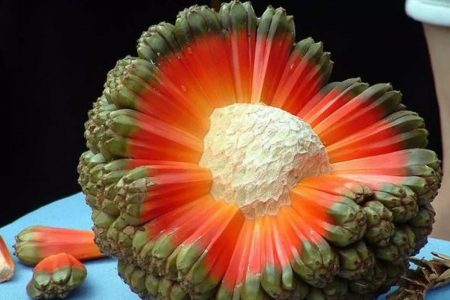
The hala fruit is produced by a Southeast Asian and Australian species of screwpine. These large fruits are as pretty as they are strange.
The round hala fruit grows to be around a foot in diameter. It consists of up to 200 wedge-shaped segments attached to a central husk.
These segments’ ends are green, but if you start pulling them off, they’ll reveal a bright gradient varying between orange, red, and yellow. The fruit and seeds can be eaten, but some varieties contain high amounts of toxic calcium oxalate and must be cooked first.
4. Jabuticaba
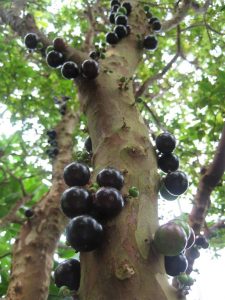
Fruits and berries usually hang off a tree’s branches by a stalk. The Brazilian jaboticaba, however, plays by its own rules.
Its purple-black fruits grow directly off the branches — and the trunk. When it’s bearing fruit, it looks like the entire tree is covered in bizarre, shiny black growths.
Don’t be afraid of them, though. Peel off the thick skin and you’ll find sweet, soft fruit flesh that can be eaten like grapes or made into jams, jellies, and wine.
5. Buddha’s Hand
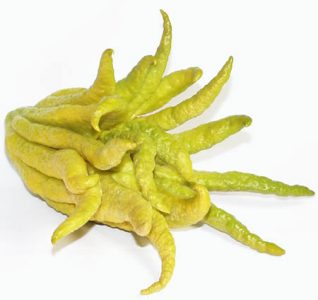
When you see Buddha’s hand for the first time, you might think, “What’s wrong with that lemon?” But it’s not a lemon — Buddha’s hand is a variety of citron growing in Asia.
The fruit, which grows into a bunch of curling, wrinkled tentacles, is priced as an air freshener due to its pleasant smell. It doesn’t have much in the way of pulp, but it can be eaten and is used as a flavoring in many Asian cuisines.
It still looks pretty unappealing, though. If your hands resemble the Buddha’s, you might need some medical attention.
6. Morinda
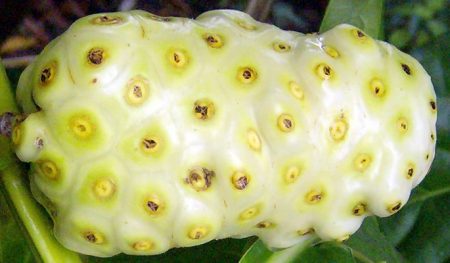
There are very few positive things about the morinda fruit. To begin with, it looks like a mass of pimples about to burst.
Also, much like the durian, this fruit stinks. As it ripens it emits such a pungent, distasteful odor that it’s sometimes called cheese fruit or vomit fruit.
If you can get past the revolting appearance and smell, morinda fruit is edible — in the sense that eating it won’t kill you. Many native peoples in the fruit’s native Southeast Asia use it as a famine food when there’s literally nothing else to eat.
7. Ackee
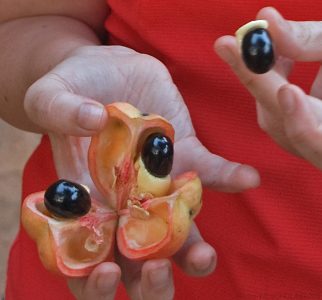
The ackee fruit is a Jamaican delicacy, famous for being part of Jamaica’s national dish of ackee and saltfish. Yet, that doesn’t make the fruit look any less weird.
While unripe, ackee is a red, three-lobed fruit. As it ripens, the lobes split open, revealing three shiny black seeds attached to an off-white fleshy part. It’s like three eyestalks are staring at you from the fruit.
You have to be careful which parts of ackee you eat, too, since everything but that white flesh is poisonous. It must’ve taken some effort (and a few sick people) to figure out how to eat this thing.
8. Miracle Fruit
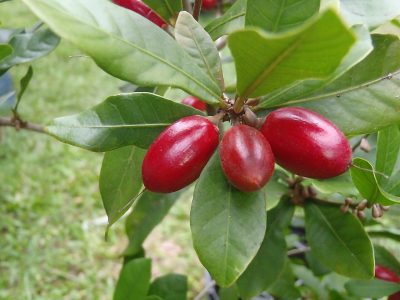
There’s nothing outwardly strange about the miracle fruit — it looks like a generic, reddish fruit you might see in cartoons. But the miracle happens when you eat it.
Miracle fruit contains a protein called miraculin. When consumed, miraculin binds to your taste buds, causing sour foods to taste sweet.
So, if you ate a lemon after eating the miracle fruit, it would probably taste something closer to a sweet tangerine to you. The effect lasts up to an hour, at which point your saliva neutralizes the miraculin.