
- Once you no longer need your body parts, someone else might.
These days, when a person dies, they’re typically solemnly buried or cremated with their bodies intact. It wasn’t always like that, not by a long shot.
Throughout history, human body parts have often been valuable commodities. Sometimes they served a real purpose; other times, they were nothing but a gruesome pastime for the rich and powerful.
Here are 9 creepy things people used to do with human remains.
1. Shrunken Heads
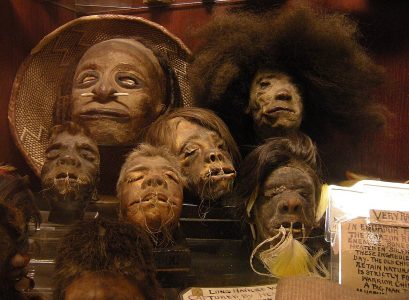
You’re probably aware of the practice of head-shrinking. However, popular media makes it seem more prevalent than it ever really was.
Mostly, the shrunken heads that everyone’s familiar with were made by the Shuar people living in today’s Ecuador and Peru. They removed the victim’s skull and shrunk their head to trap the slain person’s angry spirit inside it.
However, head-shrinking became more prevalent among the Shuar after European explorers became fascinated with the dried heads. Obtaining the trophies became a profitable, if macabre, business for the Shuar.
2. Skull Cups
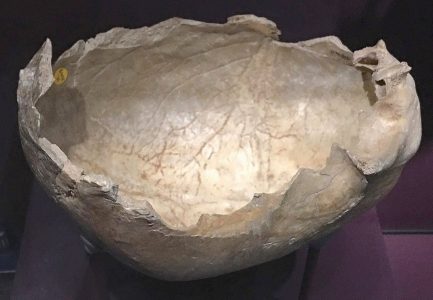
Skull caps are… Oh wait, that doesn’t say caps. It’s cups.
Skull cups are drinking vessels made from the top part of the human skull. Although the oldest known such vessels are from China, they’re known to have existed in many cultures, from southern Asia to Europe.
Although turning someone’s skull into a goblet was usually meant to humiliate a killed enemy, it wasn’t always so. For instance, the 10th-century Turkic Khan Kurya fashioned the skull of Svyastoslav I of the Kievan Rus into a chalice to honor and remember his brave foe.
3. Corpse Medicine

A pinch of a human corpse is good for what ails you. That was a prevalent theory in European medicine up to the 18th century.
There was virtually no part of the body a medieval doctor couldn’t prescribe to you. People consumed powdered skulls to treat epilepsy, spread rendered human fat on aching joints, and dabbed the sweat of executed criminals on themselves to make their skin prettier.
Human blood, too, was a common medicine. However, it had an even more disturbing use, namely…
4. Blood Aphrodisiacs

There’s nothing to put you in the mood like smearing yourself with the crimson gore of another person, right? Human blood in various forms has been used as a love potion throughout history.
The ancient Romans, for instance, would collect the blood of wounded and dead gladiators to sell as aphrodisiacs. I suppose the logic was that consuming their blood would make you as virile as a studly gladiator.
Menstrual blood has also been a historically popular aphrodisiac from the Mediterranean to Africa and South Asia. That’s for reasons I probably don’t need to spell out.
If you want to learn more about weird, supposed love potions, check out this list of 12 bizarre aphrodisiacs.
5. Human Skin Books
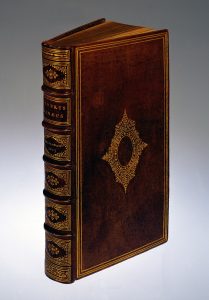
In fantasy novels, movies, and games, you can’t ransack a dark wizard’s fortress without finding at least a few forbidden tomes bound in human skin. That ominous practice, however, was strangely widespread in the 18th and 19th centuries.
No, it was never a common thing to do. However, some executed criminals and more than a few unfortunately random citizens had their skins wrapped around book covers.
Why, you ask? Because people who had more money than common sense figured it was an interesting thing to have.
6. Mourning Wreathes
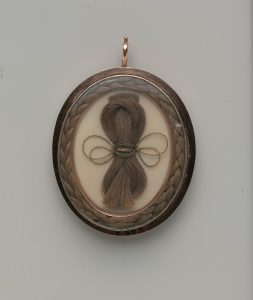
It’s not all that weird to keep a lock of hair from a deceased loved one as a memento. In Victorian England, however, this practice reached a ridiculous and frankly disturbing extreme.
Keeping hair from your dead family members became such a fad that people would harvest nearly all of their hair. They would then fashion into various creepy objects, from jewelry to intricate, large wreathes.
Because there’s nothing better to remind you of grandma than having all of her hair hanging on your wall.
7. Reliquaries
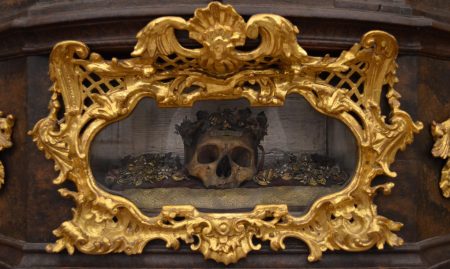
Saving bits of holy people’s bodies in reliquaries is common to most religions around the world. While that could be viewed as a gruesome practice, it definitely went overboard during the European Middle Ages.
Relics from saints and great rulers were hugely popular at the time, with pilgrims from all over the continent flocking to see them. All those travelers brought money with them, and churches and cities were willing to invest huge sums into acquiring relics.
That resulted in a massive relic black market where body parts from any poor bastard got shipped around Europe under claims of having once belonged to this saint or that. This often resulted in comical situations where multiple churches would claim to house, for example, Saint Peter’s skull – although Peter obviously only had one of them.
8. Waterloo Teeth
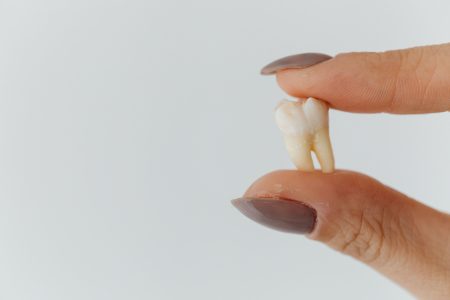
Are you wondering what Waterloo teeth are? They’re dentures made from teeth ripped from dead (or sometimes living) people’s mouths.
Although fake teeth made of porcelain, ivory, or gold have existed for centuries, second-hand teeth used to be a very popular option for dentures. That might be because you know the things will actually fit a human mouth.
And there’s no better place to find people who no longer need their teeth than a corpse-strewn battlefield. The term “Waterloo teeth” stems from the 1815 Battle of Waterloo, after which corpse looters would prowl among the carnage for days pulling teeth from the fallen.
9. Ossuaries

Ossuaries were (and are) rooms in churches designed to remind the faithful of their mortality and impending divine judgment. To achieve that, ossuaries are filled with human skeletons.
Some of them might just have one prominent cadaver propped up to spook churchgoers. Others, however, go way farther than that, with entire churches furnished with elaborate bone arrangements.
And then there’s the Portuguese Capela de Ossos where they simply hung two corpses from the ceiling, with their dried-up flesh still clinging to the bones after nearly three centuries.
To see Capela de Ossos and other such grotesque places, check out our list of 8 buildings decorated with human remains.