
- Earth’s been through a lot, some of it being very odd.
Earth is old. Our planet has been around for around 4.5 billion years, which is a longer time than you can really comprehend. As such, this little blue ball has been through quite a bit.
Some periods of Earth’s history are firmly etched into the popular imagination, like the Jurassic with all the famous dinosaurs. However, just like everyone growing up, the planet has gone through a few strange phases over its life.
Here’s a quick look at nine of the oddest periods of Earth’s history.
1. Hadean Inferno
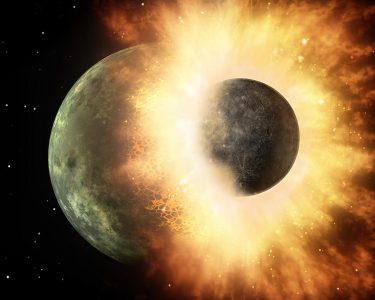
The Hadean period is the earliest stage of Earth’s history, lasting from the planet’s formation to around 4 billion years ago. As the sinister name might clue you in, it wasn’t a nice environment to be in.
Not that anything could be around. Young Hadean Earth looked more like Venus or Mercury, with violent volcanism, tearing tectonic plates, and appearing and disappearing seas all over the place.
But perhaps the worst part was the repeated massive asteroid impacts. One of them was so huge that it knocked a part of the planet off, giving birth to the moon.
2. Oxygen Catastrophe
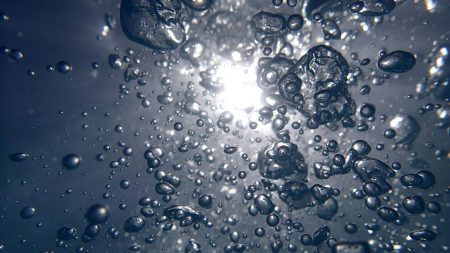
Fast-forward some 1.5 billion years from the Hadean, and Earth had calmed down. Volcanic events continued, but permanent oceans had formed by now, and they were teeming with single-celled organisms.
Then one of those organisms, namely cyanobacteria, learned photosynthesis. And as you learned in science class, photosynthesis produces oxygen, which now flooded the seas and atmosphere.
While that’s great news for us, it was a planet-spanning disaster at the time. Most organisms on Earth back then didn’t need oxygen; in fact, it was toxic to them. The Great Oxidation Event, also known by nicknames such as the Oxygen Catastrophe or the Oxygen Holocaust, wiped out massive amounts of ancient life.
3. Boring Slimy Earth
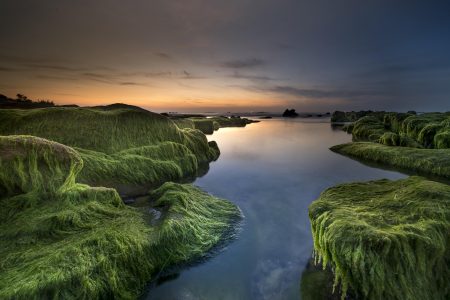
Following the Oxygen Disaster, Earth apparently decided it was time to calm down – by a lot. The epoch between 1.8 billion and 800 million years ago is commonly known as the Boring Billion.
It’s not that everything on Earth came to a screeching halt. The tectonic plates still moved, a volcano erupted here and there, and new bacteria developed every now and then.
However, compared to anything before or after this billion-year stretch, it was mind-numbingly dull. The continents were steady, diversification of life slowed down, and no major catastrophes occurred.
Things were so calm, in fact, that the bacteria living in the oceans could develop enormous biofilms that covered the seas and land. Those slimy layers resulted in this era’s second nickname: the Age of Slime.
4. Snowball Earth
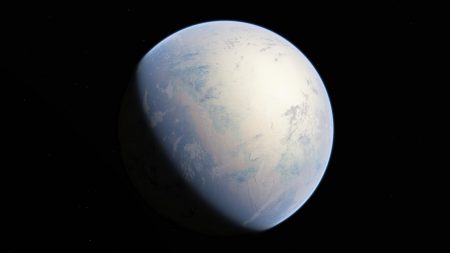
Eventually, the warm, slimy conditions changed, and Earth got cold. Stupidly cold. So cold that the entire planet probably turned into a snowball.
The Cryogenian period took place from 720 to 635 million years ago. Earth’s climate cooled down so much that the planet suffered at least two globe-spanning glaciation events.
It’s a point of contention in scientific circles whether all of Earth was a snowball or whether some oceans around the Equator remained ice-free. In either case, the vast majority of Earth turned into an icicle.
5. Fungal Earth
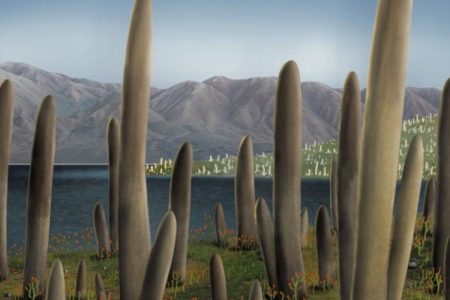
The deep freeze didn’t kill off life on Earth, though, and as the weather finally warmed, living things appeared on land for the first time. You, however, would not recognize the view and would probably think you’ve landed on a bizarre alien world.
Most land life consisted of tiny, primitive plants and maybe some ocean-based critters around the coastal areas. But then there were prototaxites – 26-foot-tall and 3-foot-wide featureless trunks growing out of the ground.
According to the currently prevailing theory, prototaxites were some kind of fungus, making this Earth’s mushroom phase. However, the towering things were so strange and unusual that there’s no consensus on whether they were fungi or something else that no longer exists.
6. Cambrian Explosion
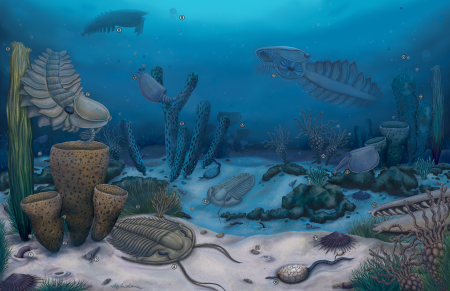
If the gears of evolution were almost stopped during the Boring Billion, they flew into overdrive some 550 million years ago. The result was the Cambrian Explosion, the period when life on Earth diversified at a rate higher than ever before or since.
New species appeared almost every day, and each one was stranger than the last. We had things like the proboscis-equipped Tully monster, the H-shaped Etacystis, and Typhloesus, a thing so weird that nobody really knows what it is.
If you want to learn more about the bizarre life that appeared during this period, read our list of the most bizarre animals in the fossil record.
7. Great Dying
The Cambrian Explosion produced so much new life, but where did it all go? Sadly, nearly everything that lived back then perished in the Great Dying around 250 million years ago.
Essentially, everything that could’ve gone wrong with Earth went wrong. A wave of raging volcanism in today’s Siberia belched clouds of toxic gases into the air, suffocating life and blotting out the sun. Acid rain turned the oceans toxic, the climate warmed up instantly, and oxygen disappeared.
An estimated 90% to 95% of all life vanished in the worst extinction event in Earth’s history. Everything living today is descended from that lucky 5% that managed to cling on.
8. The 2-Million-Year Shower
Life came back quickly after the Great Dying, and some 240 million years ago, creatures such as primitive dinosaurs were back on land. Then it started to rain.
And it didn’t stop for 2 million years. The Carnian pluvial event was a major shift in Earth’s climate, resulting in vastly increased rainfall across the planet.
Of course, it didn’t rain all the time, but the forecast over that 2-million-year period had at least a drizzle booked for every day. It sounds miserable, but it was actually great for the animals at the time. For instance, the rain created the vast swampy regions that helped dinosaurs take over the world.
9. Now

Yes, right now is one of the most bizarre times in Earth’s history. It’s a regular day for us, but just think about what’s going on from the perspective of everything else in the planet’s past.
There are these hairless apes running around, digging stuff out of the ground to build houses, roads, ships, cars, and computers. They have no wings, but they’re flying thanks to the things they make. They left Earth and went to the moon!
But now the apes’ industry and vehicles are doing some funky things to the planet that no other animal has ever done. And they could probably wipe out all life on Earth, including themselves, if they felt like it.
Compare that to masses of slime or a long rainy period. It’s weird.