
- Go on, have a bite. We dare you.
We all have our comfort foods. Whether it’s a steaming bowl of chili, a stack of pancakes, or some biscuits and gravy, there’s a dish you can tuck into when you want to feel cozy and warm.
These are not those dishes. You could call them discomfort foods or “does somebody actually eat that f***ing thing” foods.
And the answer is always yes. There are dishes, even some that you eat, that are actually pretty terrifying either due to their appearance, cooking method, or potential toxicity.
Here are seven of the scariest foods that people do genuinely eat.
1. Blood Soup
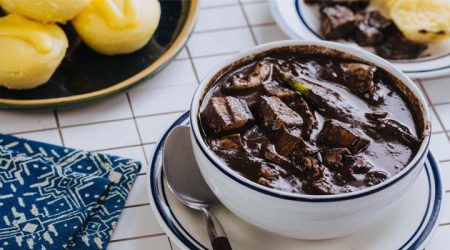
Animals’ blood has been used as a cooking ingredient for ages, for instance in the famous black pudding of the British Isles. Yet, many people still find the many blood soups of the world off-putting.
Blood soups are (relatively) popular in Europe and Asia. In come cases, particularly in Asia, the blood is congealed separately and added to the soup in pieces, which can make its appearance more palatable.
But then there are the soups where the sanguine juice is mixed in while liquid. The addition of blood invariably dyes the soup almost black and gives it a thick consistency — hence why many of these soups are called “black soup” in the local language.
2. Kidney Beans
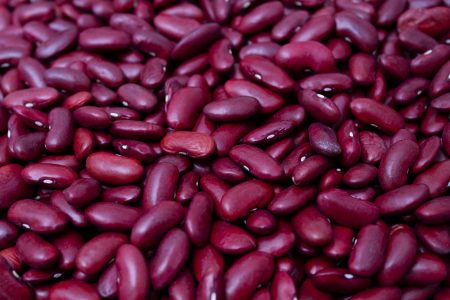
You might wonder why kidney beans are on this list, considering how popular they are. But the fact is that raw kidney beans are toxic.
Very, very toxic.
Kidney beans (and various others) contain a chemical called phytohaemagglutinin. It’s tough to spell and it’s tough on your stomach, causing violent indigestion, nausea, vomiting, and diarrhea.
You can experience all that after eating only four raw or undercooked kidney beans. You’ll either have to go through an hours-long soaking and boiling process to prepare the beans, or just use canned beans.
3. Casu Martzu
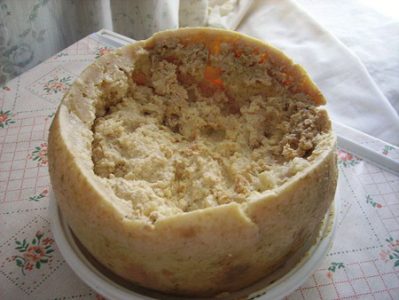
Casu martzu is a type of cheese from the Italian island of Sardinia. It’s name translates to “rotten cheese” — and that’s a very literal name.
This nightmare cheese is prepared by inoculating a pecorino sheep’s cheese with the maggots of the cheese fly. As they gorge themselves on the cheese, they decompose it until it’s a gooey, rotten mess in the middle.
And that’s when you’re supposed to eat. With the maggots.
Those maggots better still be alive too, because if they’ve died, the cheese is too rotten and will probably poison you. Oh, and the maggots might survive your stomach and live in your intestines.
4. Shanghai Blood Clams
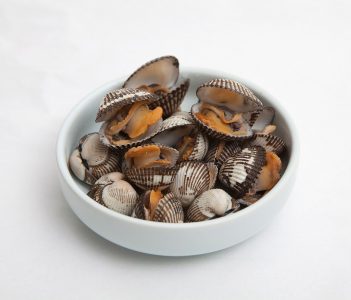
Blood clams are called that because of their red, bloody-looking flesh. The color is due to an excess of hemoglobin, which they need to live in low-oxygen environments.
The problem is that, due to where they live, they need to filter a lot more water to get the food they need. Consequently, they have the opportunity to ingest many more disease-causing viruses and bacteria — like hepatitis A.
That’s usually not a concern, as long as the clams are cleaned and cooked properly. Around Shanghai, though, we have an issue.
The waters around the city are seriously polluted, and the locally popular cooking method for the clams involved only poaching them until they’re still half raw. Consequently, an estimated 18% of Shanghainese who eat blood clams carry the hepatitis A virus.
5. Sannakji
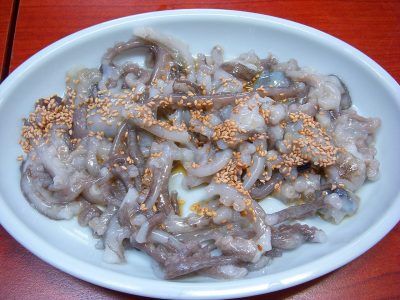
Sannakji is a Korean delicacy, whose name means “squirming octopus.” The dish consists of a small octopus or the tentacles of a larger one that wriggle around as if alive.
Now, the octopus on the plate is actually dead. But it’s very fresh, so it moves because the salts in the accompanying soy sauce make its recently-deceased neurons still fire.
That comes with a choking hazard. The tentacles behave exactly as if they were still alive, and their suckers could latch onto your throat — from the inside.
As such, diners eating sannakji are strongly encouraged to thoroughly chew their food to break down the suction cups.
6. Smalahove
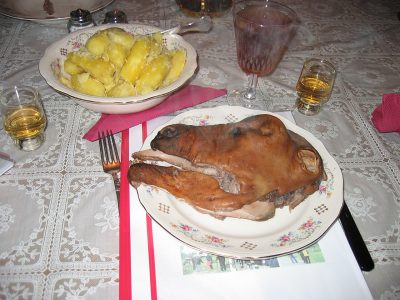
If you eat meat, you’ll have to accept the fact that your meal came from a dead animal. But it’s still a bit unnerving to have a severed sheep’s head put down on the table in front of you.
Smalahove is a traditional Norwegian Christmas dish. It consists of a de-fleeced, smoked, and boiled head of a sheep, often served with mashed potatoes or rutabaga.
Now, the dish’s popularity has decreased significantly over the years and these days most people opt for pork belly, lutefisk, and lamb ribs at their Christmas tables. Still, you can get it easily if you want to try it, and sheep’s heads are sold in grocery stores around Christmas.
7. Fugu
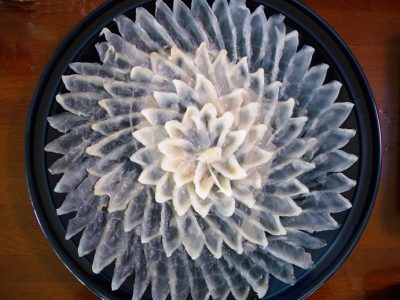
Finally, we have fugu. This dish, consisting of raw, sliced pufferfish, is considered one of the finest delicacies in Japanese and Korean cuisines.
That’s despite the fact that it can very well kill you.
The fugu pufferfish is incredibly toxic. Eating certain parts of it contain so much tetrodotoxin that it can kill you within an hour of consumption.
As such, to legally prepare the fish, chefs must undergo a meticulous training and certification program organized by the Japanese and Korean governments. But even then, death could be just one hastily cut fish away.