
- From the oceanic abyss to the Amazon, there are plenty of new creatures left to discover.
We know more about the natural world than ever before in human history — which is to say, still not very much. For instance, biologists estimate that we have discovered less than 15% of all animal species living on Earth.
We’re making good progress, though. Every year, researchers define new animal species and 2024 was no different.
Some of the newly discovered animals are majestic, others are terrifying, and then there are the ones that are… Well, they’re a little weird.
Naturally, we’re the most interested in that latter category. Here are seven new animals discovered in 2024 that are a bit odd in one way or the other.
1. Whistling Frogs
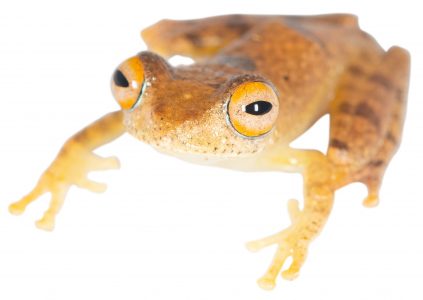
If we asked what sound frogs make, you’d probably say they croak. And most frogs do, but not the seven new species discovered in Madagascar this year.
They whistle.
Belonging to the tree frog genus Boophis, these whistling frogs live in the rainforests of Madagascar. The team that discovered them believes the frogs whistle instead of croak to ensure they can hear each other over the loud, fast-flowing streams they live by.
They also thought that the whistles sounded like sound effects from Star Trek. So, they named each frog species after a famous space captain — Kirk, Picard, Sisko, Janeway, Archer, Burnham, and Pike.
Heh, nerds.
2. Skeleton Panda Sea Squirt
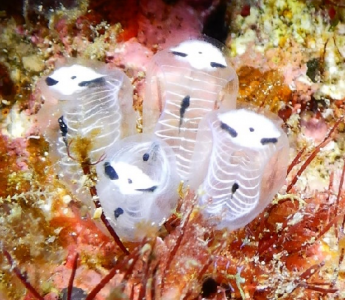
The skeleton panda sea squirt is one dumb animal. We’re not saying that to be mean, either — it literally doesn’t have a brain or much of a nervous system in general.
These filter feeders look striking, though. Their transparent tube-like bodies have horizontal, white blood vessels that look kind of rib cages. The “panda” part of their name comes from the black-and-white pattern at the end of their bodies.
Researchers don’t yet know why they have the panda patterns. It just goes to show how strange these things are.
3. Ghost Crustacean
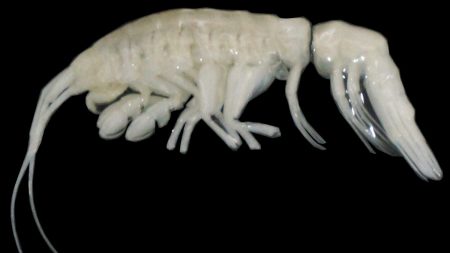
The award for the most alien creature identified this year would undoubtedly go to Dulcibella camanchaca. This bone-white deep-sea crustacean looks like something straight out of a sci-fi horror movie.
D. camanchaca is a type of shrimp-like amphipod that lives at a depth of 25,900 feet in the eastern Pacific’s Atacama Trench. With a body length of around 1.5 inches, it’s a real giant in its environment.
And it’s a ravenous giant to boot. D. camanchaca is the first known active predator to live at such a staggering depth.
For its food, it catches other, smaller amphipods. In the abyss, D. Atacama is the undisputable king of the food chain.
4. Pirate Spiders
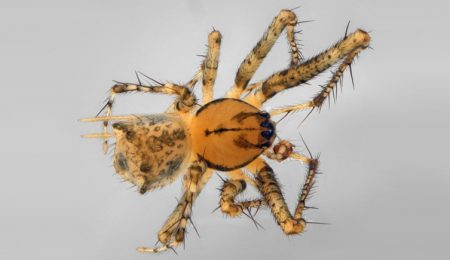
The island of St. Helena is most famous for being the place where Napoleon was exiled. This year, however, biologists discovered two maroon pirates on the island.
Only, the pirates are spiders.
For a long time, scientists believed the pirate spiders Ero lizae and Ero natashae belonged to another, closely related species. A DNA-level analysis, however, revealed that they are indeed their own species.
But why are they called pirate spiders? Well, that’s because they eat other spiders, raiding their webs like pirates would loot a merchant vessel.
5. Soft Hedgehogs
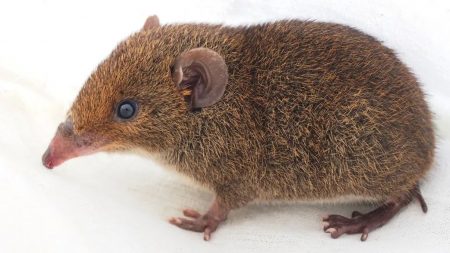
The most defining feature of a hedgehog is its spines. That’s why you might not recognize these five newly discovered animals as hedgehogs — they have no spines.
Instead, these five hedgehog species, belonging to the genus Hylonus are covered in fluffy (if a bit coarse) fur. We suppose they’re still soft-furred compared to regular hedgehogs.
Otherwise, though, they behave much like their spiny relatives. Living in Southeast Asia, they waddle about, consuming bugs and worms as they can catch them.
6. Vegetarian Piranha
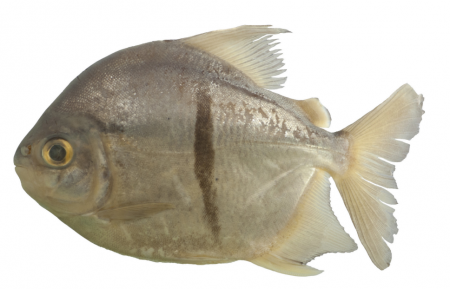
Piranhas have a reputation have a reputation for being ravenous, bloodthirsty killing machines. You can’t say the same about Myloplus sauron.
This fish is a pacu, which look a lot like piranhas and are very close relatives. Unlike its ferocious relatives, however, M. sauron eats plants and fruits.
And if you’re curious about the name: yes. The fish is named after Sauron from The Lord of the Rings.
When the team that identified the new species saw it for the first time, they thought the dark vertical stripe on its side looked like the Eye of Sauron as depicted in the Peter Jackson movies. So, they named the fish after the Dark Lord.
Heh, nerds.
7. World’s Largest Snake
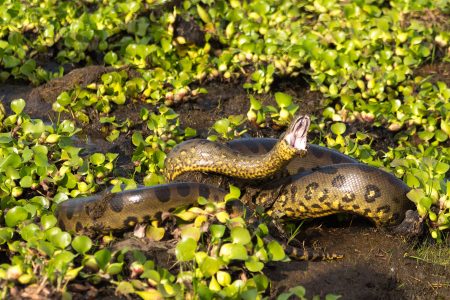
You might think that most new species that we find are small — after all, it’s harder to spot tiny things. However, the northern green anaconda shows you that you can be very big and still avoid detection.
After all, this is the largest species of snake living on the planet. Northern green anacondas live in the Amazonian rainforests of Ecuador, growing to be up to 20 feet long.
Biologists used to think that there was only one green anaconda species in existence. Then, a new DNA analysis showed that there’s more genetic difference between northern and southern green anacondas than there is between humans and chimps.
The northern anacondas tend to grow a bit larger than the southern ones, so now they get to hold the record title.