
- If animals go to war, it’s usually to either kidnap, kill, or eat the enemy’s children.
Organized warfare in a uniquely human phenomenon. We’re the only species on the planet unfortunate enough to have developed the kind of intelligence and political organization necessary for full-scale, total war.
That said, it’s not like animals don’t go to battle against each other. While most fights between them are single bouts between predator and prey or two rivals squaring up for territory, some animals engage in shockingly well-organized violence.
So much so that you could almost say they’re going to war. Here are seven animals that engage in war-like behavior.
1. Lions

Lion prides are tightly-knit and highly territorial groups. As such, it’s no surprise that the lions of the pride will band together to defend their home turf from invaders, be they packs of wild dogs or hyenas.
However, there are two situations that really get lions on the war path. The first is another pride encroaching on their area.
In this situation, the females of the pride will usually square up against each other. These encounters generally end without violence, but it’s not uncommon for a fight to break out.
The second situation happens when a group of male lions bands together in what’s known as a coalition. Coalitions often seek out prides rules by older, weaker males and attack to overthrow the previous leader.
Some lion coalitions are extremely successful. For instance, a group called the Mapogo coalition took over 170,000 acres of territory in South Africa’s Kruger National Park, systematically slaughtering more than 40 male lions and absorbing their prides into their empire.
2. Chimpanzees
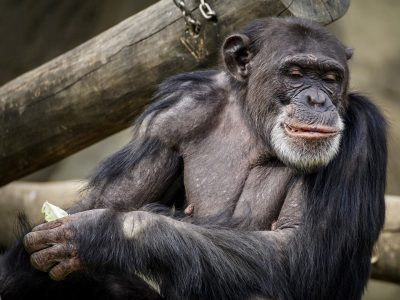
Chimps are our closest relatives and exhibit many surprisingly human-like behaviors. That extends to intergroup conflicts — particularly in the use of reconnaissance.
Recent observations of warring chimps have shown that the apes understand the advantage of high ground. In border zones between two feuding chimp troops, they will often send small groups of chimps onto hills and cliffs to listen to the noises of their enemies.
If they don’t hear anyone, the scouts will know the area below the hill is empty. They’ll report back to the main troop, which will organize a raid party to push into enemy territory and take their rivals by surprise.
In addition to conquering more territory (and therefore food and other resources), chimp troops will raid each other for their babies. They’ll kidnap their enemies’ children to boost their own group’s genetic diversity.
That said, chimps will fight other apes as well. Biologists have observed full-blown battles with sticks and stones between chimps and gorillas.
3. Gorillas

Speaking of gorillas, they’ll wage war on other gorilla groups (in addition to irritating chimpanzees). However, unlike chimps, gorillas have the exact opposite strategic goal when raiding enemy territory.
They don’t want to kidnap their rivals’ babies — they want them dead.
Mountain gorillas are particularly vicious in that they will battle other groups when there’s no reason to do so in terms of resources. These gorillas rely on food sources that are readily available all over the place year-round.
Instead, they simply don’t like the idea of other gorillas living near them. Killing a grown male gorilla is no easy task, but if they keep killing the enemy’s vulnerable infants…
Well, soon enough, their problem will die of old age.
4. Banded Mongooses
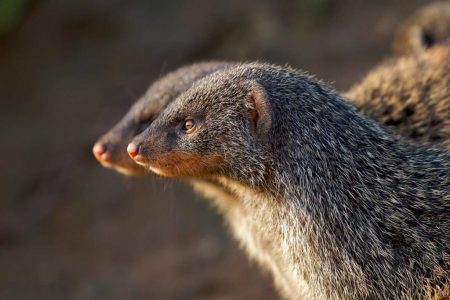
Banded mongooses take the term “bloodlust” to a whole new level. They march to war not for food, territory, or glory — but because the leading female is horny.
When a female mongoose goes into heat, she will begin stirring up trouble. Perfectly intentionally, she assumes a leading role in directing the mongoose pack into a place where they will come into conflict with another pack.
At that point, mongoose warriors will form battle lines like something you’d see in an epic fantasy movie. But as they charge each other, the scheming female is suddenly nowhere to be found.
That’s because she has slipped behind the lines to mate with the males of the opposing pack. She’s ready to sacrifice her own flesh and blood (in a figurative sense) just in order to get some.
5. Hornets (And Honeybees)
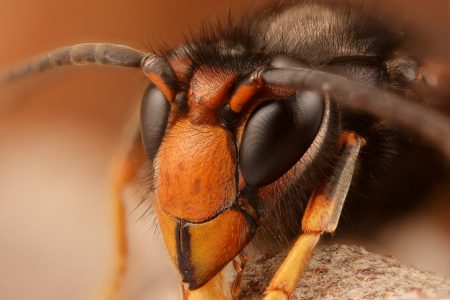
Asian hornets are enormous stinging monstrosities that have a very specific favorite food — honeybee larvae. They love to eat bee babies so much that they’ll commit mass-scale genocide to get them.
If a hornet scout finds a beehive, it will beeline (pun intended) back to its own hive. Then, a warband of 30 or so hornets takes flight, heading toward the beehive while The Flight of the Valkyries plays in the background.
Once they arrive at the beehive, they begin the slaughter. That raiding party of 30 hornets is perfectly capable of massacring an entire hive of more than 30,000 bees, carrying their young away to be consumed.
That said, the bees are far from helpless, and in fact have a genius strategy to kill the invaders. Using their numbers to their advantage, the bees seek to swarm the hornets, forming a ball around them. They will then start vibrating their wings, raising the temperature in the center of the ball so high that it cooks the hornet alive.
So, in the end, one party of the conflict will be eaten — it’s just a question of whether the menu features still-squirming baby bees or hornet cooked sous vide.
6. Ants
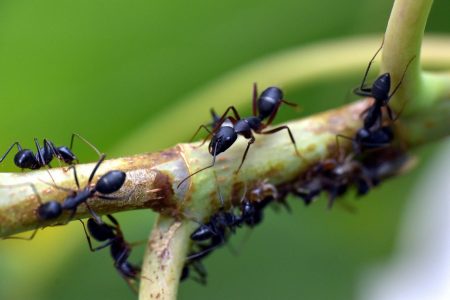
Ants are perhaps the most famous example of warring animals. They’ve really developed full military machines, featuring everything from scouts to purpose-bred insect tanks.
However, ant warfare can take many forms. Some species will engage in full-blown mortal combat, attacking and killing off competing colonies in the name of their queen.
Others, however, engage in less lethal forms of combat. For instance, when encountering a rival colony, certain species of ants form long battle lines before beginning a push battle.
They try to shove the enemy line back as far as they can. Wherever the lines are at the end of the “battle,” that’s where the new border is.
7. Naked Mole Rats
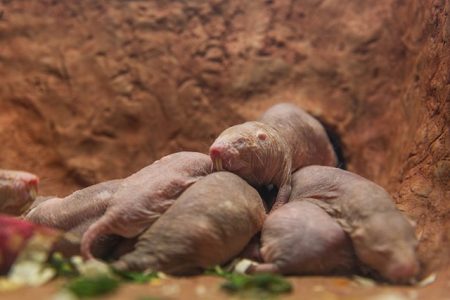
Naked mole rats are bizarre and, frankly, disgusting creatures. These wrinkled, nude, cancer-resistant rodents live much like ants. They form colonies centered around a queen, with sterile female workers taking care of all everyday business.
Those duties include staging slave raids.
You see, the mole rat queen doesn’t trust its own daughters one bit. One of them might get uppity and start exhibiting queen-like traits, which could lead to internal bloodshed in the colony.
So, when the mole rats come into contact with another colony, the queen will command her troops to invade them. Her orders are simple but cruel: “Bring me their children; kill the rest!”
When/if the raiders return, the kidnapped infants will be pressed into slave labor for the rest of their lives. Cut off from their own colony, they’re less likely to rebel against queen rat.
And to her, that’s well worth the lives of a few of her own children.