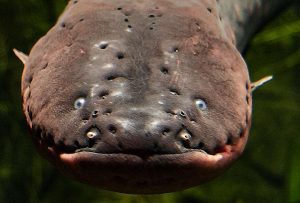
- When is an eel not an eel? When it’s electric.
Animals can have confusing names. For example, did you know the red-bellied woodpecker doesn’t have a red belly?
These kinds of misleading monikers can be a result of outdated classifications, shared appearances between unrelated animals, or simple mistakes. Whatever the reason, though, an animal’s name or behavior can lead you to believe it’s related to creatures it has nothing to do with.
Here are 10 examples of animals that aren’t what you might think they are.
1. Red Panda
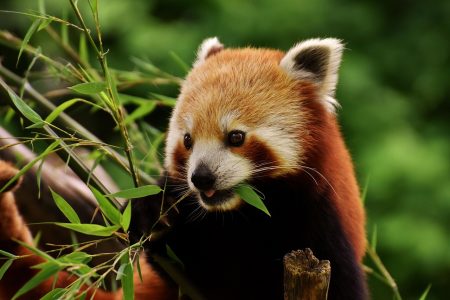
Looking at the red panda, you might already guess that it’s not actually related to the black-and-white giant panda bear. Instead, these adorable fuzzballs are the relatives of skunks, weasels, and raccoons.
The confusing naming comes from the animal’s Nepali name, “ponya,” which refers to the thumb-like wrist bone both red and giant pandas have for grasping bamboo. In the English-speaking world, however, the red panda was originally simply known as “panda” until the giant panda was scientifically described in the late 19th century.
That means the red panda is actually more of a panda than the giant panda. Even though it’s not a panda.
2. Shrew
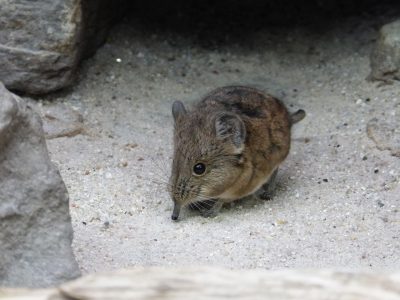
Many people seeing a shrew running across their yard might think it’s a mouse. Indeed, with their tiny bodies and long tails, it’d be easy to believe shrews are just long-nosed mice.
In reality, though, shrews aren’t even rodents. They belong to the order Eulipotyphla, which also includes hedgehogs, moles, and the solenodon.
That latter is actually one of the rarest animals in the world. You can read more about that here.
3. Koala
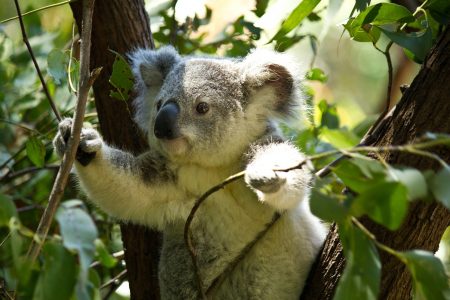
You may have heard people refer to the koala as the koala bear. Although it does appear sort of bear-like, koalas are absolutely not bears.
Like so many other creatures Down Undah, the koala is a marsupial, with its closest living relative being the wombat. Koalas even have the characteristic marsupial pouches where their babies live, although they’re not immediately noticeable.
4. Mantis Shrimp
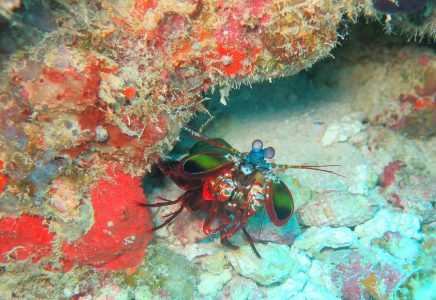
The mantis shrimp are named after mantises due to their sharp claws and shrimp due to their shrimpy appearance. However, they are neither of those things.
Mantis shrimp belong to the order Stomatopoda. They kind of do their own thing, but they’re more closely related to lobsters and crabs than shrimp, despite their appearance.
Oh, and the peacock mantis shrimp isn’t a peacock, either. How many misleading names can you pile on one critter?
5. Termites
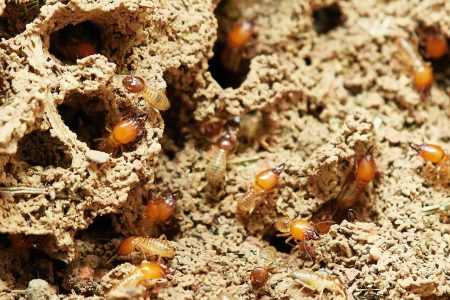
Termites live in colonies, have specialized roles, and live to serve the queen that gives birth to all of them. So, they must be related to ants, right?
Not even close. Termites are a hyper-specialized type of cockroach that just happen to live in a manner resembling ants.
Paying close attention reveals key differences between ants and cockroaches, with the latter having both a king and a queen and undergoing only a partial metamorphosis.
6. Killer Whale

The orca is often called the killer whale, and not without reason. They are extremely adept hunters, but whales they are not.
Instead, orcas are the largest member of the dolphin family. Technically, that does make them whales — in the sense that they’re cetaceans — but nobody really considers dolphins “whales” in everyday life.
Really, calling them whales just because they’re so big is kind of rude.
7. Horned Toad
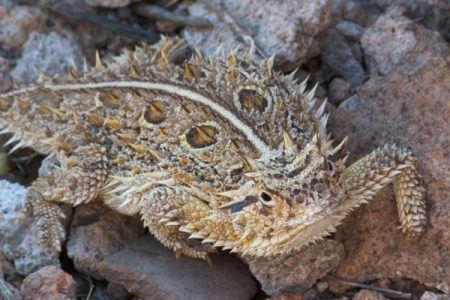
You absolutely would not believe this spiky lizard is a toad, despite its name, and you’d be correct. But why is it called a “toad,” then?
The name comes from their body shape. These lizards are flat, broad, and round and have blunt noses, so their body structure superficially resembles a toad.
Whoever named them, though, has obviously never seen an actual toad.
Fun fact: the horned toad cries blood when threatened. Read more about that in our article on weird and gross self-defense mechanisms.
8. Bearcat
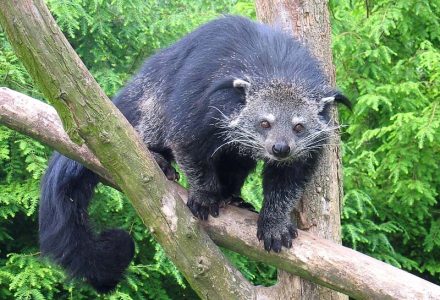
The bearcat is a tree-dwelling, shaggy creatures from the forests of South and Southeast Asia. And, as you can probably guess, it doesn’t have anything to do with either bears or cats.
Instead, the bearcat is a member of the viverrid family. This means its related to such obscure creatures as civets, genets, and oyans.
Don’t feel bad if you’ve never heard of any of those. There’s a reason why people these days prefer to call bearcats by their native name binturong. At least then you won’t be confused.
9. Honey Badger
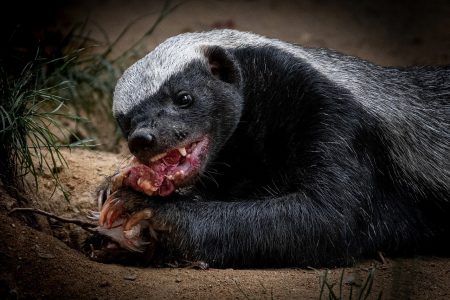
Honey badgers are colored black and white and they’re roughly badger-shaped and badger-sized. Badgers, however, they are not.
Granted, they belong to the family of mustelids, which includes badgers, but also weasels, wolverines, otters, and martens. The honey badger is the only living member of the Mellivora genus, making it a unique living relic and not a true badger.
That also explains why the honey badger doesn’t behave anything like a real badger. Or did you know that honey badgers are among the most violently aggressive animals on the planet?
10. Electric Eel
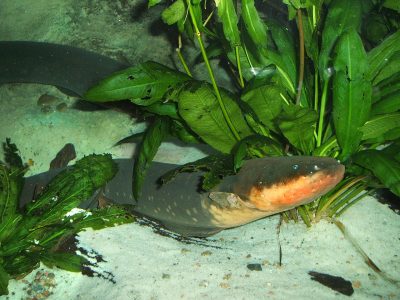
It looks like an eel, it swims like an eel, and it sounds like an eel (in that it sounds like nothing). Yet, the electric eel is shockingly not an eel.
In fact, it’s not even close. The electric eel is closely related to the various knifefish species, and more distantly to catfish and piranhas.
It just goes to show that you can judge an animal by its look any more than you can judge a book by its cover.