
- Chocolate is (almost) always worth protecting...
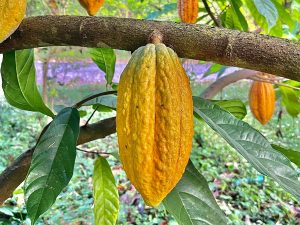
Cocoa is a vital global crop, estimated to support the livelihood of more than 40 million people, most of whom are farmers from West Africa, Southeast Asia, or Latin America. Cocoa is the main ingredient driving the entire chocolate industry, making it a massive economic driver for the entire world. The current global market is valued at well over $100 billion annually. For countries such as Ghana or Côte d’Ivoire cocoa is a fundamental pillar of the local economy. However, their contribution is crucial for the world as well, since approximately 60% of the world’s supply comes from these two countries.
The cacao trees only grow in a narrow area close to the equator, further elevating the consumer demand. Despite the financial value the sector has been struggling under the yoke of several different factors. Many farmers continue to struggle as a result of volatile price markets and the uncertainties of global supply chains, while the depletion of natural resources and the effects of global warming bring additional challenges as well. The cultivation of this daily staple is becoming increasingly complex as a result, prompting discussions around the importance and implementation of sustainability and equity.
Background of the crisis
Between 2023 and 2024 cocoa prices skyrocketed by a whopping 600% as a result of crop failures in West Africa. The market has cooled today but the strain is still there, with the main reasons being the weather and diseases that are affecting the trees. Alkalized cocoa powder, the kind of cocoa that is most commonly used in mass-market baking, beverages, and commercial production, was already slightly pricier due to additional processing steps needed to create it, as well as the fact that the cocoa has a higher fat content, but the changes impacting the entire sector could elevate prices even further.
The unpredictability of climate patterns as a result of global warming means that high temperatures are paired with extreme rainfall and prolonged dry stretches. This puts a lot of strain on the trees, making them more vulnerable to diseases and pests as well. The black pod disease and cacao swollen shoot virus are the most concerning, having the ability to kill trees altogether as well as infect the ones found nearby. The former is responsible for yield losses of around a third of the total crop, with the best means of control being to prevent infection altogether.
In the case of the swollen shoot virus the pathogen is transmitted from one tree to another by mealybugs. Hundreds of millions of trees have already been decimated by the disease, with high-density planting facilitating the spread of the virus since the bugs are able to move freely from one tree to the other because of the interlocked canopy.
The dangers of deforestation
Cocoa production is unfortunately a major driver of deforestation, particularly in West Africa. Farmers have to clear the tropical rainforest in order to establish new plantations. This is more concerning than ever nowadays, because the older trees are aging rapidly, meaning that their yields are pretty much exhausted. This way the cycle continues to repeat, meaning that protected habitats are in danger and endangered species face increasingly pressing existential risks. If you want to ensure you keep up with sustainability standards make sure the black cocoa powder and all other derived products you use come from eco-friendly providers that care about the environment and ethics.
A certain destructive pattern is associated with the growing of cocoa trees, namely that forests are felled, new trees are planted, the profits appear, then the soil becomes unable to sustain production, the trees suffer, and there’s no choice but to move to untouched forests again. Monocultures wipe out the natural biodiversity as well, which is why many are starting to advocate for agroforestry instead, a model that allows different types of trees and shrubs to grow alongside cocoa crops as well. This mimics natural ecosystems more closely and means that cocoa trees can grow and thrive under the protective canopy of other trees.
Many jurisdictions have begun implementing regulations as a means of curbing the impact of deforestation. The EUDR, for instance, has been adopted by the European Union and forbids the selling of products associated with woodland degradation in the EU. Many organizations have become involved in promoting and supporting sustainable farming initiatives by joining forces with local communities in order to come up with joint solutions. It has been demonstrated that managing undergrowth, planting native timber or other crops alongside cacao trees, and pruning can significantly improve yields without the need to move into new forests at all.
Improving the livelihood of workers
Cocoa production has come under scrutiny as a result of the ethical challenges associated with the production processes as well. Economic inequality is one of the most significant concerns, since despite the fact that chocolate is a multi-billion-dollar industry many cocoa farmers earn very little for their labor. A lot of the work is often unpaid as well, since some farms cannot afford to pay their workers at all but need workers so that they continue to survive. The conditions can be dangerous as well since harvesting pods is done with machetes. Carrying heavy loads and the fact that the workers typically don’t benefit from any form of protective gear are also concerning.
To ensure ethical practices, companies that focus on sustainability, activists, and consumers are relying on supply chain transparency and independent certifications that can guarantee better practices. Fairtrade ensures that farmers get paid and that investments are made to local communities, especially in areas such as education and healthcare. Other certifications focus on environmental sustainability, the general welfare and well-being of the employees operating in the sector, and agroforestry. Some chocolate makers have decided to bypass supply chains altogether and go for farming cooperatives instead.
To sum up, the cocoa industry is on the brink of change. In order to move forward more comprehensive sustainability policies are needed. Prioritizing human rights and the environment are non-negotiables and vital for the entire planet.