
- Maybe you should occasionally talk to your neighbors.
It’s unusual enough to live for decades in a single hotel room. But it’s even more unusual that not a single person on the planet seems to know a thing about you.
Yet, that is the story of Hisako Hasegawa.
Hasegawa, a Japanese woman, moved to the Belvedere Hotel in New York City in the ‘70s. For the next 40 years, she would call that small room her home.
In 2016, Hasegawa died. As the cops showed up to file a report on her death, the hotel staff and Hasegawa’s neighbors realized they knew nothing about her.
It’s not that the senior lady was disliked around the hotel — quite the opposite. She was a polite and cheerful woman, that seemed to brighten the day of everyone around her.
No one just ever thought to ask her about her life, and she wasn’t talking on her own initiative.
Who was Hasegawa and why did she come to America? How did she earn the money to stay at the hotel? Did she have a family?
Nobody knows. Let’s take a look at the mysterious lady that was Hisako Hasegawa.
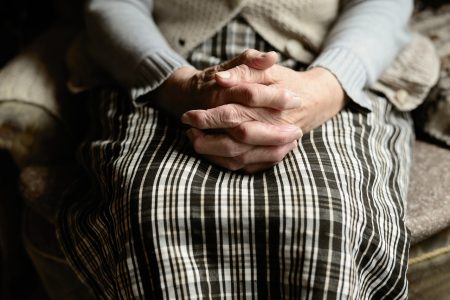
NYC Was Cheap Once
But first, you may need some context. You might be wondering how anybody could afford to stay in a hotel in New York City.
Believe it or not, but there was a time when hotels in NYC were an incredibly affordable housing option. The single-room occupancy (SRO) units, as they were called officially, gave you a room, a bed, and possibly even a small cooking corner as in Hasegawa’s case.
By the 1970s, however, SRO housing had acquired a bad reputation, with the units associated with all kinds of criminal activity. As a result, NYC began cracking down on them and many closed.
Others, like the Belvedere, managed to remain open. The hotel had also offered rent-stabilized rooms at the time, meaning that there was a hard limit on how much the owner could raise the rent annually, if at all.
Belvedere has continued to honor these contracts through the years and multiple changes in ownership. This resulted in a few dozen people living in the hotel on a permanent basis.
The Nice Loner
This is how we get to Hasegawa. First, the facts — she was born in Japan, is believed to have arrived in NYC in the ‘70s, and settled in the Belvedere in room 208.
And that’s it. The fastest fact check in the history of Oddee.
Hasegawa remained mostly in her room, occasionally emerging to run errands and go shopping. According to the few people who talked to her, she was a pleasure to be around.
Always with a smile on her face, Hasegawa was positive and polite. She would respond to even the smallest favors with completely overblown acts of kindness.
“If you wrote her a rent receipt, for example, you would magically find a hand-drawn card the next day on your desk,” Ali Mahmood, a Belvedere employee told NPR.
“Someone took 45 minutes to make that card.”
The person who was the closest thing Hasegawa seemed to have to a friend was Renee Querijero. She lived in the apartment opposite Hasegawa’s, yet she still never learned much about her.
“As far as the nearest neighbor, I’m the only one who she talks to and she knows my name,” recalled Querijero.
“She doesn’t say so much, you know, except the usual greetings, ‘How are you? Weather is nice. I’m gonna get my mail.’”
Hasegawa did enjoy Querijero’s piano playing, however, and would often thank her for the music — even if Querijero was playing for her own amusement.
‘I Should’ve Asked Her’
And so the years went on. In time, the hotel staff learned Hasegawa’s routine so well they could’ve probably set their watches based on seeing her in the lobby.
That’s why they were surprised to find that one morning in 2016, Hasegawa didn’t come down. Concerned for the now elderly lady, the staff went up the check on her.
Sadly, Hasegawa had died at the age of 82. As is routine in cases like this, the hotel called the police.
The cops began asking questions from the staff and Hasegawa’s “friends” in order to file their report and find family members to contact. That’s when people realized — perhaps for the first time — that as nice as she was, Hasegawa was a total blank.
They knew nothing about her life or her family. Nobody knew why she left Japan, what her job was, or who her friends were.
Querijero realized that despite living across from her door for years, she had never seen or heard Hasegawa have any company over. The revelation made her feel bad about never trying to get to know the old woman better.
“I should have asked her. They think you are intruding or something, but no, that’s a misconception, I think you should ask,” she mused.
For his part, Mahmood wondered if Hasegawa came over chasing a dream she never got to realize.
“To leave, and leave your families behind, one would hope that you’d find love and meet people, have a family and maybe not end up alone in a hotel room somewhere,” he said.
Yet, perhaps that’s how Hasegawa wanted it. Perhaps she left Japan because she wanted to be alone.
We’ll never know, though. And Hasegawa, currently residing at plot 379 in the Hart Island public cemetery, surely will not tell us.