
- We’ve heard of “packing up and leaving” but this is ridiculous.
Jackpot! You’ve struck gold — or some other kind of valuable mineral. Now you just have to get it out of the ground.
Usually, that’s as “simple” as constructing a mine. But what do you do if someone’s already built a city over your precious deposit?
Sweden is resolving that problem in a decidedly extreme manner. No, they’re not demolishing the city.
They’re just moving it out of the way.
The city of Kiruna is on the move. For the past couple of years, they’ve been pulling buildings off their foundation and moving them to a new site one by one.
It’s all done due to the discovery of rare earth minerals under Kiruna. The move should be completed by 2035, with the entire city having migrated two miles east.
Yet, the move isn’t just because of the new minerals. The ground under the city has become dangerously unstable due to an enormous iron ore mine that made Kiruna wealthy.
So, they’re now moving the town away from the old mine — so they can construct a new mine next to it. Swedish ingenuity, everybody!
A Big Discovery
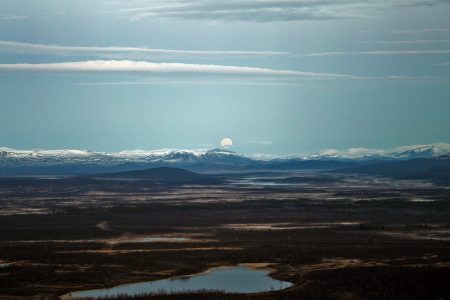
Kiruna is a city of some 17,000 residents, located in northern Sweden’s Lapland region. Recently, surveyors made a big discovery under the city.
As it turns out, Kiruna sits on top of the largest known deposit of rare earth minerals in Europe.
In case you’re not aware, rare earth elements are kind of a big deal. They’re vital for our ability to build, among other things, wind turbines and electric car batteries.
A lot of the rare earth metals used in industry come from Russia, which isn’t currently the most popular trading partner, because… Yeah, the whole Ukraine thing.
So, it’s easy to understand why Sweden wants these metals.
The problem is that there’s the city on top of them. Mining a massive cavern under a busy urban settlement isn’t really the smartest move because it would kind of cave in and swallow the whole city.
What could the Swedes do to resolve this dilemma?
Pick It Up and Put It Elsewhere
SpongeBob must be popular in Sweden. We’re saying that because they took Patrick’s advice.
They’re taking Bikini Bot-… Sorry, Kiruna, and pushing it somewhere else.
Since 2021, Kiruna has been picking up its most significant buildings and hauling them to a new site. The new Kiruna will be 1.9 miles east of its current location.
Among the buildings to be moved is Kiruna’s unique wooden church, built in 1912 to resemble a traditional indigenous Sami hut. It’s move should be completed in 2026.
Kiruna has already built a new railway station to its future location. An entire new downtown area is slated to be completed in 2035.
In addition, some 6,000 locals are expected to pack up their things and move out of the new rare earth mine’s way. Not everybody’s happy about it, though — rents in Kiruna are slated to jump by 25% due to the move.
Ouch.
Let’s Do This Again
There’s another reason for Kiruna’s move than just the new mine, though. That reason is the old mine.
Kiruna is home to one of the largest iron mines in the world. Case in point, the Kiruna mine — founded in 1890 and operated by Sweden’s state-owned LKAB — is responsible for a whopping 80% of all of Europe’s iron production.
Every day, miners haul away enough iron ore, rock, and soil to weigh six times as much as the Eiffel Tower in France. A bit of a weird comparison, but hey — that’s the data we found.
This all presents a problem. There’s nothing to replace that missing Earth and Kiruna has begun to slowly collapse in on itself.
Local hospitals and schools, for example, have developed cracks so big the authorities have deemed them unsafe. Even without the rare earth minerals, Kiruna would have to either move or slowly sink into the ground.
At least moving the town will solve this issue. The mining company can then happily dig a new mine right next to the location.
Seriously, we can’t be the only ones thinking someone hasn’t thought this through.