
- Who needs subtlety when you can drop hundreds of tons of death on your problem?
Imagine you’re facing a difficult problem. How would you go about solving it most efficiently?
The mature and sophisticated way would be to carefully analyze its root causes and address them with intricately planned measures. Or you could just bomb it until everything in a 100-mile radius around the problem is a lifeless wasteland.
Look, we’re not saying it’s a good solution, but it’s a solution.
It’s also the approach researchers plan to use against the mice of Marion Island. They want to kill every last mouse on the miserable chunk of rock through an extensive rodenticide carpet bombing campaign.
That might sound cruel, but the rodents aren’t exactly being little angels themselves. The invasive mice have developed a taste for endangered wandering albatross — and they prefer to eat their meat while it’s still alive.
Consequently, Marion Island’s million-strong mouse population is pushing the already vulnerable albatrosses toward extinction. Either the mice or the albatrosses have to go.
The bombers are scheduled to take off in three years. If you have more humane suggestions on how to resolve the mouse-albatross conflict, it’s time to let somebody know.
The Day the Mice Came
Marion Island is one of the two Prince Edward Islands that peek out from the ocean roughly halfway between South Africa and Antarctica. They’re nearly barren, grassy rocks, populated mostly by insects and visiting seals.
As such, they’re an ideal nesting ground for wandering albatrosses. These legendary seabirds have been laying their eggs on the islands for… Probably as long as there have been albatrosses.
And then the mice came.
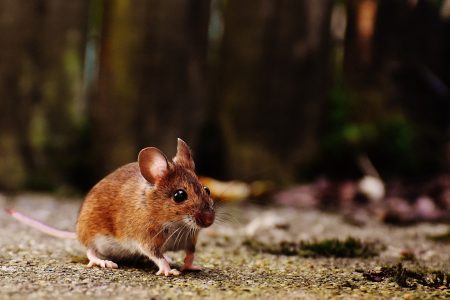
The humble house mouse — the same rodent you might find sneaking about in your pantry — arrived on the island in the 1800s on board seal-hunting ships. They soon found that nothing on the island threatened them, so they decided to stay.
The mice needed food, though. Lucky for them, Marion Island’s seabird nests provided an ample supply of eggs with which the mice could feed themselves and their swarms of offspring.
But plain eggs get boring after a while. Looking to expand their diets, the mice realized the newly hatched baby birds were defenseless against them, so they started devouring the hatchling alive en masse.
Now, the mice had tasted blood — and they wanted more.
The Flesh of the Living
The thing about Marion Island albatrosses is that they’ve never faced a threat on land. The seals don’t care about them and they’re the biggest birds around, so they have absolutely zero defensive strategies against land predators.
Unfortunately, the mice have realized this. And they’ve put their newly acquired knowledge to practice in the most horrific manner.
They’ve started eating the albatrosses alive.
Since the birds have no clue how to react to them, the mice can simply climb on the albatrosses. They will then attack the birds’ elbow joints, chewing through them to render them incapable of flying off.
Stuck on the ground, there’s nothing the albatrosses can do. They will soon be dead, either from starvation or the thousands of tiny teeth tearing away at their flesh.
Today, there are an estimated million mice on Marion Island. They’re not only eating albatrosses, but all the other birds nesting on the island as well, most of which are endangered.
Soon, they might wipe out the island’s bird population altogether. That’s why BirdLife South Africa has decided the mice have to die first.
“We have to get rid of every last mouse. If there was a male and female remaining, they could breed and eventually get back to where we are now,” BirdLife South Africe CEO Mark Anderson told AFP.
An ‘Oopsie’ Moment
Conservationists have tried getting rid of the mice before. In 1948, researchers took five cats to the island.
Cats eat mice, so this should work out, right?
Not so. Sure, the cats ate some of the mice, but here’s a pop quiz — what other animals are cats notorious for eating?
Yup, that’s birds. The scientists basically sat the cats at a buffet and let them go nuts.
By the 1970s, the now-feral cats were killing approximately half a million birds a year. It took until 1991 that researchers managed to fix their mistake and eradicate Marion Island’s last cat.
Bombs Away
This time, BirdLife South Africa is bringing out the big guns. And we mean it — they intend to essentially carpet bomb the mice to kingdom come.
Instead of high explosives, though, the bombs will contain pellets of rodenticide. The bird conservation organization is working with the South African government to raise $29 million to dump 660 tons of rat poison on Marion Island.
On paper, it seems like a workable if crude solution. It should not have any effect on the island’s insects, and the birds typically catch fish from the sea.
Of course, the bombing campaign could still backfire in some horrific fashion. We’ll have to wait to find out, though, as the helicopters carrying the pellets bombs are scheduled to take off in 2027.