
- Here’s a reminder that any AI picture depicting a realistic situation might get you in trouble.
It’s so easy to generate an image of virtually anything you can think of with current AI platforms. You can put almost anyone in any situation, real or imaginary.
But if you do make some AI-processed photos, be careful about sharing them. Somebody might think they’re real and it could land you in hot water – as happened with this man in Singapore.
Ye Lin, a citizen of Myanmar residing in Singapore, has been charged with spreading false information and obstructing justice. At the root of his legal problems is a seemingly innocuous, lightly AI-doctored image.
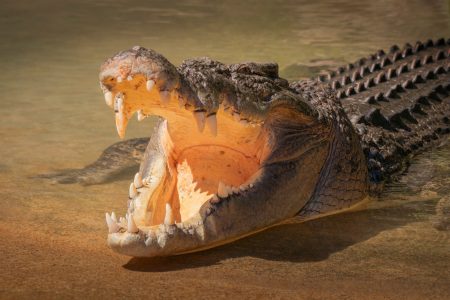
Lin generated an image of a large crocodile lurking in the waters of a popular public reservoir. He sent the photo to his coworker, and in most cases, that would probably be the end of the story.
However, the coworker must have shared the photo because Singapore’s water management agency suddenly started receiving concerned calls about crocodiles in the favorite swimming hole. Out of an abundance of caution, the authorities suspended all activities in the area and performed a wildlife sweep for crocodiles.
After they discovered no nefarious reptiles, the water management and police deemed the supposed original picture to be an AI fake. They tracked it to Lin, who is now possibly facing years in prison.
And it’s not even clear if he ever meant anyone but his coworker to see the photo.
Coworkers Sharing Pictures
The events got their start on August 20. On that day, Lin allegedly used the Google Gemini AI app to generate an image of a large saltwater crocodile at Pandan Reservoir, a popular site for swimming, boating, and other watersports.
Around 3 p.m. on the day, Lin reportedly sent the image to a person identified as his coworker. Had that been it, there would never have been any further issues.
Work buddies like to send funny pictures to each other, after all.
What happened next, however, is not clear. The Singaporean police have not disclosed whether Lin claimed the photo was authentic or whether it was a case of, “Hey, look at this funny picture I generated.”
In either case, the coworker must have forwarded the picture to other people. And those recipients clearly were not in on the gag.
No Crocs Here
Still during the same day, Singapore’s national water agency, PUB, started receiving calls and reports of a dangerous animal at Pandan Reservoir. All the reports cited a photo of a saltwater crocodile that had been supposedly taken at the lake.
Tasked with keeping the public safe around Singapore’s water sources, the PUB had no choice but to take the reports at face value. As far as the agency was officially concerned, people said there was a crocodile at Pandan, so the PUB had the duty to get the beast out of there.
Consequently, the PUB put the reservoir under total lockdown. The agency shut down all the beaches, suspended all licenses for commercial and club activities, and sent agents to find the offending croc.
However, as reported by Channel News Asia, the reservoir was completely calm as the authorities arrived. A sweep of the waters confirmed that there was no crocodile, and there probably never was.
The PUB reported the false alarm to the Singaporean police, who launched an investigation. They determined that the original photo, which had been forwarded to the PUB, was a fake AI picture.
With that, they started seeking the source of the forgery.
Device Wipe
By this point, Lin must have heard the hubbub about a crocodile in the reservoir and connected the dots with his AI-doctored picture. According to the police, Lin deleted the original picture from his phone. He also wiped the generation history of his AI app, possibly to cover his tracks.
But the thing about most AI apps is that they’re not locally hosted. The police were able to find Lin’s information and usage history from Gemini records.
They tracked the man down and slapped handcuffs on him. Now, he has been charged with one count of spreading false information. For deleting his app history, he has also been charged with obstructing justice.
Lin, who has reportedly been communicating with the police through an interpreter, seems to be owning up to his actions. He has reportedly said that he plans to plead guilty to all charges and has not hired a lawyer to defend him.
Under Singaporean law, spreading false information is punishable by a fine of up to $7,800, up to three years in jail, or both. Obstructing justice, meanwhile, can come with a maximum jail term of seven years.
We don’t know if Lin ever intended for anyone but his coworker to see the crocodile picture. The police have not disclosed his motivations for creating and sending the photo.
In conclusion, be very careful about what you share online.