
- Our conclusion is that the eastern U.S. is infested with microscopic vampires.
Bug bites are nasty enough on their own. But it’s a lot worse when you have no idea what’s bitten you.
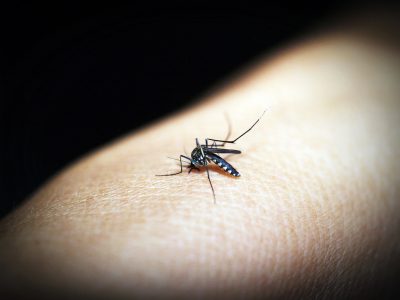
Residents of Arlington county, Virginia, are struggling with a mysterious infestation. Dozens, potentially even hundreds of people have suddenly found large, blistering bug bites on their bodies — with no idea what has bitten them.
This is what happened to Morgan Dailey. One day, she realized she had an itchy bug bite, which she initially though was a mosquito sting.
As it turns out, it really wasn’t.
“It started to grow and it swelled, and then I was at work one day and I noticed that it was blistering,” Dailey told NBC Washington.
Concerned, Dailey decided to go show the bug bite to her mother, Betsy Withycombe. Having brought up a large family, there was no kind of bite or sting she hadn’t seen on her kids — until now.
“We have five children. I’ve seen a lot of different types of bites,” Withycombe said.
“This looks unlike anything I had ever seen before.”
‘Big Lump’
Looking for more information, Withycombe turned to that most reliable of all sources — the internet. She made a Facebook post asking whether anyone else had seen the weird bug bites.
A lot of people had. Withycombe’s post has to date received more than 150 responses.
One of the responders was Michele Donner, who also had been bitten by the mysterious bug. Her bite was surrounded by reddish blotches.
“It was really itchy the first day, then it stopped. Then every day since it’s spread more and more and more,” she said.
“And it was really hard underneath, too. It was like this big lump,” Donner added.
They Came with the Cicadas
So, what is it that keeps chewing on unsuspecting Virginians? Unfortunately, we just don’t know.
The Arlington County Health Department has thrown its hands in the air and straight up said that they have no idea what bug they’re dealing with. Private health clinics aren’t fairing any better, either.
“We don’t really know what type of bites they are. Patients come in for a bug bite, but they’re not sure if it’s a tick, mosquito, or spider bite,” the Urgent Care Center of Arlington told ARLNow.
The only thing that is certain is that people have been reporting bug bites much more often than usual this summer. That fact, however, could give us a vital clue into the culprit.
As we’ve reported before, the Brood X cicadas hatched in eastern U.S. this summer. They may have brought with them a pest that’s now also attacking humans.
“The leading suspect at this point is something called a pyemote, which is a type of mite that likes to feed on cicada eggs, so they must be very happy with their food supply at the moment,” Kurt Larrick of the Arlington County Department of Human Services told 7News.
Pyemotes are tiny little insects that are difficult to spot with a bare eye. Their coloring also sort of blends in with human skin, so that could explain why no one has seen the bugs.
Pyemotes are opportunistic feeders that will take a bite out of anything they can. Historically, that has included humans.
Stumped Experts
Other experts, however, are skeptical about the pyemote theory. Doug Pfeiffer, an entomologist and Virginia Tech professor, doesn’t believe we should blame pyemotes.
“I don’t think cicadas are involved here at all,” Pfeiffer said.
USDA entomologist Dr. Samuel Ramsey doesn’t think pyemotes are the cause. Sure, they’ve been known to bite humans, but he can’t see them being a nuisance at such a massive scale due to their feeding habits.
“The cicadas themselves are going to be just as annoyed by the pyemotes mites as we would be because the pyemotes are generalist. They will eat a lot of different things that happen to be around, including the cicada’s eggs,” said Ramsey.
According to him, mosquitoes, skin infections, or allergic reactions could be behind the weird bites. To us, though, that seems unlikely since so many people are reporting similar symptoms.
As to what’s actually behind the epidemic, Ramsey has nothing to offer.
“It is unfortunate that we as scientists have to step back a bit and not give people those definitive answers all the time, because there are alternative explanations,” he said.
Protect Yourself
Whatever it is that’s biting people, it’s most likely a bug. If you live on the East Coast, you may want to take some extra steps to protect yourself from insects.
Larrick recommends that people wear long sleeves, pants, and socks whenever they’re outside. It might be uncomfortable in the summer heat, but it’s a small price to pay for not having to deal with bug bites.
He also suggests using an effective insect repellent, such as DEET, picaridin, or lemon eucalyptus oil. It might also be a good idea to avoid being outside at dusk and dawn when insects are most active.
You can also protect your home by properly sealing any doors and windows. You should also drain any standing water on your property to keep mosquitoes and other biting pests from breeding in it.
“If, despite prevention, you are bitten and have concerns, we encourage you to see your healthcare provider,” Larrick concluded.