
- Do you have a money tree in your house?
These money tree fun facts will surprise you, especially if you don’t know anyone that has one. (Or maybe even if you do.)
- In the wild, money trees can grow up to 60 feet tall, but as houseplants they usually stay between 3–6 feet.
- In the wild, money trees produce large, showy flowers that bloom at night and are pollinated by bats.
- Overwatering is actually one of the most common ways people accidentally harm their money tree.
- Money trees can live for many years indoors with proper care—some become long-term “lucky companions.”
- The braided trunk you often see isn’t natural—it’s created by growers who carefully weave young, flexible stems together as they grow.
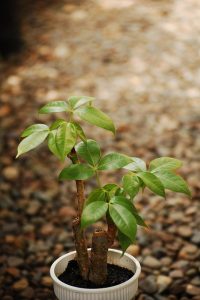
- These plants store water in their trunks, which is why they can tolerate occasional neglect and irregular watering.
- According to legend, a poor farmer discovered the tree, took it home, and later became wealthy selling its seeds—hence the name “money tree.”
- Some people use money trees as a visual reminder to save money or focus on financial goals. Did you know this as one of the money tree fun facts?
- NASA has studied many houseplants for air quality benefits, and while money trees aren’t the top performers, they still contribute to a healthier indoor environment.
- The flowers eventually develop into large seed pods filled with edible nuts.
- In some cultures, money trees are given as gifts for business openings, weddings, or housewarmings.
- The seeds can be eaten raw or roasted and are said to taste somewhat like peanuts or chestnuts.
- Money trees are strongly associated with good luck and prosperity, especially in practices like Feng Shui.
- With proper care, pruning, and repotting, a money tree can keep growing and thriving for decades.
- They’re especially popular in offices because they’re believed to attract financial success and positive energy.
- Finding a stem with seven leaves is considered especially lucky—some people even believe it signals a financial windfall.
- They’re relatively low-maintenance, needing watering only when the top inch of soil feels dry.
- Money trees are pet-friendly compared to many houseplants, making them a safer decorative option for homes with cats and dogs. Did you know this as one of the money tree fun facts?
- The number of trunks braided together can also have symbolic meaning, often representing stability or growth.
- Yellowing leaves can signal overwatering, while brown edges might indicate dry air or too much direct sunlight.
- The “money tree” most people refer to is the plant Pachira aquatica, a tropical wetland tree native to Central and South America.
- Some people decorate their money trees with red ribbons or ornaments to enhance their “luck factor.”
- The plant’s resilience makes it a popular choice for beginner plant owners.
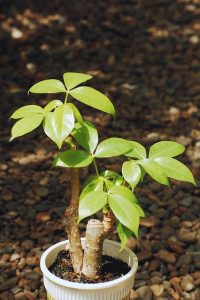
- They prefer bright, indirect light but can adapt to lower light conditions, making them great indoor plants.
- Despite their name, money trees don’t actually grow money but they can inspire better financial habits! Did you know this as one of the money tree fun facts?
- In Asian cultures, businesses often place money trees near entrances to “invite wealth in.”
- Rotating your money tree regularly helps it grow evenly, since it naturally leans toward light.
- Money trees typically have five leaves per stem, symbolizing the five elements: earth, water, fire, wind, and metal.
- They thrive in humid environments, which reflects their swampy natural habitat.
- Money trees are often confused with jade plants, another “lucky” plant, but they are completely different species.
- In Feng Shui, the plant is believed to bring financial success, especially when placed in the “wealth corner” of a home or office.
Did you know all these money tree fun facts? Tell us about the most interesting in the comments!