
- If you’re going to build a fake ancient building, at least try to make it look halfway believable.
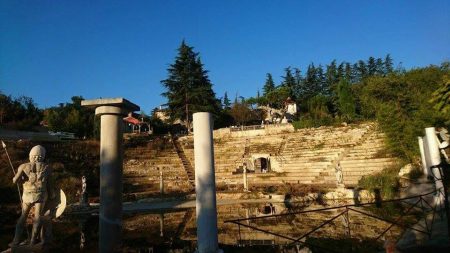
In the rolling hills of northern Italy is an immaculately preserved, thousands of years old amphitheater of ancient Greek construction. It’s a prime tourist spot, with glowing reviews praising the structure and its genius discoverer.
And none of it is real. Not even the reviews.
Italian courts recently wrapped up a bizarre fraud case over a fake historical site. At the center of the story is Franco Malosso, a man who claimed to have discovered an amphitheater left behind by a Greek colony.
The site, however, was fake. Malosso had the structure constructed just a bit over a decade ago. Yet he was advertising it and giving tourist tours as if it were the real thing.
His scheme didn’t last very long, honestly, as Italy’s cultural watchdogs got on his trail in about two years. But Malosso has been fighting a losing court battle ever since, claiming that the fault lies with tourists who were dumb enough to believe him.
Now, his appeals have been rejected. Malosso has been sentenced to prison and to pay reparations for desecrating an actual cultural landscape.
Imagine what he could’ve done if he’d directed all this effort into a legitimate business.
A Surprise Relic
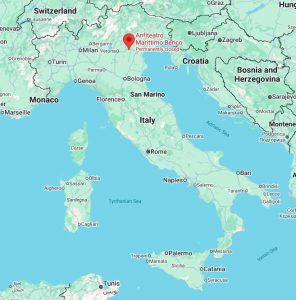
According to his “official” story, Malosso – who also claimed to be historian Franco von Rosenfranz – discovered the ancient theater after a landslide unearthed it. It was conveniently located on a plot of land he owned in the protected Bericci Hills area of northern Italy’s Venetto region. So, around 2014, he started charging tourists to see the Anfiteatro Marittimo Berico.
Only the last part of that story is true. Malosso really did begin guiding tourists around the site in 2014, after he hired a local construction firm to build the amphitheater.
According to documents from local authorities presented in court, Malosso originally applied to build a garage at the site. Instead, he contracted local builders to construct an amphitheater, telling them to “make it look old,” reported CNN.
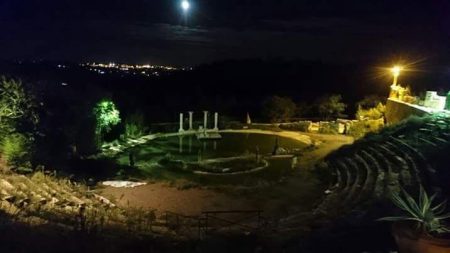
Once the site was ready, with the terraced seating rows, a pond, and various sculptures, Malosso opened the doors to tourists. He charged visitors around $14 to tour the site. To deter locals who might wonder why there was suddenly an “ancient” theater in their backyard from coming to the site, anyone from the city of Vicenza and the surrounding area had to pay nearly $50.
Coming with friends? That’s fine! For a low, low price of almost $700, Malosso… I’m sorry, “historian Von Rosenfranz” would give a guided group tour while detailing the site’s history.
And what history it is! Many famous ancient people had visited the amphitheater, including Julius Caesar, Cleopatra, and Juliet Capulet of Romeo and Juliet fame.
Blatant Fake
Wait, Juliet from Romeo and Juliet? Isn’t she a fictional character?
Indeed, she is. To anyone with even a passing knowledge of history, small details like this would immediately clue you in that “Von Rosenfranz” had no idea what he was talking about.
Those with a bit deeper understanding of ancient Greek architecture would start noticing more red flags the second they walked in. To begin with, the place wasn’t an amphitheater.
Amphitheaters are oval-shaped, while Malosso’s theater was fan-shaped. That might seem like nitpicking, but to the supposed expert, it should’ve been obvious.
Then there were the other telltale clues. The “marble” statues were obviously made of plaster, the columns and seats were built with modern concrete, and typical Greek architectural elements were missing. In the center, there was no trace of the ancient stage; instead, there was Malosso’s scenic pool.
Ignoring even all that, the place just looked too new. All the edges were sharp and clearly defined, and nothing was crumbling.
What’s more, the Greeks never founded any colonies this far up north. They only colonized southern Italy.
But let’s suspend our imaginations and assume the theater was real. Malosso still couldn’t have displayed it to the public as he did because it’s against the law.
“You’re not allowed to dig up antiquities in your backyard. You have to declare it, they investigate it, they excavate. This is terrible,” Darius Arya, archaeologist and director of Ancient Rome Live, said.
‘It’s Not My Fault They’re Stupid!’
Frankly, Malosso’s façade was so shoddy that the “art squad” of Italy’s police quickly took note of him. Yes, Italy has to have a special force for policing antiques fraud.
In 2016, inspectors arrived at the site. They were curious about a lot of things, among them how Malosso was able to supposedly dig the theater out of the landslide so quickly. Typically, excavating only a single seat row of an ancient theater can take a year, if not more.
Well, there’s not much to say about what the inspectors found. Malosso was immediately told to shut the site down, and the authorities launched an official fraud investigation.
Over the next three years, they dug into the why, when, and how of the case. To this day, they’re not sure how many people Malosso scammed and how many of the site’s visitors actually believed him.
Meanwhile, Malosso made posts on the amphitheaters website, accusing the investigators of being on the mafia’s payroll, among other things. He also published articles by “Von Rosenfranz” defending the site as authentic.
It didn’t work. In 2019, the court convicted Malosso of fraud. He immediately appealed, and this year his case landed before Italy’s supreme court.
There, Malosso argued that he couldn’t be blamed if some tourists were stupid enough to believe his blatant lies. They should’ve been more careful.
The high court didn’t buy his arguments. Now, Malosso has been sentenced to 28 months in jail and to pay nearly $8,000 in fines and court fees.
Additionally, the court ordered him to remove his fake theater from the protected landscape. The question now is, who’s going to pay for that project?