
- There are so many things to learn about hummers, also known as Hummingbirds!
Do you see “hummers” and also think of Pocahontas? There are so many things to learn about the hummingbird!
- Some hummingbird species like the Anna’s and Costa’s are singing birds. Like other animals, they commonly make aggressive sounds like chattering or squealing.
- Hummingbirds prefer nectar over feeders.
- Hummers have over 1,000 feathers.
- Their legs are underdeveloped meaning that they cannot wait.
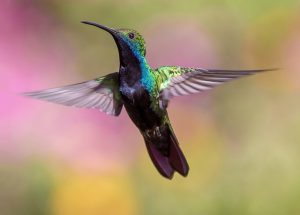
- Hummingbirds can hover and fly backward.
- Hummingbirds are nicknamed “hummers.”
- They’re small but quick, the fastest fliers of their size and can reach speeds of up to 37 miles per hour or up to 60 if they’re in courtship dives.
- Hummingbirds don’t have a sense of smell.
- The hum you hear from a hummingbird is the air moving around the hummingbird created by its wings. They “beat” their wings more than 50 times per second and can be faster if they’re in extreme flight mode.
- Hummingbirds are diurnal, meaning that they are awake during the day and sleep at night. However, they will migrate regardless of the time of day.
- National Hummingbird Day is celebrated on September 7th each year.
- Hummers can travel up to 500 miles in a single flight.
- Hummingbirds have big brains considering how small they are and it takes up around 4.2% of its body weight.
- Hummingbirds live for 3-5 years though the average is more like 3 ¾ years. The oldest recorded age of a banded ruby-throated hummingbird is six years old.
- Hummingbirds can survive freezing temps.
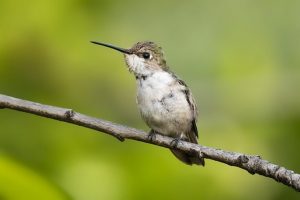
- Hummingbirds breathe quickly, with an average 4-inch hummingbird taking about 150 breaths per minute.
- Hummingbirds have amazing visual acuity. They see color even better than humans because their vision extends to the ultraviolet spectrum. This makes it easy for hummingbirds to pick out orange, yellow and red flowers among the cool greens in nature.
- A hummingbird’s wings make them the most agile bird there is.
- Hummers are very meticulous when it comes to preening their feathers.
- There are some flowers hummingbirds aren’t attracted to and these include lilacs, lily of the valley, irises, dianthus, crocuses, daffodils, forget-me-nots and more.
- Hummingbirds are attracted to the color ‘red.’
- Hummingbirds love bird baths, small misters, bubblers, and sprayers all attract hummingbirds. They like water so much you may even see them fly through the mist of a sprinkler.
- The smallest of the hummingbirds and also the smallest bird in the United States is the calliope hummingbird.
- The first hummingbird feeders were made of blown-sugar water by Laurence
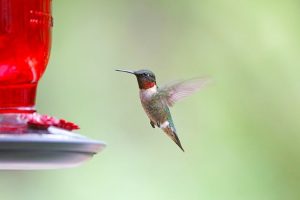 Webster for his New England gardens. It was called the “Webster Hanger Feeder.”
 - They have amazing metabolisms and need to eat every 10 to 15 minutes. The levels of sugar they ingest would be dangerous to other animals. “Hummingbirds maintain a blood sugar level, even when they’re fasting, that would make your primary care physician falter,” Ken says. Hummingbirds have highly efficient digestive organs. The sugar gets into their bloodstream quickly, Ken Welch Jr., an associate professor at the University of Toronto Scarborough says, “The average hovering metabolic rate of an Anna’s hummingbird is, gram per gram, about 10 times what an elite human endurance athlete can achieve. They can go from the highest metabolic rate of any bird while hovering, to one of the lowest in torpor.”
- Hummers visit 1,000 flowers each day.
- Hummingbirds are the only bird that can fly backward and their wings move in a figure-eight pattern, allowing them to move around with ease. (Birds other than the hummingbird fly by flapping their wings up and down.)
What’s your favorite hummers fun fact? Let me know in the comments!