
- Have you checked whether all your devices have the latest security updates?
A nefarious group of hackers has carried out a massive cyberattack in France. The digital criminals targeted popular grocery store chains, accessing the computer systems in dozens of stores.
Consequently, the stores each suffered thousands of dollars in damages. As a silver lining, the public doesn’t have to worry about stolen IDs or payment info.
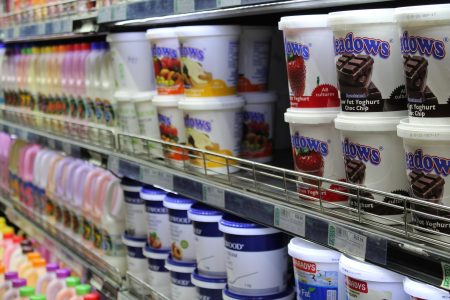
That’s because the hackers targeted the stores’ freezers.
By exploiting a software vulnerability, the hackers gained control over the stores’ cooling systems. They cranked up the temperature so much that some freezers almost turned into ovens.
While this might sound like a juvenile prank, it was anything but. Arriving to work the next morning, the store employees discovered hundreds upon hundreds of pounds worth of spoiled food sitting in the overheated freezers.
The case has stumped the cybersecurity arm of French law enforcement due to its odd target. After all, who’d think cybercriminals would go after grocery store freezers?
It just goes to show that if a device is connected to the internet, you’d better be running up-to-date security software on it. Otherwise, you might find someone taking over your Roomba.
Millions in Losses
The strange hacking incident happened in the wee hours of October 12. Overnight, malicious agents forced their way into the computer systems of several French grocery store chains across the country.
The worst hit was the supermarket chain Intermarche, which said the hackers accessed 150 of its stores. However, Intermarche doesn’t have to suffer alone; 80 Carrefour stores and 25 Monoprix stores got hacked as well.
Once the crooks were inside the store systems, they quickly assumed control of their cooling systems. Specifically, they gained access to the businesses’ remotely controlled freezers and refrigerators.
They wasted no time turning their temperature dials into the red. Intermarche told Reuters that by the time employees arrived to work the following morning, some freezers had been running above 120 degrees Fahrenheit for more than six hours.
Obviously, those temperatures aren’t good for food that needs to keep cold. The store chains reported that due to spoilage and general health concerns, they’d had to destroy hundreds, if not thousands, of pounds of food items.
Not only was that a massive waste of perfectly good food, but it also caused enormous financial damage to the stores. Intermarche CEO Thierry Cotillard said that his company alone suffered tens of millions of dollars in losses.
Add in the other two hacked store chains, and that’s one hefty grocery bill.
Security Vulnerability
You might at this point be wondering why on earth the freezers were connected to the internet. It sounds a bit unnecessary, but it’s actually common practice in stores these days.
By having the machinery hooked up to the web, engineers can control and adjust their temperatures remotely and across multiple stores at once. Additionally, they can easily see if a unit breaks and dispatch a repair crew.
However, since the freezes are online, they need cybersecurity like any computer. And that’s where the grocery store chains fell short.
At the heart of the hacking debacle is the Danfoss AK-SM 800A control interface. In August 2026, the cybersecurity firm Claroty discovered a serious vulnerability in the system that could be exploited to allow outside access to the system.
Danfoss, for its part, said that it had patched the vulnerability soon after. However, according to the company, the grocery store chains had not installed the latest updates into their systems.
Thus, their backdoors remained unlocked, so to speak.
Who’s the Attacker?
This isn’t the only incident where vulnerable fridges have attracted hackers. An earlier attack targeted none other than the U.S. military.
In August 2026, the same month that Claroty found the Danfoss vulnerability, multiple U.S. military commissaries around America fell victim to a hacking attack virtually identical to that targeting the French stores. On August 28, the Department of War confirmed that outside actors were able to take out refrigerators at naval and air bases.
The department has not stated whether these fridges used the same control units as those in France.
French authorities are investigating the most recent hack. However, the officials admit they are stumped by who could be behind the “unprecedented” attack.
“If this was a nation state, ?why affect only a subset of ?French fridges? There are plenty of other nations with fridges on the internet,” said Ken Munro of the cybersecurity organization Pen Test.
“No ransom or demand suggests a lack of appreciation of the potential commercial losses that the fridge owners may experience.”
Meanwhile, cybersecurity experts have taken the case up as a prime example of the importance of keeping security systems up to date, no matter how innocuous the internet-connected device may seem.
“Get it wrong and you get a smelly mess of defrosted food,” Munro quipped.