
- The islands are huge and there are so many of them!
What do you know about the Galapagos Islands? Do you know what the name of the largest island is? (Hint, it’s number 9.)
- The Archipelago group known as the Galapagos Islands consists of 7,880 km² (3,040 mi²) of land spread over 45,000 km² (17,000 mi²) of ocean.
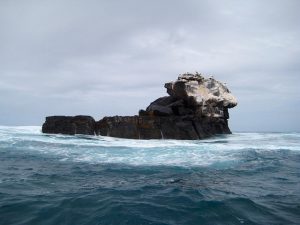
- There are 13 main islands, 7 smaller, and 107 islets, out of which in only 5 have people living on them: Baltra, Santa Cruz, San Cristobal, Isabela, and Floreana. (This represents only 3% of the Islands!)
- The islands are a part of Ecuador, a group of volcanic Islands and Islets that lie in the Pacific Ocean, located around 973 kilometers west from the continental coast.
- There are a total of 13 main islands, 7 smaller islands, and more than 200 islets and rocks.
- The official name is “Archipiélago de Colón.” Known as the Spanish name ‘Islas Galápagos’, but also called the Enchanted Islands.
- In the eruption of 2009, the coast line of Fernandina Island changed.
- The islands are located where three tectonic plates meet, the Pacific, Cocos and Nazca plates, resulting in 13 volcanic eruptions in the last 100 years.
- The Galapagos Islands became a National Park in 1959, were declared a UNESCO World Heritage Site in 1978, a whale sanctuary in 1990 and one of the most traveled tourist destinations on Earth.
- Isabella is the largest island in the Galapagos.
- Travelers are still fascinated at the 1930s disappearance of the Baroness of Floreana. (This tale of passion and rivalry even inspired Ron Howard’s movie Eden.)
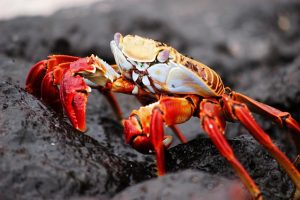
- Researchers speculate the islands were formed around 3 to 4 million years ago. It’s a very young archipelago when compared to Earth’s age, around 4.45 billion years old.
- During the 18th and 19th centuries, thousands of the Galapagos tortoises were killed and captured to extract their fat and because the tortoises can go months without eating or drinking water, they were kept on board ships as a source of fresh protein.
- The Spanish were the first Europeans to set foot on the area in 1538.
- The archipelago lay on either side of the Equator Line, meaning they have perpetual summer.
- Ecuador claimed the islands in 1832, naming them “Archipielago de Ecuador” and 127 years later the islands were declared a national park.
- When the Spaniard Tomas de Berlanga firstly saw the archipelago, he called them enchanted because of the mist, fog, and the rise of the tide with how they looked from far away.”
- Antique records show that in 1535 the islands were discovered by a Panamanian Archbishop Fray Tomás de Berlanga.
- Fernandina is the youngest island in the Galapagos Islands and it’s about 1,000,000 years old and still growing and changing shape.
- The islands are still growing!
- The Islands provided refuge for English pirates and b cause of their strategic location, buccaneers used the Galápagos as a hideout (and a place to store their loot.)
- The islands started from a barren mound of cooled lava. Over time and due to volcanic activity; the little mound grew to what they are today.
- The island Española in the Galapagos Islands are almost 4,000,000 years old and it continues to move towards the South American continent.

- Galapagos’ total population is more than 25,000 people and the majority live in Santa Cruz.
- The largest inhabitants of the island are giant tortoises called Chelonoidis. They were called “Insulae de los Galopegos” or “islands of the turtles.”
- Their coat of arms is divided in four, with representative images of the islands, such as volcanic cones, the blue sea, a sail boat, and of course the iconic Galapagos tortoise.
What did you learn about the Galapagos islands? Let us know in the comments!