
- You could’ve enjoyed a cold soda or an evening at a bowling alley way earlier than you’d expect.
Can you hear that? That’s the sound of the newest part of your series of Fun and Weird World Firsts!
These articles have become something of a tradition here on Oddee. At this point, though, it’s been more than a year since our last episode, so it’s high time we pick things back up.
And why not? There are always odd things out there that are way older than you think.
Let’s get to Part 6 of Strange World Firsts!
1. World’s First Receipt—1400 BCE
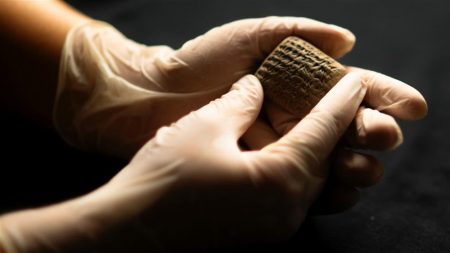
In 2024, construction workers in Turkey unearthed a small 3,500-year-old clay tablet. Dating to the 15th century BCE and the ancient Mukish Kingdom, it bore a cuneiform inscription.
What secrets did the tablet hold?
It was a sales receipt. Specifically, the tablet details a furniture sale, listing a large number of chairs, tables, and stools.
It’s not clear who wrote the receipt, although considering its contents, it likely comes from a carpenter or furniture salesperson’s shop. Neither does it say who purchased the furniture or how much the buyer paid.
It’s possible that a part of the receipt has broken off and gone missing over the ages. Wonder if the original seller would still accept it for a refund?
2. World’s First Oppressive Secret Police—1565
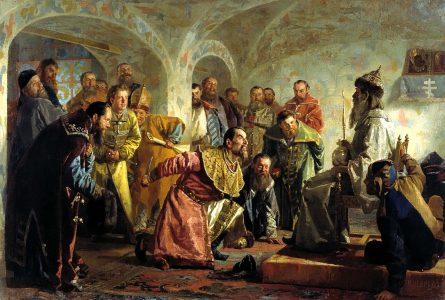
Ivan the Terrible was… Well, terrible. A big part of Russia’s first Czars infamous reputation stems from his setting the template for all repressive secret police organizations to come with the Oprichnina.
The Oprichnina was set up in the aftermath of the 1558 Livonian War, where some Russian nobles defected to the Livonians’ side. Enraged by their betrayal, Ivan created a secret police force to keep a close eye on his subjects.
This organization consisted mostly of Russian nobility loyal to Ivan who were hired to spy on other nobles. The Oprichnina was notorious for imprisonment, torture, and execution of Ivan’s enemies. But their most brutal undertaking was the sack of Novgorod, where the oprichniki killed anywhere between 2,000 and 15,000 people.
Thanks, Ivan. We all really would’ve been happier without this invention.
3. World’s First Tourist Trap—2500 BCE

The world’s first tourist was arguably Herodotus of Halicarnassus (484-425 BCE), a Greek writer who traveled around the Mediterranean to gawk at things. But for him to be a tourist, he needed a tourist destination.
He found that in the Pyramids of Giza. Built around 2600-2500 BCE, the famous pyramids have attracted visitors ever since they were completed.
Ancient Egyptians traveled to Giza for religious ceremonies and probably to see the pyramids in their prime. Yet, the pyramids have been as world-famous as anything could be throughout their history.
In fact, archeologists have discovered graffiti in the Giza tombs that dates to around the year 100. It was written by an Indian tourist, Cikai Korran, who scrawled the name and date of his visit on the wall.
In Cikai’s day, the pyramids were more than 2,000 years old. To him, visiting them was comparable to you going to see the Roman Colosseum.
4. World’s First Carbonated Drink—1783

Ever wondered who you can thank for inventing soda? That person would be Johann Jacob Schweppe (yes, the founder of the Schweppes company).
Schweppe was a watchmaker by trade, but he was also an amateur scientist. In the late 18th century, he learned that an English chemist, Joseph Priestley, had discovered a way to carbonate water to make it bubbly.
Schweppe smelled a business opportunity and developed an industrial process for manufacturing carbonated mineral water. His product was an immediate hit, selling so much that, in just seven years, he moved his factory to London to keep up with the demand.
Competitors and imitators soon popped up, but Schweppe was one step ahead. In London, he introduced a lemon-flavored mineral water, creating the first flavored carbonated drink as well.
5. World’s First Musical Instrument—50000 BCE

Frankly, the world’s first musical instrument is probably a drum, since all you need for that is a stick and a hollow tree trunk. But it didn’t take our ancestors long to invent the first known more complex instrument—the flute.
In 1995, archeologists working in the Divje Babe I cave in Slovenia discovered a piece of a bone flute. The thing turned out to be roughly 50,0000 years old, making it the oldest known instrument.
There is some debate about whether the thing is a flute, but the holes in the hollow bone are so round and equally spaced that it seems unlikely it could be anything else. Yet, it likely wasn’t created by modern humans.
Instead, based on its age and location of discovery, it’s quite possible that Neanderthal hands manufactured the flute. It seems that humanity just likes music, whether you’re Homo sapiens or Homo neanderthalensis.
6. World’s First Bowling Alley—Around 250

In 2007, Italian archeologists working near Cairo, Egypt, discovered something weird. In a building dating to Roman Egypt, between the years 200 and 300, they found a room with a slick, carefully polished limestone floor.
Even stranger, in the room was a long, narrow lane. At the end of it was a hole, inside which was a jar full of fine sand. By the lane were sitting two stone balls.
There was only a single logical explanation for the room. It was the first known bowling alley.
According to the archeologists, this form of Egypto-Roman bowling was played by rolling a ball down the alley and attempting to get it into the hole. If you won, the players could then easily retrieve the ball from the sand jar. It was kind of a mix between bowling and golf.
The Egyptians appear to have had a taste for bowling since they also created the first set of bowling pins and ball, found in a child’s tomb dating back 7,000 years. Yet, no one’s found a bowling alley that old.
All done? Why not go and read the other articles in our series: