
- Would you want to live on an endlessly sailing megaship?
Are you sick of living in a crowded city with endless traffic jams and foul air? Would you like to wake up to an ocean breeze every day as you roam the seven seas?
I have good news for you. You can do that without even becoming a sailor on the Freedom Ship!
Assuming it ever gets built.
The Freedom Ship is a bold plan to construct what is essentially a floating city. This enormous vessel would endlessly roam the oceans, with its passengers being less like passengers and more like permanent residents.
Behind the dream of oceanbound freedom is a company called Freedom Cruise Line International (FCLI). Their vision for the ship is nothing short of ambitious – perhaps overly so.
If built to the current plan, the Freedom Ship would house tens of thousands of people. They could live and work on the ship just as they would on land, even for their entire lives if they wanted to.
There are obstacles on the way, though, even besides the ship’s obvious sky-high price tag. One of the biggest issues is that the proposed mile-long ship would be so huge it couldn’t dock at any existing port in the world.
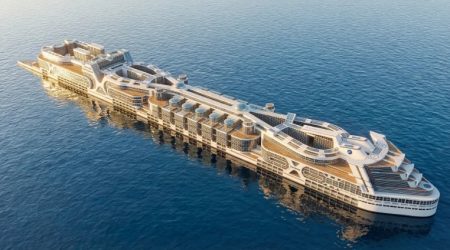
What Is the Freedom Ship?
The Freedom Ship is, according to its developer, not a cruise ship, despite what the company’s name would have you believe. Instead, the company envisions the enormous vessel as an independent floating city.
“The Freedom Ship is envisioned as a permanently mobile city at sea, designed for long-term residence rather than short-term travel,” FCLI states. “It is planned as a stable, self-contained urban environment that continuously circumnavigates the globe while supporting everyday life.”
The ship would be able to house up to 80,000 people on a permanent basis. You need a lot of space for that many people, and the Freedom Ship would indeed be humongous.
Its current plans state that the ship would measure a mile in length and 750 feet in width. From the ocean surface, it would tower 350 feet into the air.
As such, it would be the largest ocean-going vessel ever constructed. Well, perhaps short of Noah’s Ark, but it’s not like we have exact measurements for that.
The ship would be propelled forward by nuclear-powered engines. It wouldn’t speed across the world, though, as a single circumnavigation would take roughly two to three years, depending on how often the ship has to dock.
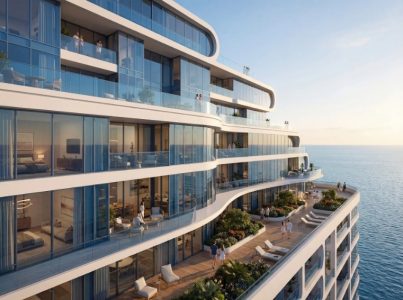
As it roams the seas, the residents would be able to live just like they do on land. FCLI envisions the ship having 50,000 residential housing units, in addition to offices, hotels, restaurants, gardens, casinos, pools, sports stadiums… Anything you could wish.
The residents would be able to either work locally to keep the ship going or remotely over satellite internet. With all the planned amenities, people could be born, live, and die on the ship without ever setting foot on land.
Hurdles on the Way
However futuristic it might seem, the Freedom Ship is not a new concept. In fact, it has been in the plans for decades at this point.
The idea first surfaced in the 1990s, and it resembled the current proposal. At the time, however, technology to support the ship just wasn’t there, and it remained nothing more than a sci-fi daydream.
We’ve made great strides since then, though, so why hasn’t the ship been built? Well, allow me to count the ways.
First, the Freedom Ship is/would be ridiculously expensive. According to FCLI, the price tag for its current vision would run at around $15 billion.
Then there’s the matter of supporting the ship. No matter how self-sufficient it’s designed to be, it would need to dock at times to receive supplies and maintenance.
However, there is no harbor in the world big enough to accommodate the proposed ship. That means you’d have to build all the land-based infrastructure it needs as well.
Finally, we get to the practicalities of living on the ship. It’s easy to design a huge city ship, but actually making it happen is incredibly complicated.
Will it have a large enough hospital to provide healthcare for its population? How will the people get food? Who will govern the ship? Which country’s laws would apply to it in international waters?
Not So Ridiculous, After All
To be sure, there’s no guarantee that the Freedom Ship ever moves beyond an ambitious vision. That said, building it is not entirely out of the question, as there may be demand for it.
Sea levels across the world are rising, and housing shortages are becoming a part of everyday life. Many countries in the world are already exploring the possibilities of offshore housing, whether on artificial islands, enormous piers, or oil rig-like structures.
What’s more, an increasing number of people are working remote jobs. Against this background, the Freedom Ship is not as ludicrous of an idea as it might initially seem.
Want more outlandish travel and tourism stories? Perhaps you’d be interested in the company taking reservations for a (non-existent) moon hotel or the strange tale of Disney’s ridiculous Star Wars space cruise.