
- You ever had things go wrong, but they do so in just the right way to prevent a disaster?
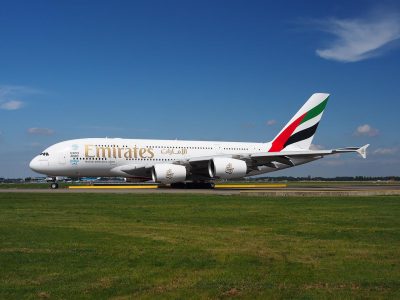
Emirates flight EK430 took off from Dubai in the early hours of the morning on June 30. Nearly 14 hours later, the Airbus A380 landed at its destination in Brisbane, Australia, some 20 minutes late.
The passengers got out of their seats, grabbed their backs, and started disembarking. But as they got off the plane, they were in for a shocking surprise.
There was a massive hole in the side of the airplane.
That’s not something you want to see when leaving a passenger jet. But the hole definitely would explain the loud bang the crew and passengers heard shortly after the takeoff.
But that also means that the hole had been there practically the entire flight. The plane had managed to fly halfway across the world with its side torn open.
That’s an eerie prospect. But we suppose it’s a much better alternative than — you know — having the flight end in a sudden nosedive.
‘Felt It Through the Floor’
As we mentioned, the flight began perfectly normally. The passengers got on the plane, the jet taxied across the Dubai Airport’s runways, and took off on time.
But some 45 minutes into the flight, something happened. All of a sudden there was a strange noise.
“There was a loud bang and I felt it through the floor as well,” a passenger identified only as Patrick said, according to Euronews Travel.
Needless to say, the sound caused no small deal of alarm amongst the passengers. But the crew kept their cool, which may have helped calm down some of the passengers.
“The cabin crew remained calm, stopped the food service, and got on the phone. [They] checked the wings and engines,” Patrick recalled.
The cause of the noise was an incident that will probably not do anything to soothe nervous flyers. The bang was the sound of one of the A380’s tires bursting mid-air.
As the high-pressure air escaped from the tire, the force punched a hole clean through the plane’s side. This means that a part of the plane is now sitting at the bottom of the Indian Ocean.
But the crew didn’t seem too bothered about the incident. They returned to their duties and the flight went on until the plane successfully landed in Brisbane.
No Cause for Concern
But wait just a gosh-darned minute here, you might say. Why didn’t the crew abort the flight and land at the nearest possible airport?
Well, that’s because they saw no need to do that.
Of course, the crew did all the necessary safety checks after they heard the bang. The cabin crew checked the wings and sides of the plane through the windows, while the pilots started going through the plane’s sensors and warning systems.
But that was all fairly pointless. The cabin crew didn’t notice anything off through the windows. And how could they have — the hole was below the windows and not visible.
Additionally, the hole was on the A380’s aerodynamic fairing, or the outer “skin” covering the plane. There are no sensors or cameras on this surface, so the pilots didn’t notice anything unusual.
Since the plane still handled fine, they simply didn’t have any cause for concern. They probably contacted Dubai Airport to ask if any parts of the plane had fallen off during takeoff, but the air control said there had been no issues.
So, it seemed to the crew that everything was just fine. Luckily, they were right.
‘One in a Million Case’
It was fortunate that the hole appeared where it did. The tire blowout didn’t damage the plane’s frame or fuselage, and the lower fairing doesn’t really affect its flight.
The passengers were not in any danger. They just had a bit noisier flight than usual.
Still, it’s not like pilots didn’t do anything at all. Something must’ve caused the bang, so they called Brisbane airport ahead of their arrival and reported that they may have a blown tire.
The flight could’ve easily ended in disaster, though. We shudder to think what would’ve happened if the tire had damaged the pressurized air compartment of the plane.
“It’s a one in a million case probably. It’s something that we don’t see every day,” said Dr. Johannes Boroh, an aviation studied lecturer at London’s Kingston University.