
- We could all stand to learn something from these monkeys.
Nature can be a cruel place. There’s only so much food, territory, and other resources to go around, so animals often fight tooth and nail for them.
But what if a natural disaster cut the availability of resources even further? You’d probably expect the animals to get even more aggressive in their fight for survival.
On Monkey Island, however, the exact opposite happened.
Some years ago, a hurricane devastated the tree cover of a small island off the coast of Puerto Rico, home to hundreds of rhesus macaques. Biologists who had been observing the already rather aggressive monkeys understandably thought they would wage a full-blow macaque civil war for the vital shade of the remaining trees.
To their surprise, they found out that the monkeys instead learned to get along better. They began to put aside their differences and share the cooler spaces under the trees — even when they would’ve ripped each other shreds over it prior to the storm.
Before the Storm
Cayo Santiago is a small, roughly 35-acre tropical island, sitting less than a mile off Puerto Rico’s western coast. However, it’s often better known as Monkey Island.
That would be because of the monkeys.
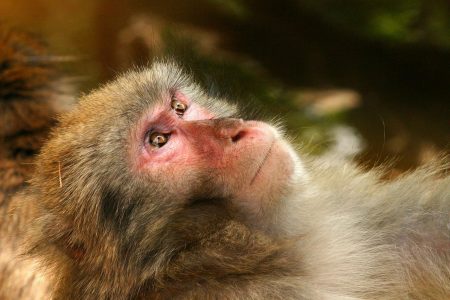
The island is home to more than 1,000 rhesus macaques, descendants of monkeys imported from India. While the monkeys thrive on Cayo Santiago, they’re a rambunctious bunch.
Macaques can be very aggressive, and fights between monkey packs are common. Violence often happens even within a pack — for example, if a male macaque isn’t in the mood, an amorous female just might rip his little guy off.
Ouch.
The monkeys’ lives changed in 2017 when Hurricane Maria plowed through the region. The storm wrecked Puerto Rico, but Monkey Island didn’t escape unscathed either.
Maria uprooted and threw 63% of all vegetation on Monkey Island into the ocean. That was terrible news for the monkeys, who now lacked food and shade.
You see, it gets hot on Cayo Santiago — stupid hot. When the tropical sun blazes in the countless sky and temperatures start pushing 105, even the macaques need cover.
Each pack usually congregated under different trees, a safe distance away from each other. After the hurricane, however, there were so few trees left that the macaques had to try and get under the same ones.
The scene was set for a bloodbath.
Maybe This Town Is Big Enough for Both of Us
That’s what everybody observing the monkeys thought, anyway. As it turned you, though, the macaques found a peaceful solution.
They learned to share.
“In response to the drastic changes caused by the hurricane, macaques persistently increased tolerance and decreased aggression towards each other,” Dr. Camille Testard from the University of Pennsylvania told Earth.com.
Macaques that would’ve previously been sworn enemies now stayed peacefully in the cool shade of the same tree. The behavior wasn’t a momentary change, either — Monkey Island still lacks most of its trees and the macaques continue to share what’s left years afterward.
Why did they suddenly decide to get along?
According to Testard, the change is likely due to a shift in survival needs. Earlier, with plentiful shade, the macaques could afford to get violent, so to speak.
Now, however, they’ve seen what fate awaits those who get rowdy. Wounded macaques kicked out from the shade of a tree will soon die in the scorching sun, so they figured they’re less likely to die if they keep their peace and share.
Essentially, the monkeys raised their hands and said: “Look, I don’t like you and you don’t like me, but we’ll either share the trees or everybody dies.”
There’s still competition between the macaques, but horrific violence is no longer the default answer to problems. Basically, they learned they’re all in the same boat and it’s best not to rock it.
Wonder when we the people will figure that out.