
- Mass extermination, governmental ineptitude, zombies… This story’s got it all.
In Denmark, an excavation of massive scale has begun. But the project isn’t just any regular construction or landscaping project.
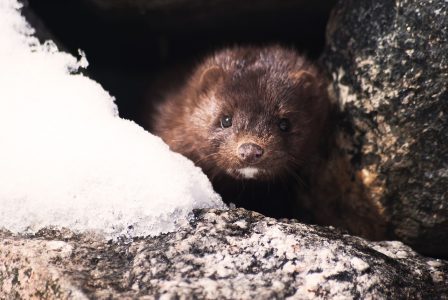
Instead, the Danish are digging up millions upon millions of corpses. Granted, they’re corpses of minks, but corpses nonetheless.
During the COVID-19 pandemic, the Scandinavian country exterminated every single farmed mink in the country. The cull of extreme proportions came after doctors discovered a coronavirus strain that was infecting people through the animals.
The masses of dead minks were then hastily buried. But now, the… “Runoff” from the millions of corpses is having some unintended side effects.
Namely, local residents are concerned that the rotting minks are polluting drinking water around the mass grave. They also worry that the decomposition fluids seeping off the minks could taint a popular swimming spot.
Everything Going As Planned…
Workers have now started unearthing the minks, and so far everything is proceeding well, Denmark’s agriculture minister Rasmus Prehn said.
“The test excavations of mink are underway in Nørre Felding. I am relieved to see that everything is going according to plan,” Prehn tweeted.
The 13,000 tons of mink carcasses will not go to another mass grave. Instead, they will serve the public good as energy sources.
Maabjerg Energy Center (MEC) intends to incinerate the corpses at its bioenergy plant near Holstebro in western Denmark. However, MEC did have to issue a warning to those living near the facility.
The energy producer informed locals that they might cause a bit of a stink. Burning millions of decomposing corpses could initially produce some funky odors.
As the corpses start burning up, the stench should soon dissipate, MEC said. Hopefully.
…For the First Time
As said, the excavation – which cost $24.4 million, by the way – is going as planned. However, that’s a first for Denmark with the whole mink fiasco.
To properly appreciate this screw-up of epic proportions, we have to start from the beginning. In mid-2020, at the height of the COVID-19 pandemic, Danish health authorities made a disconcerting discovery.
They found virus strains that could – and had – transferred from the minks to people. Not only that, they were much more resistant to any medications available at the time.
Faced with a potential viral time bomb, the Danish government made a difficult decision. They signed the death warrant of the country’s entire 17-million-strong farmed mink population.
“We have a great responsibility towards our own population, but with the mutation that has now been found, we have an even greater responsibility for the rest of the world as well,” said Danish prime minister Mette Fredriksen.
He added that the government would mobilize the police, army, and home guard to help with the cull.
Government: ‘Oopsie-daisies.’
The country’s mink farmers were understandably less than enthusiastic about the plan. But they had no choice but to suck it all up for the greater good.
Or so everybody thought. In their hurry to resolve the situation, the Danish government had overlooked one teensy-weensy, tiny little detail.
They realized they had no legal right to exterminate the animals, particularly in farms without coronavirus infections. And that was after they had started already killing the minks.
According to Danish law, the government needs a three-quarters majority in the parliament to enact an emergency legislation, like the mink cull. It turned out, they didn’t have that.
It seems the government had expected opposition parties to simply dance to their tune, but that never happened. So, they had to backtrack and simply recommend that farmers exterminate their minks.
“We should have clearly communicated whether there is legal basis for the authorities to order the killing of healthy mink herds outside the safety zones. I regret that has not been the case here,” said then-agriculture minister Mogens Jensen.
While the political back and forth continued, so did the cull, though. In the end, the government’s view of the greater good won.
But not without some casualties. As the mink lost their lives, Jensen lost his job as minister due to the scandal.
The Night of the Living Dead Minks
But everything should’ve been over once the minks were dead, right? It’s not like they could rise up from their graves.
Yeah, about that. Remember how we said earlier the minks were hastily buried?
The cull came to an end in November and the mink carcasses went mostly into two mass graves in western Denmark. But just a couple of weeks afterwards, people started reporting sightings of zombie minks.
Some of the dead minks began rising back to the surface. Authorities soon discovered that the three feet of sandy, loose soil on top of the graves wasn’t enough to weigh the corpses down.
Suppose there’s a reason why we say we’re putting things six feet under.
“As the bodies decay, gases can be formed. This causes the whole [grave] to expand a little. In this way, in the worst cases, the minks get pushed out of the ground,” Denmark’s national police spokesman Thomas Kirstensen described.
“This is a natural process. The problem is that the sandy soil in West Jutland is too light. So we have had to lay more soil on top,” he added.
Combined with the concerns for water pollution, the undead minks quickly resulted in calls to dig the carcasses up. And that’s what they’re doing now.
Hold on, we’re going to get some popcorn. If this whole project’s history is anything to go by, it’ll be a spectacle once they start burning the minks.