
- You can’t get much more Canadian than this.
Think quickly — what’s the most Canadian thing you can imagine? Perhaps polite hockey? Or maybe poutine drenched in maple syrup?
Those are both pretty good options. But how about cautioning drivers not to let moose lick their vehicles?
We’re just bringing that up because it’s what Canada’s wildlife authorities felt they needed to do.
“It does sound very funny … It’s OK to laugh at it, as long as people drive responsibly and do what’s best for the wildlife,” Tracy McKay from Parks Canada told CBC.
Once you’ve had your initial chuckle of disbelief, it’s easy to see why Canadian officials would warn people about moose wanting to give their car a smooch. Moose are big, sturdy animals, and smashing your car into one is not a good idea.
“Unfortunately, [licking cars] puts [moose] at risk of being injured or killed if they get hit by a vehicle,” said McKay.
Yes, it’s risky for the moose. But it’s equally — if not more — dangerous for the people in the car.
So, if you’re heading to Canada for a trip or live up north, don’t let a moose lick your car. You’ve been warned.
A Salty Snack
But why on earth are moose waltzing up to cars to give them a thorough licking? Are they just so into the latest automobiles that they could kiss them?
Well, no. The moose doesn’t a rat’s behind about your fancy new ride — it’s after salt.
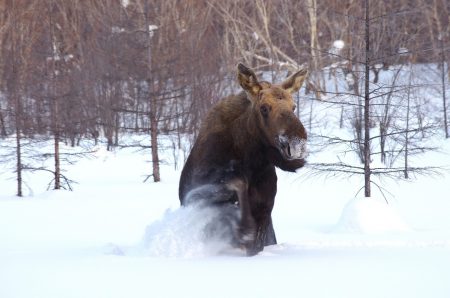
Moose are kind of like cows in the sense that they love a good salt lick. They’re massive beasts, after all, and keeping that huge body functioning requires a lot of sodium.
“In the summer there’s lots of greenery around and those plants have a lot more minerals in it … and in the winter they typically don’t have access to that,” explained Roy Rea, assistant professor at the University of Northern British Columbia.
He’s studied moose for a quarter century, so we’ll take his word as gospel truth.
Anyhow, even if plants wither and die in winter, moose still need salt. Now, what is it that they pour on roads to thaw them?
Oh yeah, that’s salt. In winter, Canada’s roads transform into gigantic, miles-long salt licks that moose simply love.
As people drive on those roads, the sides and wheel wells of their cars get splattered with a salty slush. Since many drivers (or at least those with a lick of sense) slow down when they see a moose, the animal might decide to come to lick the salt off the car.
With the moose approaching, it’s quite likely that the driver comes to a complete stop. That gives the beast a perfect opportunity to get its lick on.
Drive On
Granted, this year isn’t the first time Parks Canada has put out a warning about car-licking moose. Over the last few years, it’s become pretty much an annual tradition.
The first time Parks Canada warned people about moose and their salt cravings came after multiple confused drivers called the agency. They reported moose licking their cars and asked what they should do about it.
That’s actually a good question. What should you do if a moose starts shuffling toward your vehicle while licking its lips?
The answer is simple — keep driving.
“If it’s safe to keep going without running into the moose, then we would recommend people just try to slowly, carefully drive away. Just try not to let moose lick your car,” advised McKay.
There’s a good reason to allow moose to slurp up salt from your vehicle. If enough moose get to do so, they may figure out that cars aren’t dangerous — they’re just convenient salt licks.
Consequently, they might start approaching cars whenever they see one. And let’s just say that nobody will have a good time if a moose decides to jump in front of a car going 60 mph.
In fact, salting roads has already increased the number of moose crashes in Canada. The animals are active at night and drivers may not notice the dark-furred moose on the road until it’s too late.
As a result, some areas in Canada have started using sand on roads instead of salt. That helps a bit but not much — the sand contains a tiny bit of natural salt which still attracts moose.
As McKay recommended, the best solution is to just keep driving, as long as it’s safe to do so.