
- All the more reason to steer clear of the oceans.
The year 2023 was a weird one when it comes to animals and cocaine. First came the movie Cocaine Bear, loosely based on the real story of a black bear that devoured a discarded cocaine shipment.
A few months later, the Discovery Channel broadcast the documentary Cocaine Sharks. It speculated that sharks could be in danger of consuming drugs smugglers have dumped overboard to avoid getting caught.
What a ridiculous concept, right?
Well, it’s true. In fact, we now have scientific proof that cocaine sharks are real.
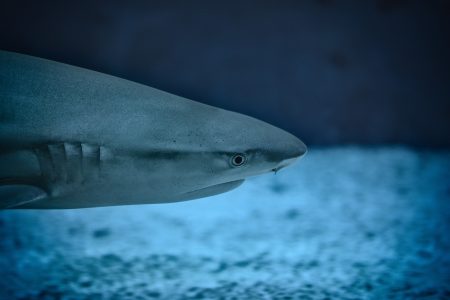
Brazilian researchers have discovered traces of cocaine in sharpnose sharks caught off the Brazilian coast. It’s not immediately clear how the sharks managed to ingest the drug — but the fact is that they did.
And if doing drugs is bad for people, it’s also bad for sharks. Cocaine could lead to all kinds of problems with the sharp-teethed fish, from bizarre behavior to infertility.
Fortunately, there’s no proof that cocaine will turn sharks into unstoppable, rage-fueled killing machines. At least not yet.
‘Catchy Headline, Real Problem’
In case you haven’t seen Cocaine Sharks, let’s do a quick recap. The basic gist of the documentary is that drug smugglers throwing their illicit loads into the sea could be causing sharks to get high on cocaine.
The title intentionally references Cocaine Bear, which was still somewhat relevant when the documentary came out. That said, it’s not just a funny thought exercise about drugged-up sharks.
“It’s a catchy headline to shed light on a real problem,” Dr. Tracy Fanara told The Guardian at the time.
“Everything we use, everything we manufacture, everything we put into our bodies, ends up in our wastewater streams and natural water bodies. These aquatic life we depend on to survive are then exposed to that,” she added.
The documentary shows dummy cocaine packages being dropped into the water. Sure enough, sharks go and rip pieces out of them.
Had the packages actually contained cocaine, they would’ve eaten it as well. Additionally, the ripped packages would’ve allowed drugs to dissolve into seawater, potentially causing sharks and other fish to ingest them by simply swimming by.
They’re Real!
In the end, though, Cocaine Sharks was pure speculation. At the time of its filming, nobody had actually tested sharks to see whether they were eating/filtering/snorting cocaine.
Well, they have now. Cocaine sharks are real.
A new study by a research team from Brazil has discovered that sharpnose sharks are somehow consuming cocaine. These fish live their entire lives around Brazilian coastal waters, meaning that if any sharks are likely to get drugged, it’s the sharpnoses.
The researchers purchased 13 sharpnose sharks that fishing vessels had accidentally caught as bycatch. Tests showed that each shark had traces of cocaine in its muscles and livers.
And there was a bunch of it, too. The results showed cocaine concentrations up to 100 times higher than anything previously detected in fish.
“This is evidence of the increasing danger of cocaine pollution,” Anna Capaldo, an environmental pollution researcher from the University of Naples Federico II, told Science.
The study couldn’t tell how the sharks ended up consuming cocaine. It’s possible that they may have done what Cocaine Sharks speculated and taken bites out of discarded drug shipments.
However, it’s also possible that they simply got high off of cocaine fumes seeping into the sea from Brazil’s wastewater systems. That, or they ate other fish that were hopped up on blow.
No More Baby Shark
But what does a cocaine-addled shark look like and what does it do? Well, no one’s not quite sure yet, but the general understanding is that cocaine isn’t good for sharks.
The Cocaine Sharks documentary showed various sharks exhibiting strange and unnatural behavior. In one instance, a hammerhead swam toward the diving camera crew, moving erratically and nervously. In another, a sandbar shark swam in endless circles, as if circling an object that wasn’t actually there.
However, there was no proof that those sharks were on cocaine. A more pressing concern is that cocaine could cause infertility in sharks.
Cocaine in shark livers can disrupt the production of vitellogenin, which forms the yolk in their eggs. No yolk means no food for the embryonic baby shark, which ultimately means no baby shark.
Insert a sad doo-do-doo here.
It’s not all about sharks, either. Cocaine could affect other sea creatures as well, in ways we couldn’t possibly predict.
As such, the Brazilian researchers are calling on authorities to monitor coastal water and figure out where the cocaine is coming from. They’d better start doing it soon before the shorelines are teeming with every imaginable kind of drugged-up seafood.