
- Fish sauce left sitting in a shuttered factory turned into a 20-year nightmare for this town.
It really stinks when people make a mess and leave it for others to clean. In the case of St. Mary’s, it really, really stinks.
This picturesque little Canadian town has struggled with a bizarre issue for the past two decades. At all times, St. Mary’s has reeked of putrid fish.
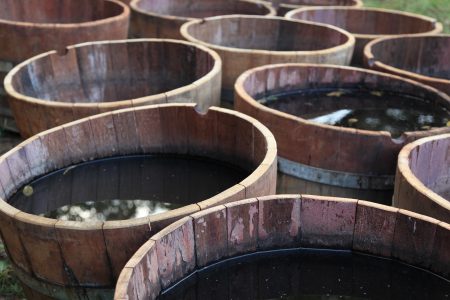
The culprit behind the stomach-churning stink is a now-defunct local seafood processing plant. After going out of business, its previous owners neglected to empty the dozens of fish sauce tanks in the facility.
Fish sauce has a potent odor even when perfectly fresh. Imagine, then, what the stench must be like after 20 years.
For ages, St. Mary’s has attempted to have the old fish factory emptied, but the project has always stalled for various reasons. Now, however, relief is finally coming.
At long last, work has started to empty and sanitize the noxious tanks. If everything goes to plan, St. Mary’s residents can soon draw a deep breath in the morning without their eyes watering.
“To be known as the ‘sauce plant mayor’… it’s time for that to be over,” said St. Mary’s mayor Steve Ryan.
Two-decade-old Problem
St. Mary’s is a small town of roughly 300 residents on the coast of Newfoundland. The troubles of this beautiful seaside village began in 1990.
The town didn’t stink back then, though, and the curse initially seemed like a blessing. That’s when the Atlantic Seafood Sauce Company (ASSC) opened a new factory in St. Mary’s, bringing jobs to the community.
However, the thing about fish sauce production is that it smells awful. Even ancient Romans mandated that no facilities producing garum (the Romans beloved fish sauce) be allowed within city limits.
But with modern technology, surely the stench could be kept in check. And indeed, initially all was good.
However, something must’ve been amiss with ASSC management. The company soon got mired in seemingly endless regulatory issues.
By the early 2000s, the factory’s situation had become untenable. Its managers sent the workers home, turned off the lights, and abandoned the facility.
What they didn’t do was empty its 110 fish sauce tanks. Each of the gargantuan vats holds 3,000 gallons of fish sauce. Put together, that’s nearly 240,000 gallons of liquefied fish.
With the factory closed, the fermenting sauce sat in the tanks, slowly turning into rotten fish sludge. As their contents decomposed, so did the seals on the storage tanks.
Odors started leaking out. And soon enough, St. Mary’s became permeated with an eternal stench of decayed fish.
Rotten Fish Times 100
Over time, the reek from the plant became almost unbearable. No matter where you went in the town, it smelled like old fish.
Actually, no – it was worse.
“Take the worst rotten fish you’ve ever smelled in your life and times it by 100,” Ryan described to the New York Times.
With the stink, St. Mary’s started a legal and regulatory battle to get the facility emptied. But it seemed no one wanted to do it.
“Nobody wanted to take ownership. Nobody knew what the ownership would consist of,” said Ryan.
In ASSC’s credit, the company did start taking out some fish vats when the plant closed. However, the federal Canadian government stepped in and halted the project.
Why? Who knows.
With that, ASSC’s ex-management threw up their arms and washed their hands of old fish sauce. The company was defunct and penniless; they had no means to do anything with the tanks.
Surely the federal government would take care of the problem, then? Nope. Neither did the provincial Newfoundland and Labrador government.
Every now and then, a twinkle of hope would appear. Some official would champion St. Mary’s cause, submit paperwork, and maybe even have a meeting.
But as soon as money came up, the project hit a brick wall.
Finally Over?
In mid-2025, however, things finally moved forward. St. Mary’s town council received a verbal commitment from Newfoundland and Labrador to foot the expected $1.2 million cleanup bill.
Will that promise hold? Well, St. Mary’s wasn’t about to wait around and quickly hired workers to start emptying the fish goo out of the tanks.
Maybe it’s easy to ask the provincial government for forgiveness later.
On July 28, the first gallons of repulsive marine slime were taken care of. However, the cleanup process may initially make the problem worse.
To empty the tanks, the workers simply punch a hole in them and allow the rotten fish liquor to leak onto the factory floor. They then cover it with peat moss, which absorbs and somewhat neutralizes the stench.
Finally, the moss is enclosed in huge vacuum-sealed sacks resembling oversized Zip-loc bags. Then, it goes to a dump and becomes someone else’s problem.
It will still take a while for the factory to be empty. Ryan expects the project to take until October, but at least St. Mary’s nightmare will then finally be over.
And Ryan will no longer be the mayor of Canada’s stinkiest town.
St. Mary’s isn’t the only place dealing with horrible smells. Read about the Utah town struggling with a horrible smell of unknown origin.