
- Your eyes see more (and less) than you might think.
They say the eyes are the windows of the soul. But you can see a lot of other things in the eyes, too.
To be perfectly honest, our eyes are a little freaky. In some ways, human eyes are some of the sharpest in nature, and there’s a lot that goes on in those balls to make them that way.
Here are 12 strange facts about human eyes that you may not have known about.
1. You Have an (Invisible) Blind Spot
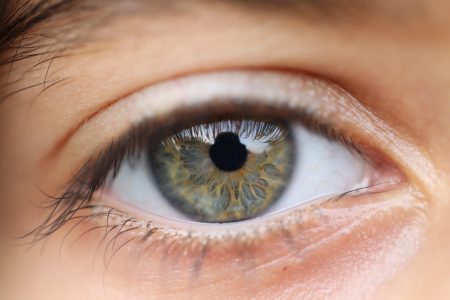
We’ll kick things off with one of the best-known little-known facts about the eyes. Both of your eyes have a blind spot, but you may not be aware of it.
That blind spot is where the ocular nerve attaches to the back of the eyeball. There are no light-sensitive cells there, so you can’t see anything in that location. Walking around with a black spot in your vision would be weird, though, so your brain fills it in with an approximation of the surrounding environment.
2. The Eye Has a Resolution of 576 Megapixels

Ever wondered what the resolution of human vision is? Well, it’s not possible to perfectly describe in such terms, but roughly speaking, your eyes have a resolution of about 576 megapixels.
Now, compare that to the latest iPhones, which have 48-megapixel cameras. Yeah, cameras have a long way to go before they’re as sharp as our eyes.
3. Eye Muscles Are the Fastest in the Body

They may not be the strongest, but the muscles in your eye are the fastest in the human body. The three muscles that move your eyeball can jerk it around at speeds of up to 900 degrees per second.
What’s more, these muscles are almost always moving – even if you’re asleep. If you’ve ever watched someone dream, you’ve surely noticed how their eyes keep twitching under their eyelids.
4. A Blink Lasts a Tenth of a Second

Speaking of eyelids, they are the single fastest-moving muscle in your body. They can snap shut in as little as 100 milliseconds, or a tenth of a second.
Impressive as that is, though, it’s not the fastest movement in the human body. That would be snapping your fingers, which takes just 7 milliseconds.
5. You Blink About 20 Times a Minute
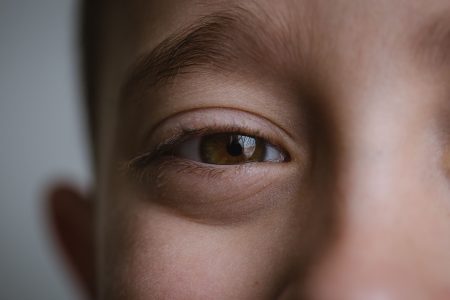
On the topic of blinking, you blink a lot. On average, an awake person blinks 20 times a minute, or roughly every three seconds. That adds up to 20,000 times per day, and 4,200,000 times a year.
Yet, you’re not actually aware of most of those blinks. Which is good, because having your vision flash every three seconds would probably drive you insane.
6. Newborns Don’t Have Tears

Babies cry a lot, so you’d imagine they’d be tear-shedding champions. But the fact is that babies can’t produce tears.
Our tear canals don’t start functioning properly until we are 1-3 months old. But why do babies become so messy when they cry?
Well, that’s drool and snot, not tears. Consider that an extra fun fact on this list.
7. Eyes Finish Developing by the Age of 10

The eyes are among the fastest-maturing parts of the body. By the time a child is 7-10 years old, their eyes and eye-brain connections are fully developed, and they can see as well as an adult.
That said, the eyeball itself isn’t yet done growing. In fact, the physical growth of the eyeball doesn’t stop until around the age of 20, which simultaneously makes your eyes one of the slowest-growing body parts. What a paradox!
8. Eye Blood Flow Can Be Observed Without Surgery
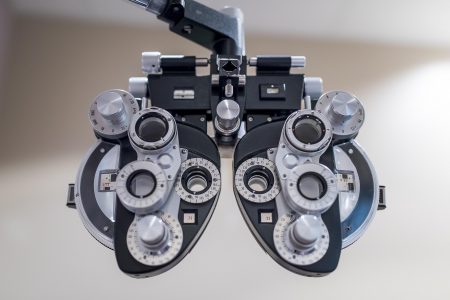
Did you know that your eye is the only place where a doctor can observe your blood flow without surgery or an extra-powerful microscope? It’s all due to the outer parts of your eye being transparent (you know, so you can see).
As such, all an eye doctor needs to do is shine a light on your eye. Then, with just a bit of magnification, they can watch blood run through the eye’s veins.
9. There Are No Veins on the Cornea
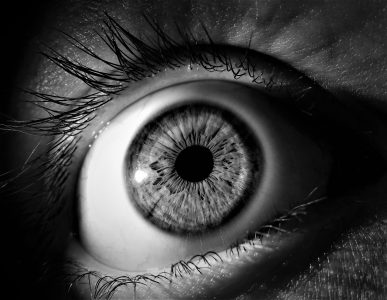
Well, there is one place where the eye doctor can’t see any veins. That’s the cornea, or the clear, dome-shaped layer that protects the iris.
That’s not much of a surprise, though. After all, having veins on the windshield of your eye would just get in the way of your vision.
However, the cornea still needs oxygen, which is usually transported by blood. Without veins, your cornea is forced to suck oxygen straight out of the air, being one of the few human body parts to do so.
10. Peripheral Vision Detects Motion Better

It’d be easy to think the place where you’ve fixed your eyes is where your vision would be at its best. Yet, when it comes to detecting movement, your peripheral vision is much better at it.
This isn’t as strange if you think about it, though. Our ancestors were at their most vulnerable against beasts and enemies that were trying to sneak behind them. It makes sense that their eyes developed to pick up even the slightest motion at the edges of their vision.
11. Eyes Produce the Majority of Your Sensory Input

We take in the world around us mostly through our eyes. Your eyeballs are responsible for producing anywhere between 70% and 80% of all the sensory input your brain receives.
On the larger scale of things, this makes human vision remarkably good. On the other hand, when it comes to other senses, like smell or hearing, most other creatures on the planet have us soundly beat.
12. Blue Eyes Come from a Single Ancestor
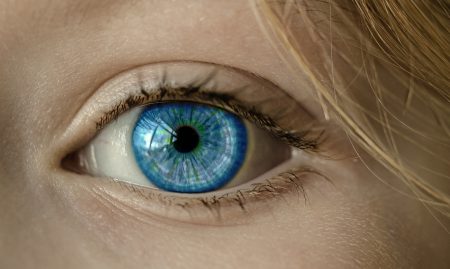
You’re probably aware that blue eyes are an extremely recessive trait. That’s because all blue-eyed people in the world are descended from one person.
For the majority of human history, blue eyes didn’t exist, and everybody was brown-eyed (with some variation). However, about 6,000–10,000 years ago, a genetic mutation occurred in a single individual that gave them blue eyes.
It’s impossible to know for certain who, where, and when that person was. But imagine how bizarre (and terrifying) it must have been for our early ancestors to see blue eyes on a human for the first time.
Is your thirst for eye facts not satisfied yet? Check out our list of 6 freakiest eyes in nature!