
- Find out why cassowaries are as odd as they are dangerous.
Today is World Cassowary Day! Don’t feel too bad about not being aware of that, since we weren’t either.
It makes sense that there’s an awareness day for cassowaries. After all, these big birds are seriously endangered.
We should protect them, too, because cassowaries are delightfully quirky and bizarre animals. Quirky, bizarre, and completely psychotic.
Here are eight facts about these strange birds to make you appreciate (and avoid) them.
1. There Are Three Cassowary Species
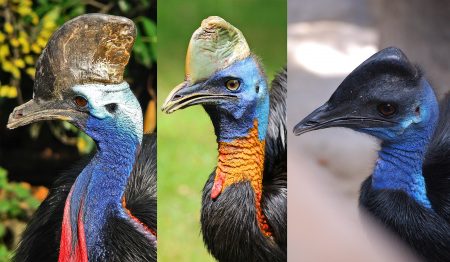
Cassowaries are relatively well-known birds and many people are aware that they exist. But what many don’t know is that there are three cassowary species in Australia, Indonesia, and Papua New Guinea.
The southern cassowary is the one you’ll probably think about when you imagine a cassowary. They’re the most abundant and largest of the trio.
Meanwhile, the dwarf cassowary is much smaller and not found in Australia at all. Finally, we have the northern cassowary, which has only recently been recognized as its own species.
2. Cassowaries Are Big…
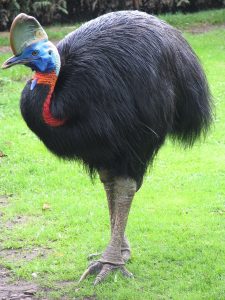
Cassowaries are very large birds. In fact, they’re some of the largest.
The southern cassowary typically grows to be about 5 feet and 11 inches tall, although they can reach more than 6 feet in height. The females are typically bigger than the males.
They’re hefty, too, losing only to the ostrich in weight. Cassowaries can swell to weigh more than 150 pounds — the most rotund cassowary on record weighed 187 pounds.
3. …But They’re Very Agile for Their Size
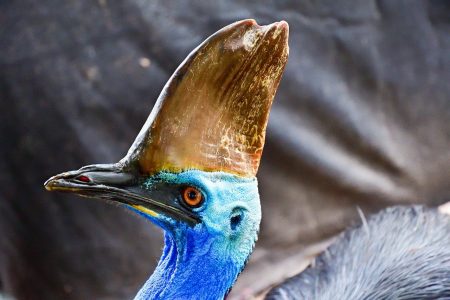
Despite their size, cassowaries are very nimble birds. To begin with, they’re fast. A cassowary can speed through the rainforest at more than 30 miles per hour, all the while dodging the trees.
They can jump, too. Cassowaries can leap up to seven feet into the air without breaking a sweat.
To top it all off, they’re adept swimmers, too. Basically, if a cassowary wants to go somewhere, it will.
4. Cassowaries Have Helmets (And No One Knows Why)
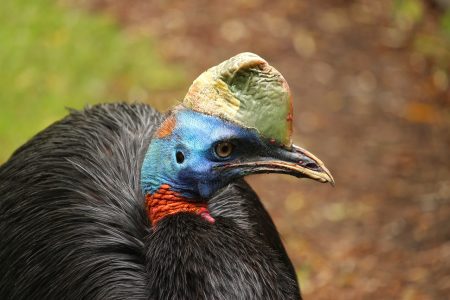
One of cassowaries’ most striking physical features is their helmets or casques. On top of its head, each cassowary has a large, hardened protrusion.
This casque is made of keratin, the same material as your fingernails. The thing grows larger as the cassowary ages, but nobody knows exactly why cassowaries have casques.
Some biologists believe the casque is actually a helmet that protects the bird’s head from banging on jungle undergrowth. Others, however, suggest that it’s a status symbol — the more impressive the casque, the bigger cheese the cassowary is.
5. Australian Rainforest Plants Depend on Cassowaries
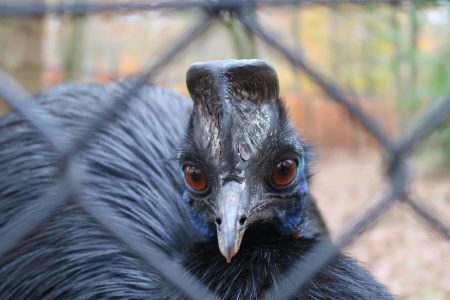
We said that cassowaries should be protected so we can enjoy knowing that these bizarre birds exist. An equally good reason, however, is that many of Australia’s rainforest plants rely on the cassowaries for spread their seeds.
Cassowaries are frugivores, that is, fruit eaters. Having no teeth, they end up swallowing any seeds contained in the fruits they eat whole.
Having eaten the seeds, the cassowary then goes about its business until it needs to do its business. And so, the cassowary deposits the plant’s seeds elsewhere and the cycle of life goes on.
6. Cassowary Dads Are Single Parents
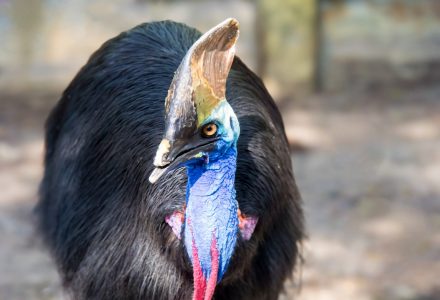
Cassowaries are solitary birds that don’t tolerate each other’s company — except during mating season. Between June and October, these large birds start looking for love.
The romance doesn’t last long, though. The female cassowary sticks around just long enough to lay its eggs before leaving the male to incubate them.
After the chicks hatch, their papa looks after them for about nine months. At that point, he will get sick of parenthood and chase his offspring away to start their own lives.
7. Cassowaries Are the Closest Living Dinosaur Relatives
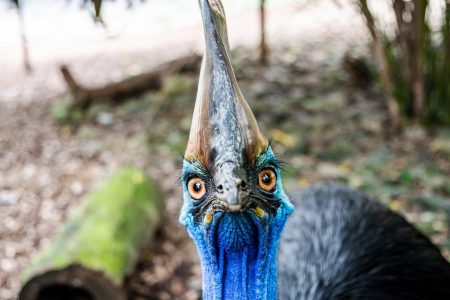
Looking at a cassowary, you might think it looks a bit like a really bird-y dinosaur. You wouldn’t be long, as cassowaries are about as close to a dinosaur you can get on today’s Earth.
Cassowaries — together with their relatives such as ostriches, emus, and kiwis — are believed to descend from a common ancestor that lived in the Cretaceous period some 60 million years ago. You know, at a time when dinosaurs were the dominant species on the planet.
It’s no wonder, then, that the cassowary resembles a dinosaur. It’s basically a modern-day velociraptor.
8. Cassowaries Will Kill You
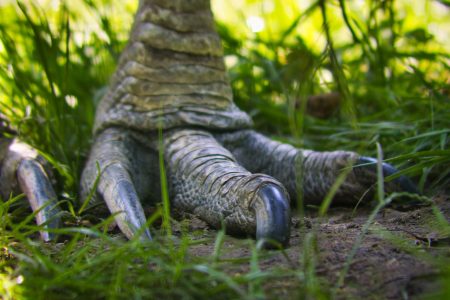
It’s fitting that the cassowary is so closely related to dinosaurs. That’s because it absolutely can murder the hell out of you.
On each of their feet, cassowaries sport a dagger-like claw that can be up to four inches long. They’re very adept at kicking things with those claws, and they like to aim for the throat.
Additionally, as we already mentioned, cassowaries are solitary and foul-tempered things. They don’t like anyone approaching them, and although they will initially try to run away, their patience is very short.
Thanks to their violent character, cassowaries are often dubbed the world’s most dangerous birds. To really drive home how psychotic they are, soldiers in the Australian military are instructed to walk the other way if they encounter a cassowary.