
- How about a nice bite of pork butt, or perhaps some spotted dick?
Knowing what you’re eating is a big part of having an enjoyable meal. Sure, it’s sometimes fun to give weird foods a blind taste test, but usually, people want to know what they put in their mouths.
In some cases, however, knowing the name of the dish doesn’t help you at all. Many dishes have names so completely misleading that we’re surprised no one’s sued them for false advertising.
Here are 12 examples of dishes whose names will fool you unless you know what’s in them in advance.
1. Boston Cream Pie

Starting innocuously enough, we have the Boston cream pie. It may be delicious, but a pie it’s surely not.
Instead, the Bostom cream “pie” consists of a chocolate-covered sponge cake with a custard filling. It’s a mystery why it’s not called Boston cream cake instead.
Oh, and depending on what kind of custard you use, the thing may not have any cream in it, either.
2. Mincemeat Pie

We couldn’t blame anyone for being surprised when biting into a mincemeat pie for the first time. After all, there’s no meat in it at all (although they do sometimes contain fat or suet).
Mincemeat, or mince for short, is made with fruit, spices, and occasionally with some distilled spirit like brandy or rum. So why is it called “mincemeat,” then?
Well, mincemeat pies are an old dish that originally did have meat in it. Over the centuries, the meat disappeared from everything but the name.
3. Head Cheese
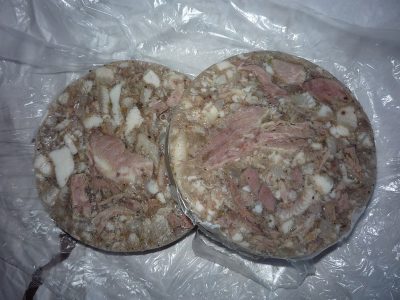
If you’re lactose intolerant, we have good news for you. Head cheese is dairy-free so you can eat it without upsetting your stomach.
The bad news (potentially) is that it’s not a cheese at all. Head cheese consists of bits of meat, usually from an animal’s head, suspended in an aspic or a jelly.
The name “head cheese” is a direct English translation of the Dutch word “hoofdkaas.” The Dutch are said to have named the dish so because its texture resembles cheese — which raises some concerning questions about Dutch cheese.
4. Welsh Rabbit
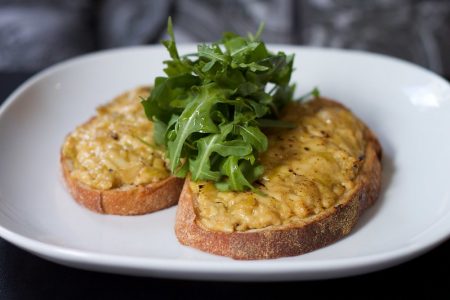
As you may guess by now, the Welsh rabbit (also known as the Welsh rarebit) contains no rabbit whatsoever. This dish actually consists of a piece of toasted bread topped with a cheese sauce.
The name is a dig at the Welsh, whom the English have historically considered poorer and less refined than themselves. The idea is that the Welsh can’t afford actual rabbit meat, so they’ll top a piece of bread with cheese and call it a rabbit.
Well, the joke’s on the English, because Welsh rabbit is actually delicious. It’s basically just a variant of a grilled cheese — what’s not to love?
5. Pork Butt
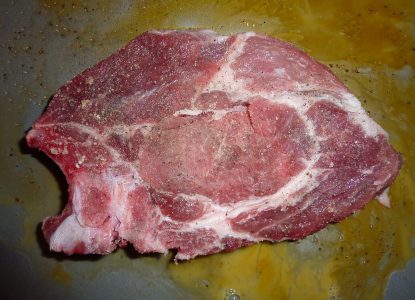
The pork butt is a cut of meat from a pig. Unlike what you might think, though, it doesn’t come from the animal’s hindquarters — that would be ham.
Instead, pork butt is a cut that consists of parts of the pig’s neck, shoulder, and upper foreleg. The misleading name stems from the fact that it used to be packed into barrels, which in turn used to be called “butts.”
The word we use for barrels changed, but the old name stuck with the kind of meat that used to go in them.
6. Hen-of-the-Woods

If you look at a restaurant menu and see hen-of-the-woods as an ingredient, you’d probably expect to be served some kind of wildfowl. In reality, though, hen-of-the-woods is a mushroom.
You may know this fungus better by its Japanese name, maitake. It may not be chicken, but hen-of-the-woods is delicious and a common ingredient in Chinese and Japanese cuisine.
7. Bombay Duck
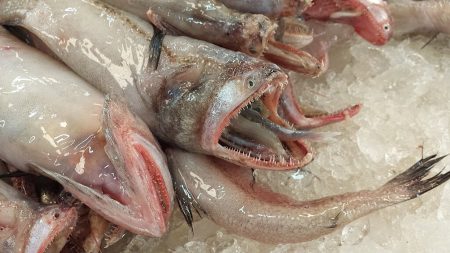
Just as with hen-of-the-woods, a dish containing Bombay duck won’t have any kind of bird in it. A Bombay duck is actually a (fairly ugly) species of lizardfish.
The fish is often caught in Bombay (today called Mumbai), but the locals rarely eat it. It’s a delicacy in Bengal, though, so the fish was often shipped to Bengali gourmands.
In the Bengali language, one word used for “mail” or “delivery” is “daak.” When the British colonizers learned the name of the fish, it sounded to them like “duck” — hence, Bombay duck.
8. Mongolian Barbecue
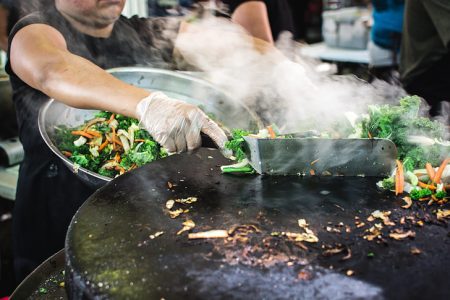
Mongolian barbecue is a common item on Chinese restaurant menus, but its name is misleading in two ways. First of all, the dish doesn’t come from Mongolia but from Taiwan.
It was invented by comedian and restaurant owner Wu Zhaonan in Taiwan in 1951. He originally wanted to call the dish “Beijing barbecue” but due to political sensitivities at the time, he named the dish after Mongolia — just because he knew that name wouldn’t upset anybody.
Second, this isn’t actually barbecue. It’s really closer to teppanyaki or hibachi dishes.
9. Scotch Woodcock
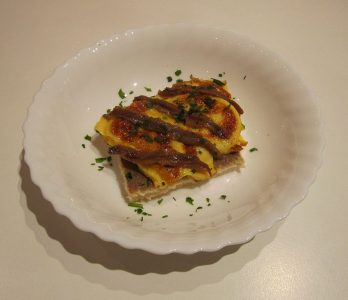
Perhaps you’re still upset that hen-of-the-woods didn’t satisfy your craving for wildfowl, so you order a Scotch woodcock instead. Well, prepare to be disappointed again.
Despite its name, Scotch woodcock is a piece of toast, topped with anchovy paste, scrambled eggs, and occasionally anchovy fillets. As such, it’s really a relative of the Welsh rabbit.
In fact, that’s where the name comes from. Scotch woodcock was inspired by the Welsh rabbit, and as such it was intentionally named after an animal that’s actually not a part of the dish.
10. Egg Cream
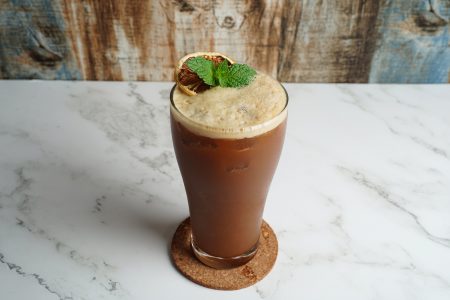
If you think something called “egg cream” sounds kind of gross, you’re in luck. Egg cream has neither eggs nor cream in it.
Instead, it’s a soda fountain drink made with milk, carbonated water, and flavored syrup (usually chocolate). But why is it called egg cream, then?
Nobody knows. The name’s origin has been lost to time, and although there are many theories, no one can prove any of them to be true.
11. Rocky Mountain Oysters
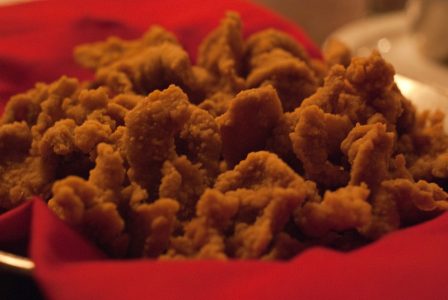
If you’re visiting Canada, Colorado, or the Midwest and you get a hankering for seafood, be careful about what you order. A plate of Rocky Mountain oysters is not in fact made with slimy shell dwellers.
Its main ingredient is, in fact, a part of a bull’s male anatomy. Its testicles, to be exact.
One theory states that the dish is called “oysters” because the sliced testicles kind of look like oysters before and after deep frying. That said, we bet because a menu item called “a big plate of bull balls” didn’t sell very well.
12. Spotted Dick
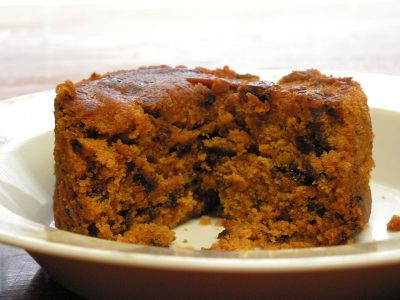
If you do like dishes named after parts of male anatomy, though, here’s another one for you. Spotted dick is a traditional British dessert and the butt of endless jokes.
Yet, it doesn’t (fortunately) contain any blemished penii and is just a steamed pudding with fruit. “Dick” is simply an old English term for pudding, sharing its roots with the word “dough.”
Still, the name is funny — even in England. In fact, the menus in the British Parliament have renamed their version of the dish “spotted Richard” to keep MPs from giggling in the lunch line.