
- Test your knowledge of the most famous Egyptian Pharaoh in history.
Exactly a century ago today, archeologist Howard Carter peered through a small hole dug into a pile of rubble. When asked if he saw anything in the faint candlelight, he answered: “Yes, wonderful things.”
What Carter saw was the tomb of Tutankhamun, colloquially known as King Tut. Since then, the ancient Egyptian Pharaoh has been a mainstay in popular media.
But despite his fame, people know surprisingly little about who King Tut really was. Everybody knows the stories about the curse of his tomb, but the real details of his life remain obscure — partly because of a deliberate effort to keep them hidden.
Here are eight weird or just plain interesting facts about Tutankhamun that you may not have known.
1) Tut Was Almost Wiped from History
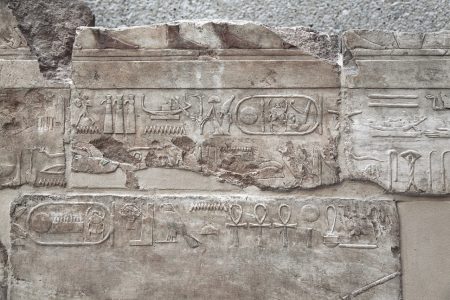
A big reason why we know so little about Tutankhamun is that it’s by design. His successors made every effort to make sure nobody would ever remember King Tut existed.
You see, King Tut’s father was the Pharaoh Akhenaten — also known as the Heretic Pharaoh. He forbade the worship of Egypt’s traditional pantheon and centered the religion only around one god, Aten.
During his reign, people went along with it because, well, they had no choice. But once Papa Tut died and King Tut ascended to the throne, he was pressured into reversing his father’s religious policy.
Still, he got part of the blame. After Tut died, his successor buried him in a small, unremarkable tomb, hid its location, and scratched his name from the history books.
He’d be probably pretty pissed if he knew how famous Tut is today.
2) Tut Was Very Ugly and Sickly
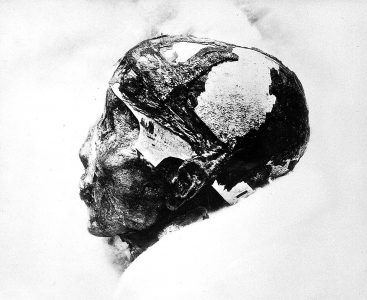
In life, King Tut wasn’t very pleasant to look at. He suffered from a whole slew of health issues that affected his appearance.
He had very large front teeth and a prominent overbite. His waist was very narrow, while his hips were quite wide. Basically, he had a pear body.
Not only that, he suffered from a partially cleft palate and scoliosis. He had a flat right foot and a clubbed left foot, forcing him to wear orthopedic sandals and walk with a cane.
Not only that, his bones were necrotic, and he was infected with malaria. He may have been the Pharaoh, but his life must’ve been constant agony.
3) Tut Was Very, Very Inbred…

Part of the reason why Tut was in such terrible shape was that he was a product of incest. Egyptian royalty had a habit of marrying their relatives to “keep the bloodline pure,” and Tut sure was pure.
It’s not exactly clear how closely related Akhenaten and his wife were. Some theories speculate they were cousins, while others claim they were brother and sister.
Whatever the case, they were related — and so were most likely Tut’s grandparents and so on. King Tut was the unfortunate end result of this generations-long incestuous family tree.
4) …And He Continued the Tradition
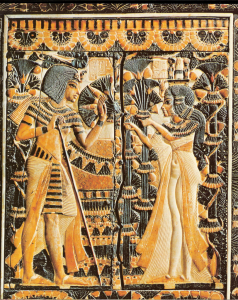
You may have thought that Tut might’ve learned something from his horrible health. But nope, he was dead set on keeping the inbreeding party going.
You see, Tut’s wife was Ankhesenamun. Again, we don’t know exactly how closely related she was to Tut.
Depending on who Tut’s mother was, she might’ve been his sister. But hey, in the best-case scenario, she was only his half-sister.
5) Tut Wasn’t Known as Tut
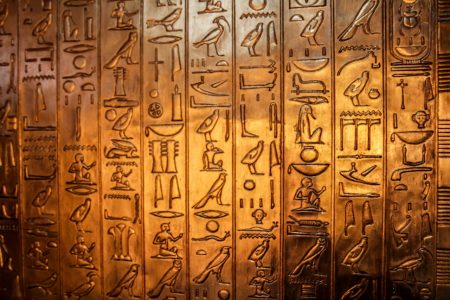
We might call him King Tut, but he wasn’t called that while he was alive. In fact, he wasn’t even called Tutankhamun.
King Tut was born Tutankhaten, which means “living image of Aten.” But after Tut reversed his father’s religious reforms, that name wasn’t so great anymore, so he changed it to Tutankhamun — “living image of Amun.”
But even then, nobody called him that. In Ancient Egypt, he would’ve been known by another one of his five names, which was Nebhkeperure.
6) Tut Loved to Hunt

You wouldn’t imagine someone as sickly as Tut would’ve been much for outdoorsy activities. But the fact is that the boy Pharaoh loved to hunt.
Fortunately for him, he didn’t have to run after his prey. Egyptian royalty used chariots to race through the desert.
On top of his chariot, Tut could more or less comfortably hunt his favorite game — ostriches. Back in his days, the giant birds were plentiful around modern Cairo.
Tut was even buried with an ostrich-feather fan whose handle depicts a successful hunt.
7) Tut May Have Died in a Traffic Accident
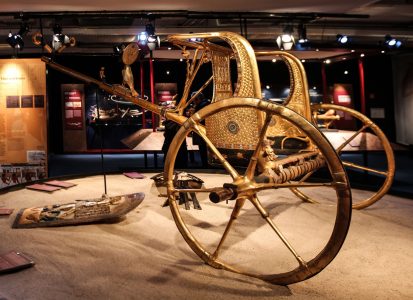
We don’t know how Tut died. For ages, people thought he was assassinated by a blow to the head, but later studies have shown his skull injuries happened after he died.
One currently prevailing theory is that Tut’s hunting hobby may have sealed his fate. One side of his body has horrific crushing injuries, including a broken leg.
It’s possible that he sustained those injuries by either falling off his chariot or by getting run over by another. The broken leg shows signs of serious infection, which may have ended up being fatal.
8) The Carpenters Messed Up Tut’s Coffin
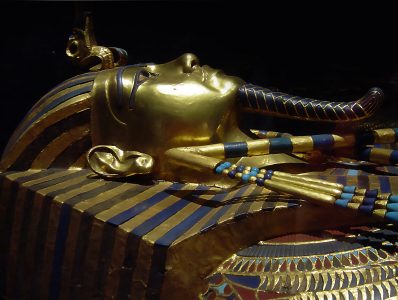
No matter where he happened, King Tut died in his late teens. But his misfortunes didn’t stop with his death.
After being mummified, Tut was placed within three consecutive coffins — like a macabre Russian nesting doll. But the carpenters who built the coffins did a little oopsie.
The toes of the largest, intricately carved coffin were too big and the lid couldn’t close. So, they naturally fixed the problem with all the care befitting of a Pharaoh.
Just kidding, they hacked the toes off until the lid fit in its place. Carter found the remnants of the haphazard fitting job on the bottom of Tut’s coffin 3,000 years later.
In short, King Tut just couldn’t catch a break — even in death.