
1Viagra ($504,816)
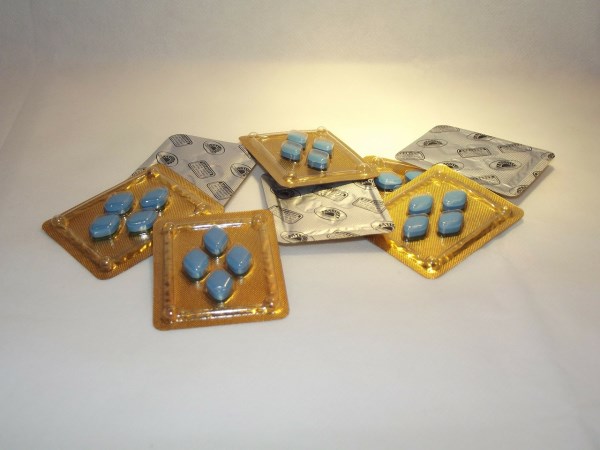
The Department of Defense spent more than a half a million dollars on the male enhancement drug Viagra in 2014, according to government contracts.
The Pentagon issued 60 contracts worth $504,816 for the drug, all of which were awarded to Cardinal Health Inc., a pharmaceutical distribution company based in Dublin, Ohio.
DoD began offering Viagra to soldiers as a medical benefit in 1998 when the drug cost $10 a pill. In 2015, one pill costs $25. At the time, the military's policy only allowed for six pills a month per patient, and the DoD said they would “not replace lost or stolen pills.”
The DoD also ordered other popular erectile dysfunction drugs including $3,505 worth of Levitra and $14,540 of Cialis. The contracts were filed under “Troop Support.”
A website, Washington Free Beacon, did the math. At $25 a pill, the amount of Viagra purchased by the Pentagon could have led to up to 80,770 hours, 33 minutes, and 36 seconds of sexual enhancement, assuming that no erection lasted more than the medically advised 4 hour maximum.
2Facebook "Likes" ($630,000)

In 2013, State Department officials spent $630,000 to get more Facebook "likes." The spending increased the bureau's English-language Facebook page likes from 100,000 to more than 2 million and 450,000 on Facebook's foreign-language pages.
Despite the surge in likes, the effort failed to reach the bureau's target audience, which is largely older and more influential than the people liking its pages. Only about 2 percent of fans actually engaged with the pages by liking, sharing or commenting.
In 2012, Facebook changed its approach to users' news feeds, and the expensive "fan" campaigns became much less valuable. In other words, if you pay for people to see your fan page, it appears in more newsfeeds. The Bureau is not unlike anyone else with a fan page. It must constantly pay for sponsored ads to keep its content visible even to people who have already liked its pages.
The agency's inspector general said many in the bureau have criticized the practice of "buying fans" – people who may have once clicked on an ad or "liked" a photo – but have no real interest in the topic and have never engaged further.
3The First Sexual Experiences of Young Gay Men ($410,265 and counting)

How was your first time? If you are an African-American young gay male, then the feds want to hear from you.
The National Institutes of Health (NIH) has spent over $400,000 studying the satisfaction levels of the first sexual experiences of young gay men.
The study, conducted by Johns Hopkins University, is examining the “meaning and function” of first “penetrative same-sex sexual experiences.”
“The goal of this project is to understand the meaning and function of first same-sex sexual experience and to prospectively be able to assess its impact on subsequent sexual experiences, young adult sexual health and health protective behaviors,” a grant for the project, which began in 2012, states.
The project has cost $136,755 for each of the past three years and funding for 2015 and 2016 have yet to be documented. Based on the history of the project thus far, this study could cost taxpayers $683,775 by the time it wraps up.
4A Video Game In Which A Player Escapes A City Where Residents Are Only Allowed Junk Food ($10 Million)
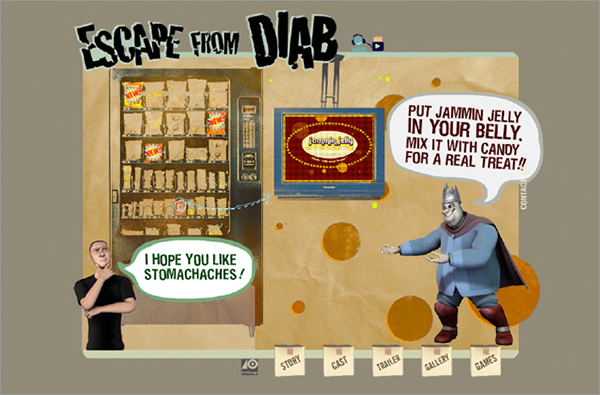
The National Institutes of Health has invested over $10 million developing and promoting a video game about a young teen that must escape a town full of fat people, as a method to fight obesity.
Players “Escape from Diab,” a “nightmare” fictional city where people are only allowed to eat junk food. “The story centers around five children who must get healthy enough to escape the evil King Etes,” explains Archimage, Inc., a computer game company that received the money to develop the games. (King Etes is a corpulent ruler who forces his people to eat out of vending machines.)
The main character, Deejay, has to teach his obese pals about healthy eating and exercise in order for them to escape the city, which is full of “high-rise vending towers” that give “free access to foods like Lard Chips, Creamy Cakes, Butter Breads, and Etes Burgers.”
The game was tested on 100 kids aged 10 to 12. Results of the study found that children increased the amount of fruits and vegetables they eat by 0.67 servings, but that playing a video game did not increase their physical activity levels. Because the researchers apparently forgot players are still sitting in front of a screen for several hours. Nice job, guys!
5A Romance Novel Website ($914,000)

According to a report in 2013's Wastebook – an annual compilation of the most unnecessary and ridiculous federal government projects of the year curated by the office of Sen. Tom Coburn (R-OK) – the National Endowment for the Humanities has funded the “Popular Romance Project” for the past three years. Incremented funding for the project has surpassed the $900,000 mark.
The Popular Romance Project is mainly a website, which aims to enlighten Americans about romance novels, music, and fan-fiction and give this genre of pop culture its due.
The project tackles controversial topics such as:
• Team Edward or Team Jacob? “Are heroes like Edward romantic or controlling?” (Edward and Jacob are the supernatural characters in the Twilight franchise.)
• Call Me Maybe: The website celebrates Carly Rae Jepsen's hit song “Call Me Maybe” as a “fun, flirty invitation to a dreamy crush” and examines how the song's video provokes some “very interesting conversations about contemporary romance.”
• The Spy Who Loved Me: The romance of British Secret Service Agent James Bond, 007, is examined by the Popular Romance Project website, noting that “the recurrent death of romance is fundamental to the 007 franchise." What can popular romance scholars make of this motif?"
While romance literature is certainly a cornerstone of American art and an inextricable part of our national identity, even the PRP's website makes the point that the industry really does not need the government's help. According to the website itself, “romance fiction generated $1.37 billion in sales in 2008, and romance was the top-performing category on the New York Times, USA Today, and Publishers Weekly best-seller lists.”
6The Sexual Habits of Obese Girls ($466,642)

In 2014, the federal government spent hundreds of thousands of taxpayer dollars researching the sex lives of obese girls.
The National Institutes Of Health grant allocated $466,642 to the Magee-Women's Research Institute to study the sexual habits of the girls, including how often they have sex and why they are less likely to use protection when they do.
The study compared sexual relationships between obese girls and non-obese girls. Money from the study was also used to see how race plays into the sex lives of the women.
NIH granted about $170,000 to a similar study in 2013 that examined how being lesbian or gay affects a person's weight and health.
7Pumpkin Donuts ($45,000)

While we're a huge fan of donuts (who isn't?) we're shocked to learn that the U.S. government has spent $45,000 to market pumpkin donuts as a healthy food choice.
In his "Waste of the Week" speech, Senator Dan Coats (R-IN) said that the feds have wasted more than $290 million in taxpayer dollars over the past ten years on an agricultural grant program for business plan development and agricultural marketing. Citing one of the more egregious cases, Coats said a grant recipient received the money to market pumpkin donuts as healthy, locally produced food.
Other equally bizarre uses of the grant money include processing olives, developing and marketing alcoholic beverages, cheese, and chicken.
8Couples Stabbing Voodoo Dolls ($331,000)

In his 2014 edition of Wastebook, Sen. Tom Coburn reports of funding by the National Science Foundation for a study involving “hangry” spouses stabbing voodoo dolls.
A lot of us know what can happen when we get hungry. We get grumpy, irritable and sometimes nasty. "Hangry is a combination of the words hungry and angry," says psychologist Brad Bushman from Ohio State University.
Over the course of twenty-one consecutive evenings, 107 couples were given a chance to stick up to 51 pins into a voodoo doll representing their spouse. The pin-pushing happened in secret, away from the other partner. Participants then recorded the number of pins they poked into the dolls. Those tests revealed what may already be obvious to many couples: a spouse with low blood sugar was an angrier one and stuck more pins in the doll (on average).
So, people who are hungry and angry act more aggressively. But did we really need a study – and an expense of $331,000 – to tell us that?
9Drunk Monkeys ($3.2 Million)
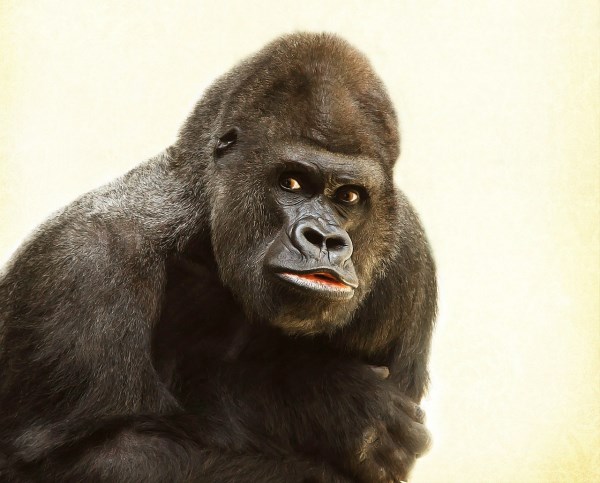
In 2014, the U.S. government spent $3.2 million to get monkeys to drink alcohol excessively to determine what effect it has long term on their body tissue.
The monkey project is being led by the Oregon Health & Science University. Scientists say the work will “bridge the gap” between studies that focus on rodents and humans. They also insist it will allow the "alcohol research community to better understand disease processes associated with alcoholism."
As part of their research, scientists reportedly force monkeys to drink too much and then study their tissue for damage.
10Shrimp Running On A Treadmill ($500,000 to $3 million)
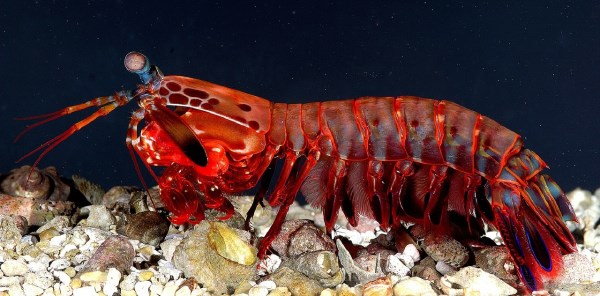
This little shrimp running on a treadmill became emblematic of wasteful government spending in recent years.
The National Science Research-funded experiments were said to have cost taxpayers anywhere from $500,000 to $3 million. In the years since they were conducted, scientists have tried (futilely) to explain the significance of testing an exercising shrimp.
David Scholnick, a professor of marine biology at Pacific University in Oregon has defended the research and belittled his critics. He claims the treadmill was made from spare parts that cost him $47 out of pocket to assemble. Another scientist said that the federal research grant money went to a lot of different studies, and the treadmill was a “small part of it.” (While that may be true, we're pretty sure it was more than $47.)
The scientist explained that the research was intended to see how well shrimp could fend off infection. “Given that every teaspoon of seawater can contain millions of bacteria, it does not take a mental giant to understand that the health of marine organisms and the safety of the seafood we eat are closely related."
Scholnick attempted to silence his naysayers by selling the treadmill for one-third of the $3 million price tag some cited. We don't know if there were any takers, but here's a video of the shrimp doing its thing to "Eye Of The Tiger." Enjoy!