
- Did you know an early photo manipulator once scammed Abraham Lincoln’s wife?
Today, photographs have taken over the world. Most of us snap at least one photo each day, and many upload several to social media every few hours.
Things were different when photography was a new and exciting invention. Taking photos took a long time, was cumbersome and expensive — and it could even be lethally dangerous.
Here are eight facts about photography that will make you appreciate the camera baked into your phone a whole lot more.
1. Nobody Smiled (Because They Couldn’t)
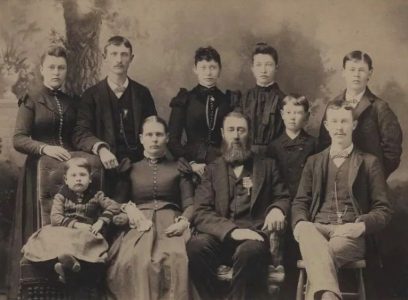
If you see old photographs from the 19th and early 20th centuries, they have one thing in common. Virtually nobody in the pictures is smiling.
That seems odd to us, who are used to calling, “Say cheese!” before snapping a picture. However, there’s a reason why folks didn’t smile in pictures.
Early photos were taken by allowing light to etch the image onto a glass or metal plate. This process took so long — sometimes even a couple of minutes — that few people could physically sustain a natural-looking smile for that long.
So, to avoid sporting weird rictus grins, people chose not to smile.
2. Child Photos Had the Mother Hidden in the Picture
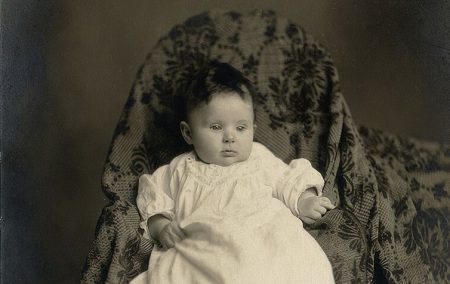
It’s one thing to keep an adult sitting perfectly still for a minute, whether they’re smiling or not. Getting a baby or young child to do that is pretty much impossible.
Yet, people have always wanted photos of their kids. So, photographers came up with a creative solution.
They would have the child’s mother hold them still and disguise her to be a part of the background. At its simplest, this “hidden mother” photography could involve her wearing a dress the same color as the backdrop curtain.
Some photographers went several steps further. For example, they would construct large, hollow armchairs that the mother could climb inside to hold the child.
3. Corpses Were a Regular Subject
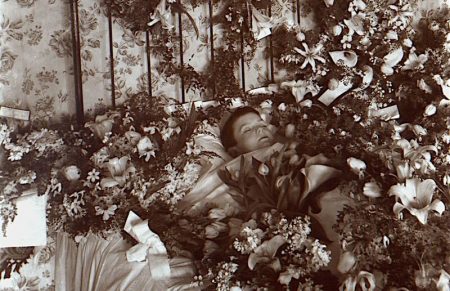
With people having to stay perfectly still for so long, it was hard to find ideal subjects for photographers. Yet, they did find them, in the most morbid place possible.
The morgue. Or wherever else somebody wanted to get a corpse photographed.
Postmortem photography was a huge thing in the 19th century. People would dress and pose their dead loved ones like they were still alive, and huddle around the quickly stiffening cadaver to take a photo.
In way, though, this was understandable. Photography was hugely expensive and you did have to stay perfectly still for the pictures, so people would splurge to immortalize grandma one more time in her finest Sunday dress.
4. Photographers Manipulated Photos by Hand…
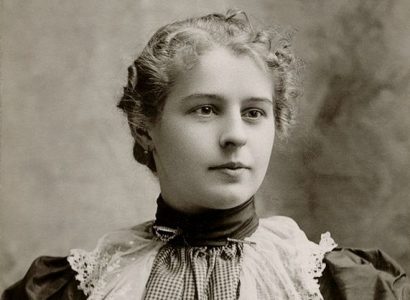
You might think photo manipulation is a modern phenomenon. However, people have wanted to appear better in photos than they really do for as long photography has been a thing.
Of course, a Victorian photographer couldn’t just boot up Photoshop. Instead, they would use pencils to draw on the glass or metal plate that held the photo negative.
With regular pencils, they’d make shadows deeper, body lines more defined, and hide wrinkles and blemishes on faces. In fact, photo manipulation was so common in the 19th century that practically every Victorian photo has been touched up.
Think about that the next time you complain about people Photoshopping their profile pictures.
5. …And They Colored Them Manually
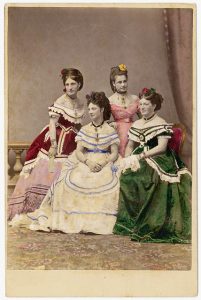
It wasn’t just hiding an unsightly mole that photographers did. They would also colorize photos by hand well before the invention and popularization of color film.
Once again, hand-colored photographs are as old as photography itself, appearing shortly after the invention of early cameras in the 1830s. After all, a colorful photo is often more pleasant to look at.
Photographers would color photographs using a wide variety of methods. They might paint over the picture with watercolors, airbrushes, crayons, or even finger paints.
6. Advertisers Abused Black-and-White Photography
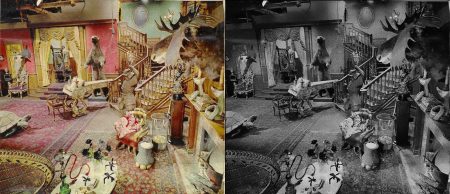
While some folks wanted color photos, others embraced the black-and-white photograph. Advertisers in particular turned the creative manipulation and abuse of monochrome photography to an art form.
With no colors, it was surprisingly easy to make your products look good and to showcase their detail. That’s because you could paint the subject in garish, clownish colors to accentuate different parts — and nobody would ever know.
If an area of the product was coming out too dark, for example, advertisers and photographers could paint it a lighter color, such as yellow. Yet, perhaps the best example of how to cheat the black-and-white camera comes from the 1964 Addams Family TV show.
The dark, ominous, and foreboding mansion, with its gothic furniture, that the Addams Family lives in? Most of its interior was actually pastel pink.
7. Photo Fads Popped Up Immediately
TikTok, Instagram, and Facebook are full of photo and video fads. But that’s nothing new — people have been doing trendy photoshoots for ages.
For instance, in the 19th century, Swedish photographer Oscar Rejlander discovered a method to cut and paste two pictures together to make it seem like people were holding their own severed heads. The headless portrait became a short-lived boom.
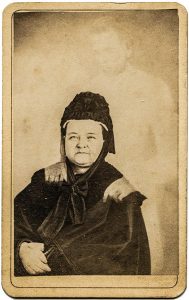
Meanwhile, American William H. Mumler found a way to use a previously taken photograph to leave a faint, shimmering imprint of a person in another photo. He decided to defraud people by claiming he could really take photographs of people with the ghosts of their deceased loved ones.
The ghost photo fad got so big that even heartbroken Mary Todd Lincoln got a picture taken with the “ghost” of Honest Abe. Mumler was eventually sued for fraud, and although he was acquitted, his career as a photographer was so dead even his fad photos couldn’t resurrect it.
8. Being an Old-timey Photographer was a Health Hazard
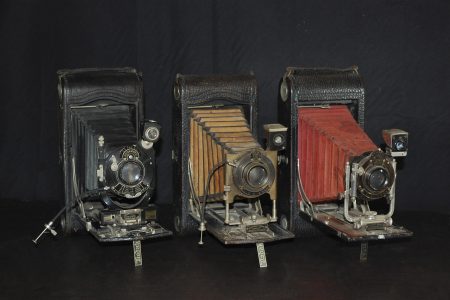
Well, old-timey photography actually sounds kind of fun! That is, until you learn about the horrible workplace hazards that come with it.
If developing modern film photos involved dangerous chemicals, things used to be much worse. Photographers regularly used things like mercury and silver nitrate with little to no protective equipment. Unsurprisingly, many unwittingly poisoned themselves — sometimes with fatal results.
And then there’s the issue with using flash powder to light up photos. Early flash powders consisted of a mix of chemicals like aluminum and potassium chloride that would burn quickly and create the needed light.
They had to be precisely mixed, though, or the combustion reaction would be much too strong. Getting it wrong could cause a fire — or the powder might just explode violently and take your fingers with it.